Commercial · Port Whitby
Commercial Rekeying in Port Whitby
Two people left over the summer and the keys they handed back came up one short.
In plain words
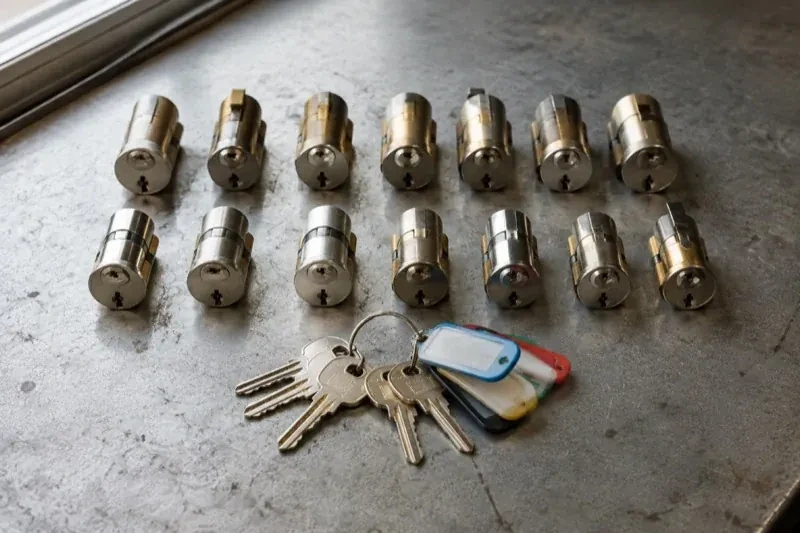
A business hands out keys as people join and rarely gets every one back as people leave. Rekeying resets that count. Instead of guessing how many copies of the front-door key exist, the cylinders are repinned so only the newly cut set works, and those keys are numbered and signed for. Where turnover is steady, the locksmith can fit interchangeable cores, which let a manager swap a core with a control key in a couple of minutes when someone departs, so the reset becomes routine rather than an event. Either way you end up with a premises where the keyholder list matches the staff list.
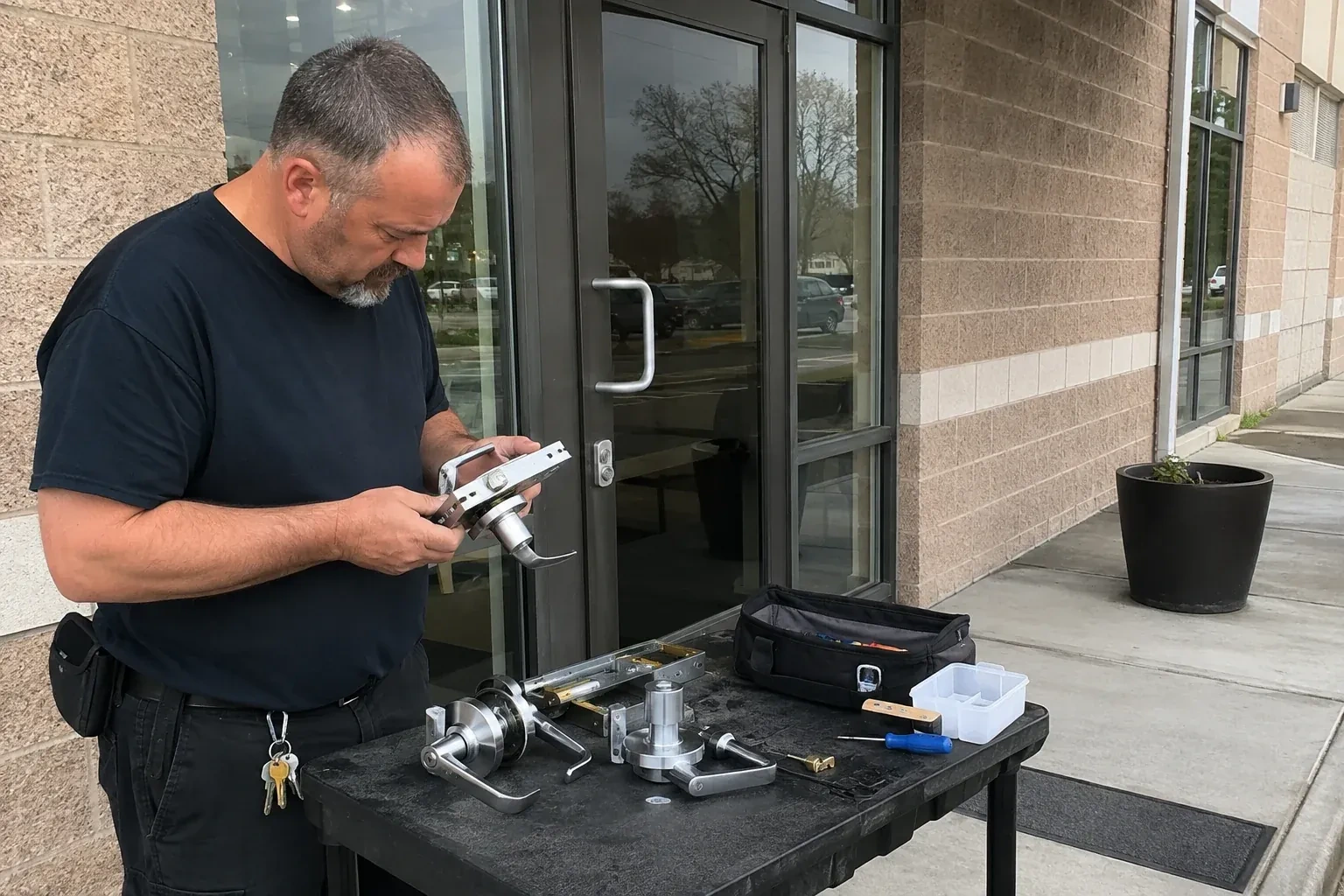
How the visit goesThe renovation is finished and the contractors have gone, along with the loaner keys they used for six weeks. Trades, delivery drivers and an inspector all came through, and the front door still answers to the key that was passed around the site.
Commercial Rekeying
How the visit goes
The state of the cylinders and the doors
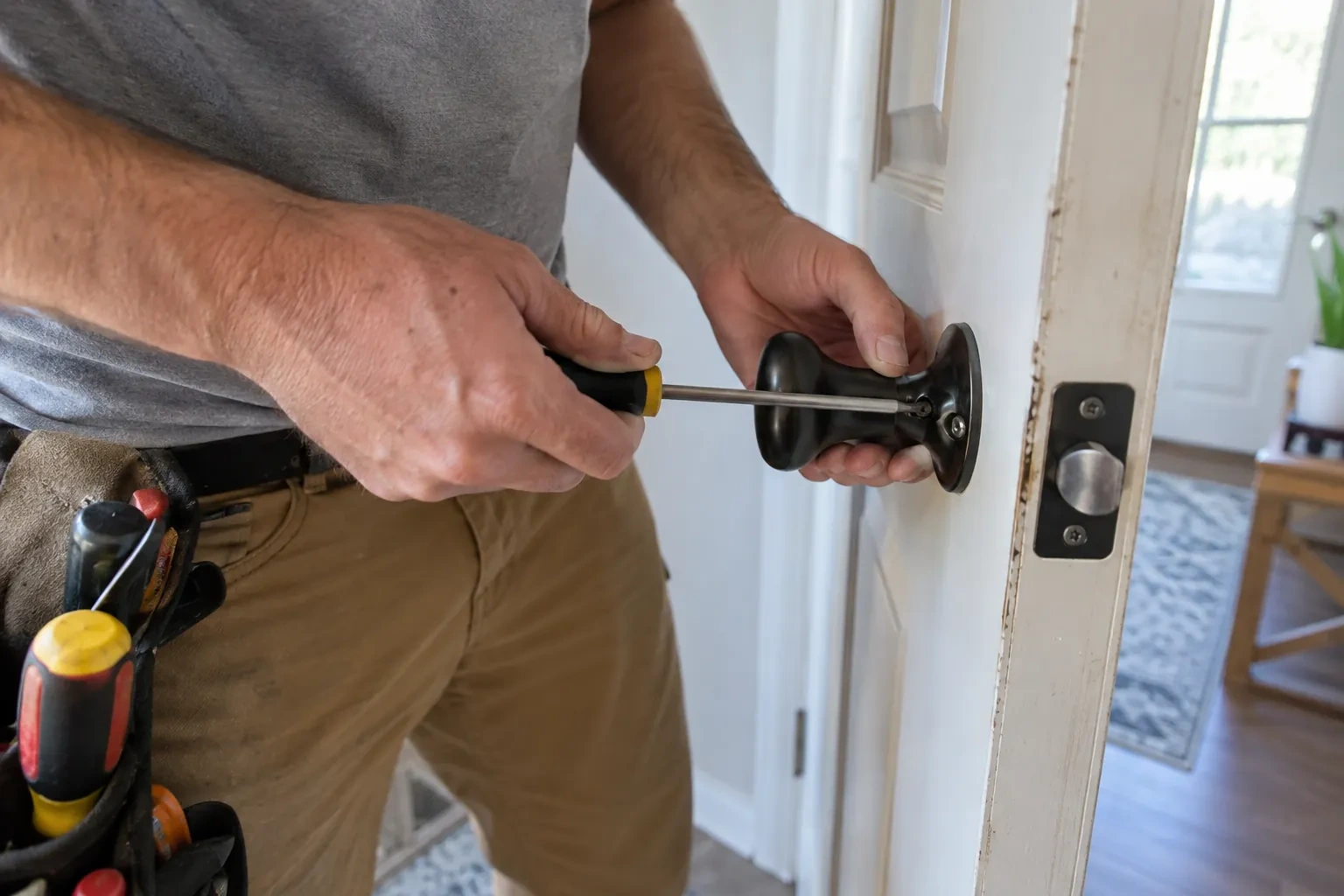
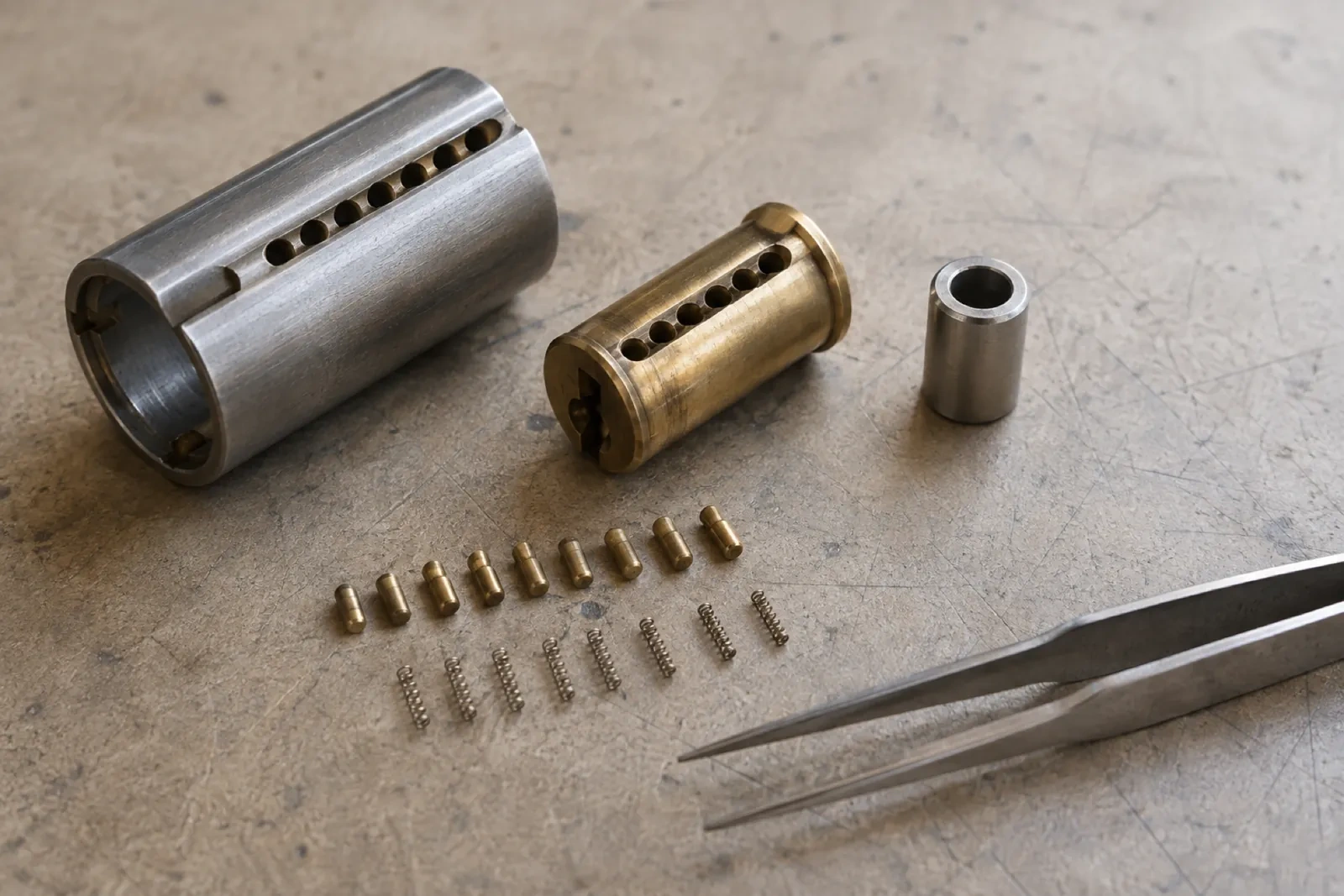
A cylinder about to be repinned is examined the way a mechanic looks over a part before rebuilding it. The plug should turn smoothly with the right key, the pins should spring back cleanly, and the face should be free of the green bloom that salt spray leaves on storefront hardware after a few winters. The locksmith also checks how the door closes: a strike that no longer lines up, a closer that slams, or a deadlatch that fails to catch will keep a freshly rekeyed door from locking properly. Most cylinders pass and are repinned; a worn or corroded one is pointed out so you can choose a replacement for that opening.
Padlocks, cabinets and the mailbox
A business is more than its doors, and the same visit brings the smaller locks into the plan. Rekeyable padlocks on the compound gate, the propane cage or the roll shutter can be pinned to the same key as the back door, so the opening crew carries one key instead of four. Filing cabinets, the till drawer, a medicine or chemical cupboard and the display cases can be keyed alike for the staff who use them or kept separate for the manager. The lobby mailbox, which often still answers to a key from two tenants ago, gets a fresh cylinder or is repinned where its design allows. Each small lock is added to the chart alongside the doors.
A routine for the next departure
Turnover stops being a security event once there is a procedure for it. When someone leaves, their key is collected against the register and ticked off; if it cannot be produced, the chart shows exactly which cylinders that key opened, and only those are dealt with. Businesses that chose interchangeable cores can go further: the manager takes the control key from the safe, swaps the affected core for a spare in less time than a coffee break, and the locksmith repins the removed core at leisure for the next time. Either way the response is measured and specific, and the front door is never left answering to a key that walked out with a former employee.
Commercial Rekeying
In the van
Rekeyable padlocks
Cylinder removal and spanner tools
Key stamp set and tags
Mortise cylinder set screws and cams
Standard and restricted key blanks

Commercial Rekeying
What affects the quote
Number of cylinders
The count of openings drives the quote more than anything else: each cylinder is removed, repinned, refitted and tested individually, so a three-door shop and a twelve-office suite are very different jobs.
Padlocks, cabinets and mailboxes
Small locks add up. Each padlock repinned to the door key, each cabinet keyed alike and each mailbox cylinder replaced is listed on its own so you can decide what to include.
Mix of lock types
A key-in-lever cylinder, a storefront mortise cylinder, a back-door rim cylinder and a padlock take different handling, though several full-size formats can share one pin kit for the same key system; a premises with a wide mix of cylinder types and brands still takes longer than one with one.
What to have ready
- How many keys do you need cut, and for whom?
- Who at the business has the authority to approve changing the locks?
- Do you have a current list of who holds keys?
Commercial Rekeying: questions
QuestionsCan padlocks, cabinets and the mailbox go on the plan too?
Yes. Gate, cage and shutter padlocks that accept repinning can share the back-door key, and the locks on filing cabinets, drawers and display cases can be grouped so the people who work at them carry a single key while the manager holds a separate one. Mailbox cylinders are small and are usually swapped for new rather than repinned. Everything is entered on the chart, so one document covers the whole premises.
Can the aluminum storefront door on our unit be rekeyed?
Yes. The narrow stile of a storefront door houses a screw-in mortise cylinder secured from the edge, and it unthreads, is repinned and screws back in like any other. What the locksmith watches is the cam: it has to suit the hook or deadbolt mechanism inside the door and sit at the correct depth, or the bolt throws short. Weather-facing cylinders showing salt wear are pointed out so you can decide on replacement.
How often should a business change its keys as a matter of routine?
There is no fixed interval. Rekey on events rather than on a calendar: a key not returned, a lease change, a break-in, a renovation crew finished, or a key count that no longer matches the register. Businesses with a good register and a restricted keyway often go years between rekeys because nothing prompts one. A yearly check of the register against the keys on the hook is the habit that tells you when the time has come.
Related services
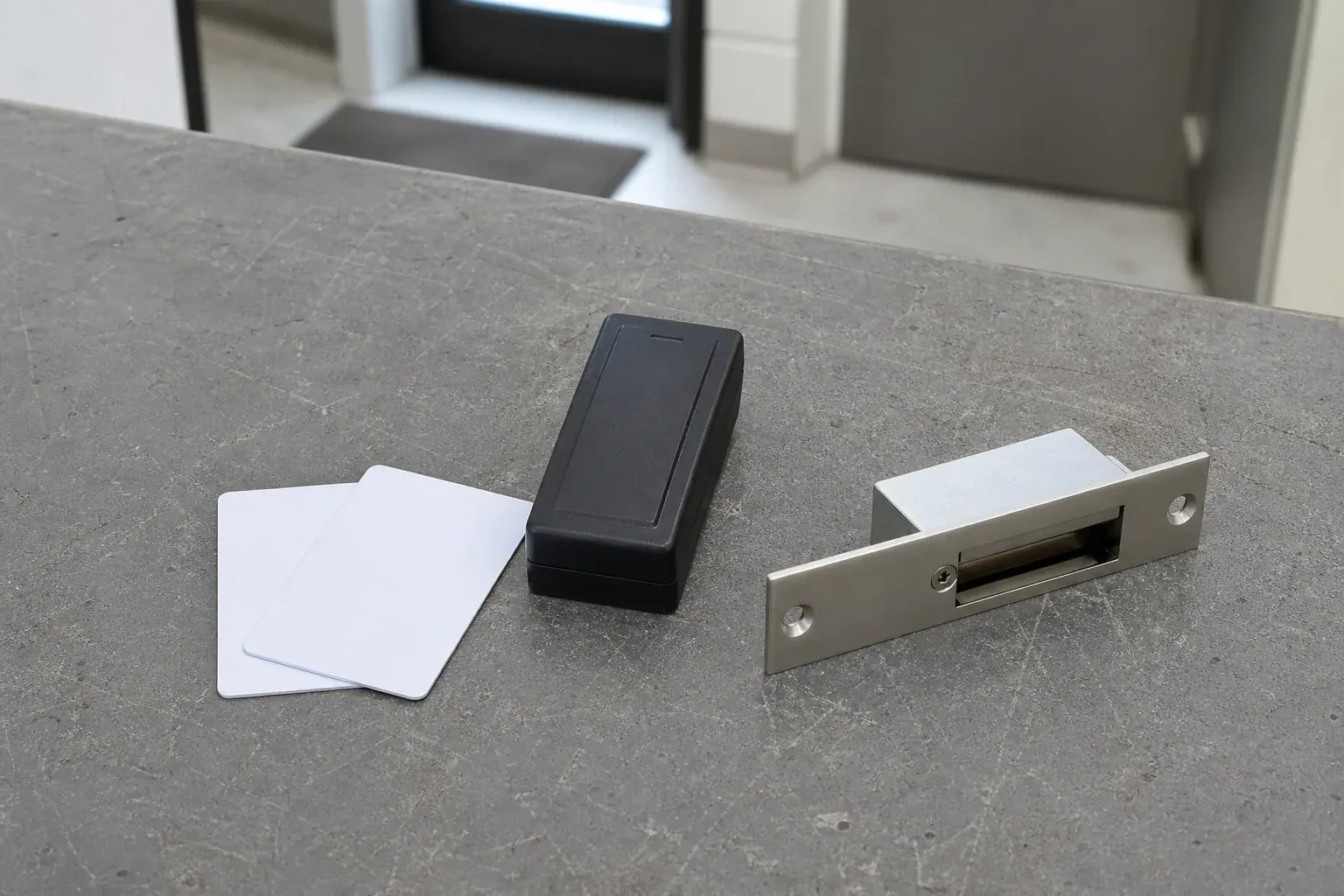
- Access Control InstallationThe team has grown past the point where one shared key still makes sense.
- Panic & Exit HardwareSomeone at the front counter always has to unlock the side door by hand before the lunch rush, because the round doorknob out there was never meant to be an exit for a room this size.
- Commercial-Grade Lock ReplacementHead office wants every branch keyed alike under one system, and half the locations are still running whatever lockset the original contractor happened to install years ago.