Commercial · Whitby
Commercial Rekeying in Whitby
Two people left over the summer and the keys they handed back came up one short.
In plain words
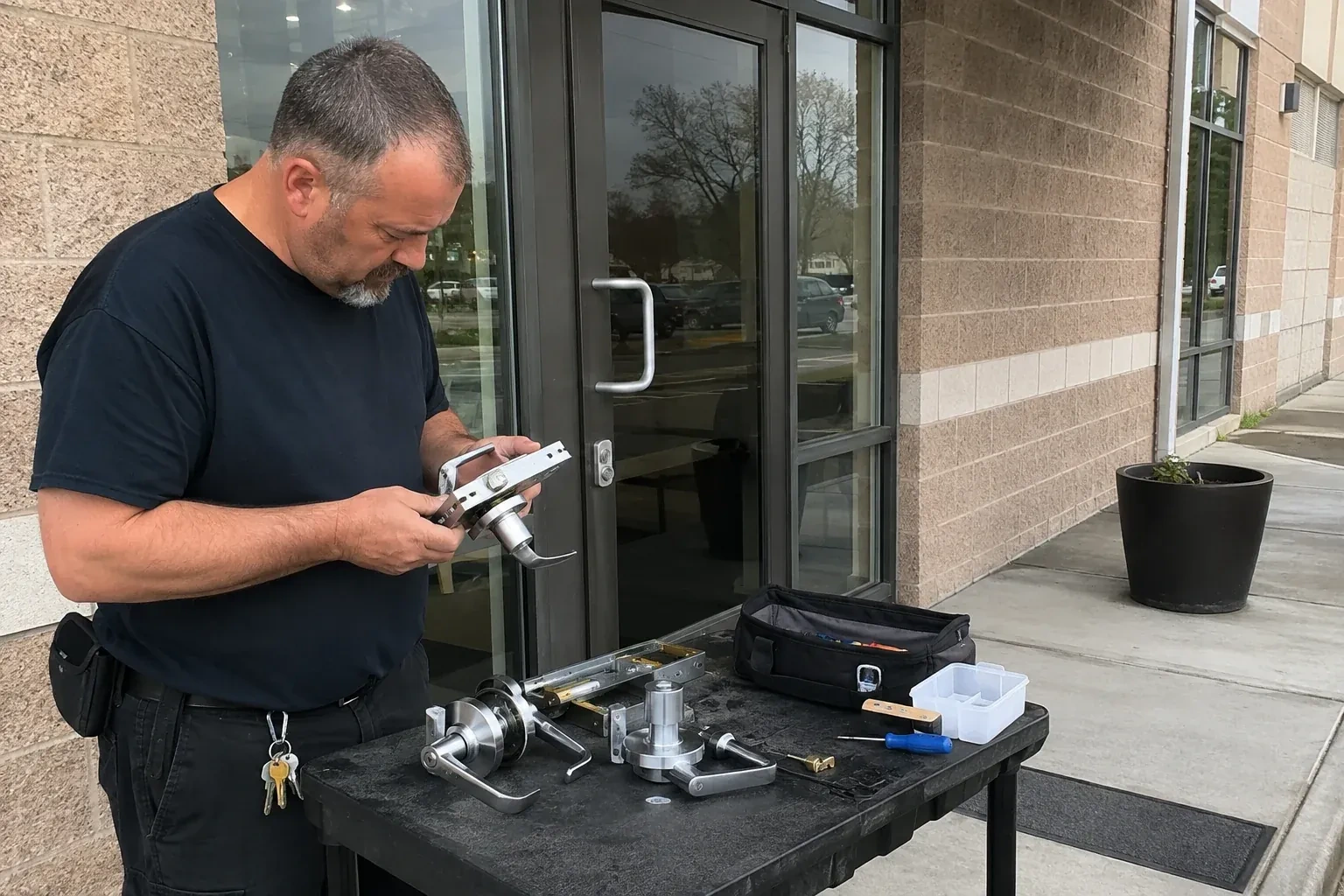
A commercial rekey is planned around the trading day. The locksmith agrees a window, often after close or before opening, and works door by door so the premises is never left without a locking entrance. Cylinders come out, are repinned at a bench in the van or on a counter, and go back in; interchangeable cores are simply swapped for freshly combinated ones. Each door is tried with both new and old keys before the next is started. New keys go to whoever opens up in the morning, and a written chart of doors and key groups stays with the manager.
How the visit goesA key turned up in the parking lot with the shop's name on its fob. It came back to you, which is lucky, but it means keys are leaving the building on rings you have never seen, and the shop's locks have not changed since opening day.
Commercial Rekeying
How the visit goes
Who is entitled to order the change
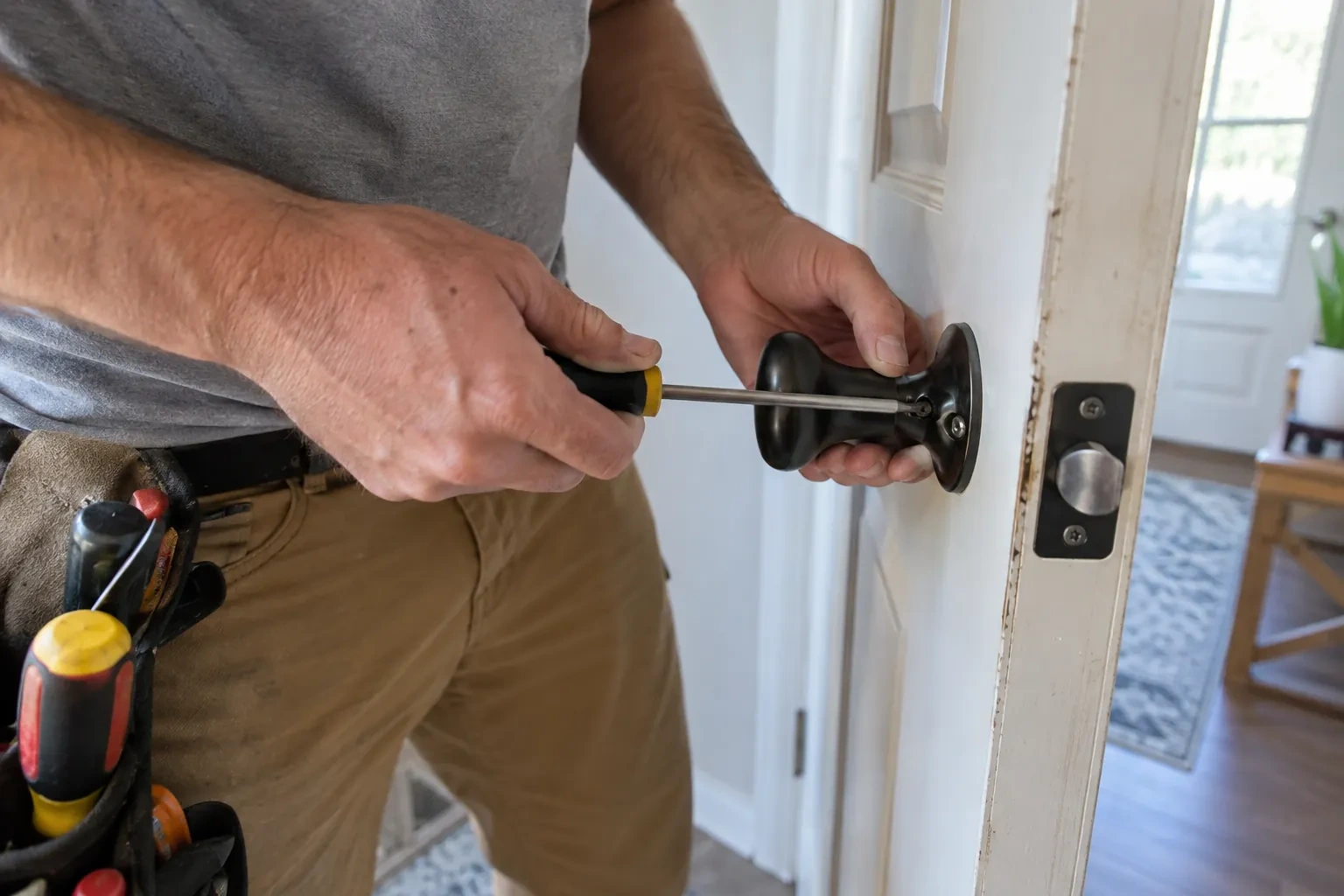
Every commercial rekey starts by confirming that the person asking for it has the standing to do so. For a small business that is usually the owner or a director; for a larger one, a facilities manager or property manager acting under written authority. The lease matters here too, because it decides which doors are the tenant's to alter and which remain the landlord's, and many leases ask that the landlord be given a key or told when locks change. Getting this straight before any cylinder comes out protects the business, its neighbours in the building and the locksmith, and it means the finished keying chart lands in the right hands.
Door by door, never a gap
The sequence agreed at the assessment is followed on the day. The locksmith finishes one opening entirely before beginning the next: cylinder out, repinned, refitted, tested with both the new key and the old, and locked again. Only then does the next door come apart. The main entrance is usually left for last and done while someone from the business is present, so there is never a moment when the premises has a door that will not lock. Staff who are working during the visit are handed their new key before the door they use is changed, and a short note goes to anyone off shift about where to collect theirs.
A keying chart in plain language
You leave the visit with a one-page chart that lists every opening by name, the key group it belongs to, the code stamped on that group's keys and how many were cut. It is written for the manager, not the locksmith: the stockroom is called the stockroom, and a glance shows that key group B opens the office and the cash room and nothing else. The bitting details that a locksmith needs to add a cylinder later are kept separately and securely. Pin the chart inside the manager's cupboard, keep a copy off site, and it becomes the reference every future key question is answered from.
Commercial Rekeying
In the van
Rekeyable padlocks
Cylinder removal and spanner tools
Key stamp set and tags
Mortise cylinder set screws and cams
Standard and restricted key blanks

Commercial Rekeying
What affects the quote
Interchangeable cores versus repinning
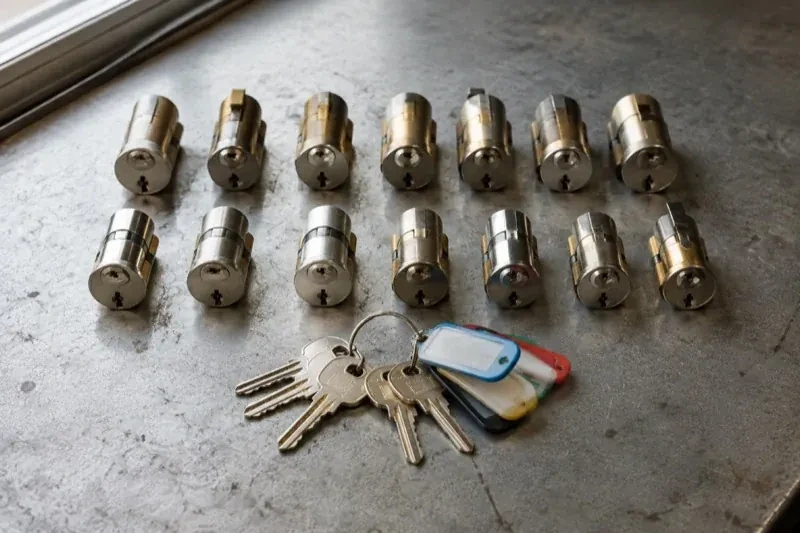
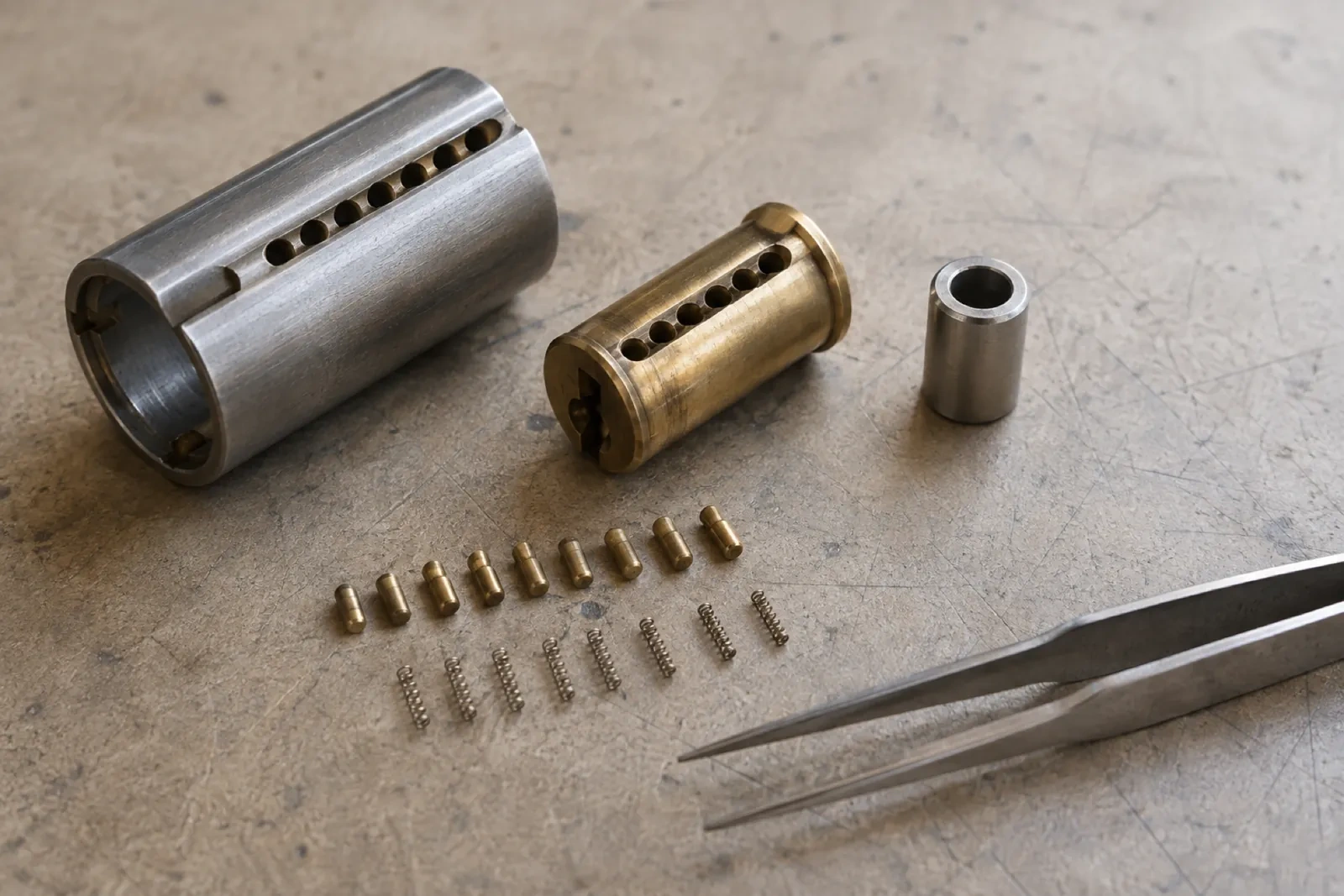
Cores swapped with a control key are the shortest work on site, while cylinders that must come apart on a bench take longer. Supplying spare cores for the manager to hold is priced as its own line.
Documentation and register
A keying chart, a key register and stamped codes on every key are part of a proper commercial rekey, and the quote names the paperwork so it is never skipped.
Padlocks, cabinets and mailboxes
Small locks add up. Each padlock repinned to the door key, each cabinet keyed alike and each mailbox cylinder replaced is listed on its own so you can decide what to include.
What to have ready
- Does your lease say anything about changing locks or giving the landlord a key?
- When is the premises quiet or empty enough for the work?
- Which staff need to open which doors on a normal day?
Commercial Rekeying: questions
QuestionsCan padlocks, cabinets and the mailbox go on the plan too?
Yes. Gate, cage and shutter padlocks that accept repinning can share the back-door key, and the locks on filing cabinets, drawers and display cases can be grouped so the people who work at them carry a single key while the manager holds a separate one. Mailbox cylinders are small and are usually swapped for new rather than repinned. Everything is entered on the chart, so one document covers the whole premises.
Can the aluminum storefront door on our unit be rekeyed?
Yes. The narrow stile of a storefront door houses a screw-in mortise cylinder secured from the edge, and it unthreads, is repinned and screws back in like any other. What the locksmith watches is the cam: it has to suit the hook or deadbolt mechanism inside the door and sit at the correct depth, or the bolt throws short. Weather-facing cylinders showing salt wear are pointed out so you can decide on replacement.
How often should a business change its keys as a matter of routine?
There is no fixed interval. Rekey on events rather than on a calendar: a key not returned, a lease change, a break-in, a renovation crew finished, or a key count that no longer matches the register. Businesses with a good register and a restricted keyway often go years between rekeys because nothing prompts one. A yearly check of the register against the keys on the hook is the habit that tells you when the time has come.
Related services
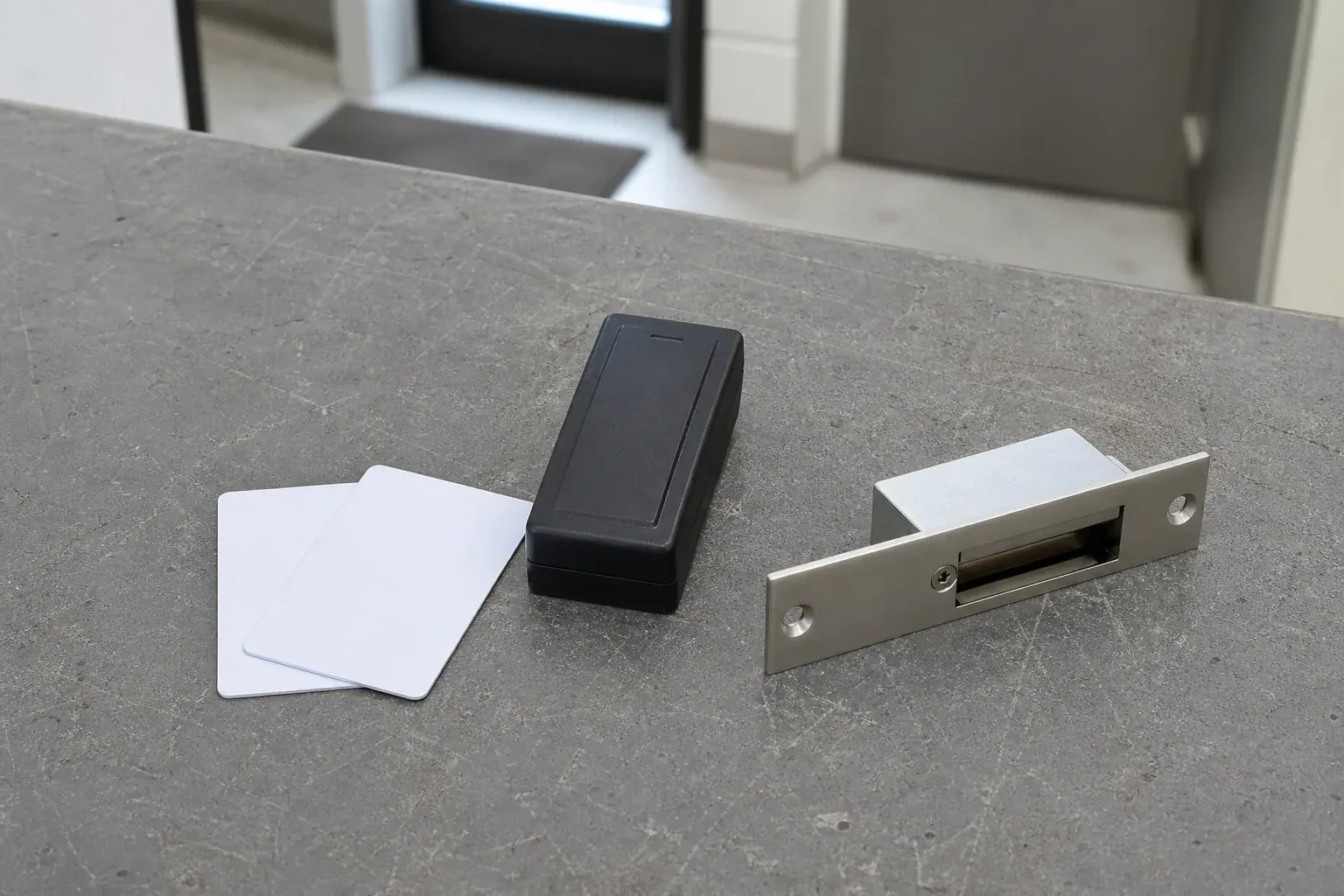
- Access Control InstallationThe team has grown past the point where one shared key still makes sense.
- Panic & Exit HardwareSomeone at the front counter always has to unlock the side door by hand before the lunch rush, because the round doorknob out there was never meant to be an exit for a room this size.
- Commercial-Grade Lock ReplacementHead office wants every branch keyed alike under one system, and half the locations are still running whatever lockset the original contractor happened to install years ago.