Lockouts · Whitby
Business Lockout Service in Whitby
The manager who holds the only set of office keys is on a plane.
In plain words
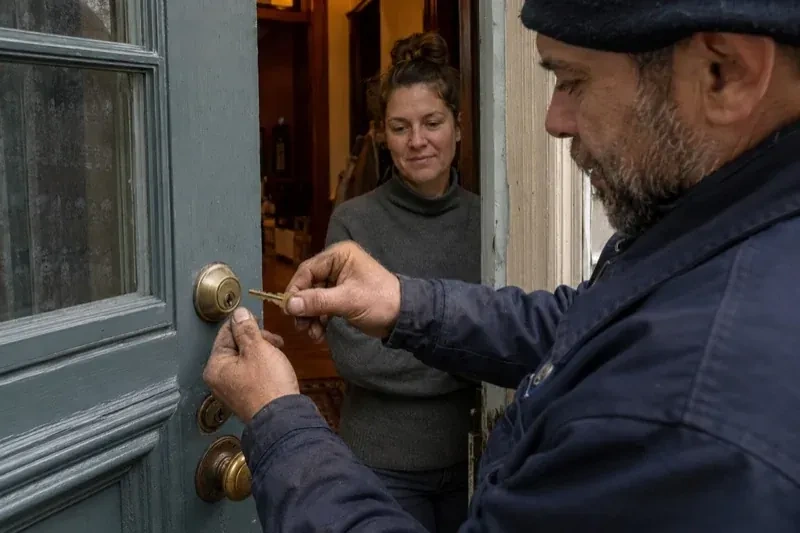
A locked business loses trading time, so the visit is arranged around getting people back to work. The locksmith opens the door first and settles the cause second: a snapped key is extracted and the cylinder checked, a lost key leads to rekeying while staff open up, a failed deadlatch spring is replaced before the door is trusted again. What matters as much as the opening is closing time. Every door worked on is locked and unlocked from both sides before the locksmith leaves, so the person doing the final walk-round that evening has no surprises and the premises are as secure as they were before.
How the visit goesAfter last night's power flicker the card reader beside the clinic door shows nothing. Fobs do nothing, the electric strike stays locked, and the small brass override key that came with the system is in a desk drawer on the far side of the door.
Business Lockout Service
How the visit goes
Alarm, reader and anything wired to the door
Before the door moves, the locksmith asks what will notice when it does. Is there an alarm with a contact on this door, who holds the code, and should the monitoring company be told to expect an entry? Is the door controlled by a card reader, keypad or intercom, and does it use an electric strike, fail-secure or fail-safe, or a magnetic lock, which releases? Is there a mechanical override cylinder and does anyone hold its key? Has the access-control provider got remote access to unlock it? These answers decide whether the opening is a phone call, a battery, an override key or conventional lock work, and they keep the security system intact afterwards.
Lever locksets and removable cores
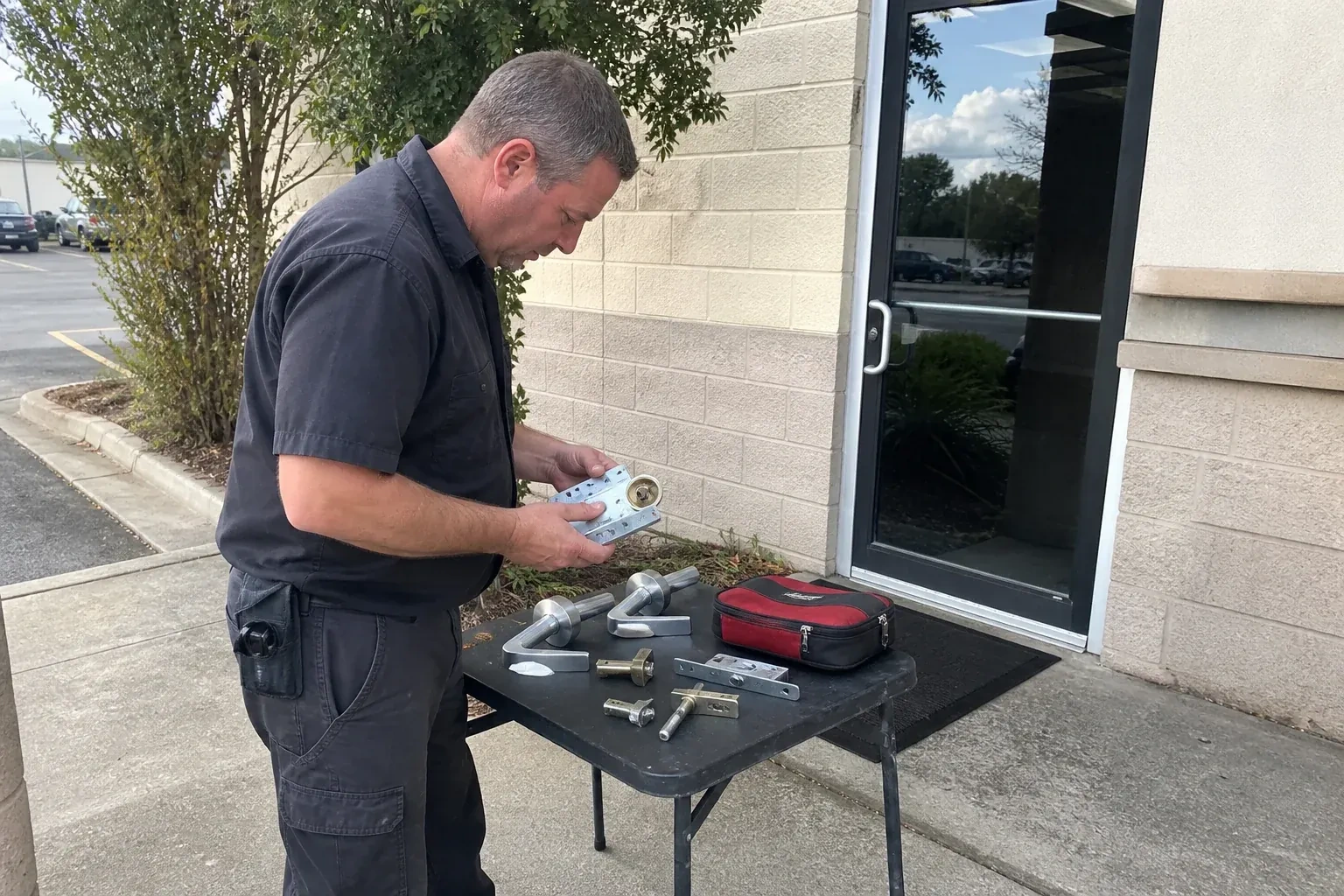
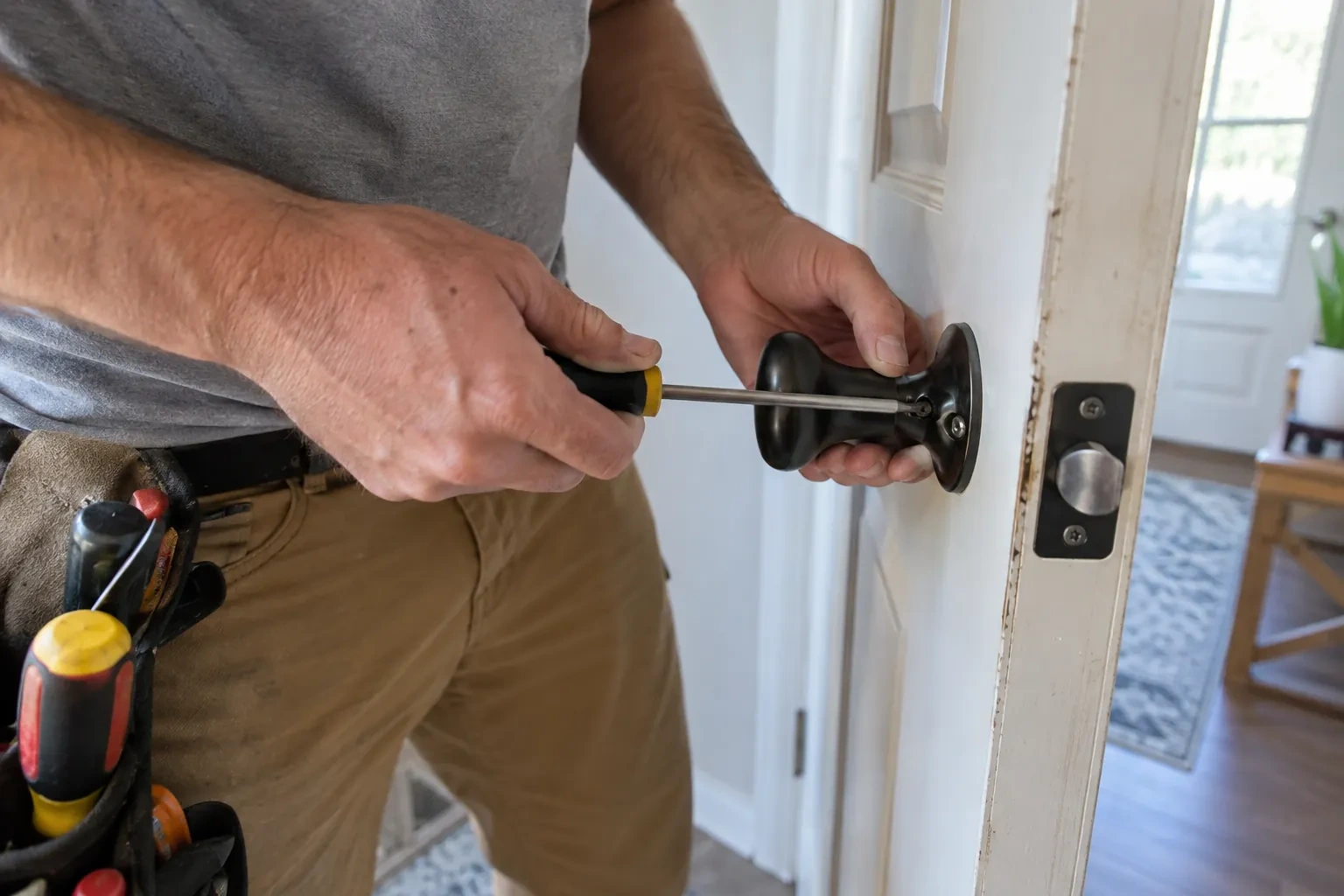
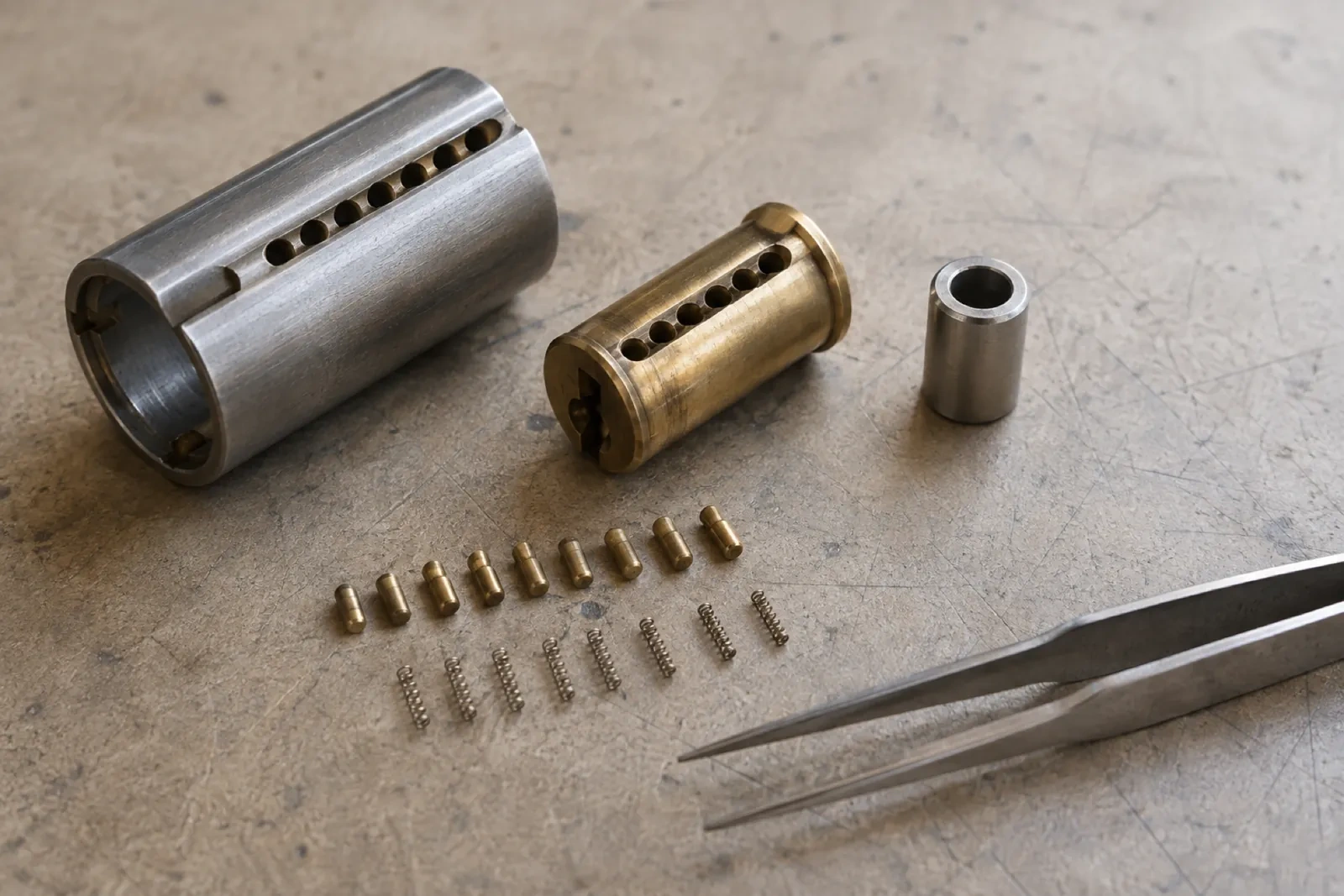
Office and back-of-house doors usually carry a cylindrical lever lockset in a storeroom function, locked from the outside at all times with the lever free inside. The latch has a deadlocking plunger, so the locksmith picks the cylinder in the lever face rather than reaching for a shim. In buildings with interchangeable cores, a control key held by the property manager or head office lets the small figure-eight core slide out and a temporary core go in, which is the gentlest opening there is. Where picking is not straightforward and no control key is available, the locksmith works through the lockset's own key-operated release path, then confirms the spring cage that keeps the lever level is seated correctly.
Access control back on its feet
When the lockout involved a reader, strike or magnetic lock, you leave with the system working as it was designed to. Power and backup batteries are restored, the strike or lock is confirmed to hold and release on command, and the reader accepts the fobs it should. Credentials belonging to people who have left are deactivated with the provider while everyone is thinking about it. The mechanical override key is the piece most businesses misplace; it should live with a named keyholder away from the door, not in a drawer inside. A short note of the controller's location and the provider's contact goes into the record for the next person who needs it.
Business Lockout Service
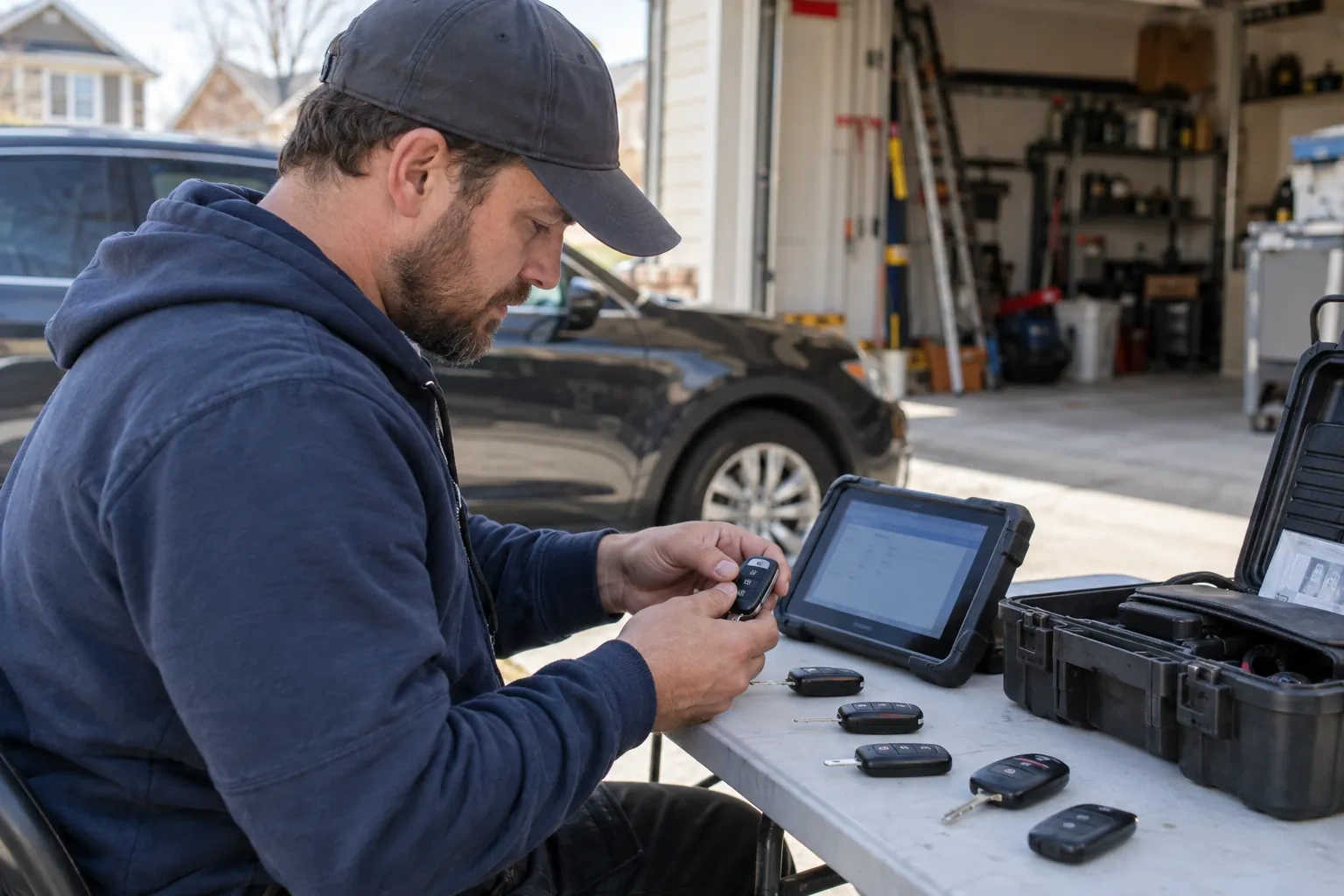
In the van
Key blanks and code cutter
Cylinder decoder and plug spinner
Interchangeable cores pinned to system
Strikes, pivot shims and closer adjustment tools
Storefront deadlatch and hookbolt bypass tools
Business Lockout Service
What affects the quote
Damage from earlier attempts
A paddle bent by a pry bar, a stile scratched by a screwdriver or a cylinder wrenched by pliers may need repair as well as opening, and the locksmith points out what was already there before quoting it.
Rekeying or swapping cores afterwards
Making a lost or unreturned key useless is separate work, priced per cylinder or per core, and the count of doors sharing that key decides how much of it there is.
Storefront, lever, mortise or exit device
An aluminium storefront cylinder, a cylindrical lever lockset, a full mortise lock and the trim of an exit device each take different tools and time to open, and the hardware on your door sets the starting point.
What to have ready
- Can you send a photo of the lock face and the edge of the door?
- Where are the keys: with an absent keyholder, lost, broken in the lock, or turning without effect?
- Are there other doors, a roll-up shutter, a gate or a padlock you also need opened?
Business Lockout Service: questions
QuestionsLast night the door would not lock either. Is that the same problem?
Sometimes, though a deadlatch that will not catch at closing and a bolt that refuses to withdraw at opening are different mechanisms, not automatically the same fault. A door dropped on its pivots or a cam slipped behind the cylinder can affect either one; a closer stopping short of the strike explains a latch that will not catch but not a bolt that will not retract. The locksmith checks each symptom on its own during the visit and tests the door closing under its own weight before leaving.
Can you open a door that has a push bar on the inside?
Yes. From outside, an exit device is operated through its trim, which may be a keyed lever, a pull with a cylinder or a bare rim cylinder. Depending on the trim fitted, picking or decoding that cylinder either retracts the latch directly or unlocks a lever, knob or thumbpiece that then has to be turned to let the latch go. The bar, rods and dogging feature stay as installed for the emergency way out, and the bar is pressed afterward to confirm it releases the latch with one push.
Do you work with our alarm company and access-control provider?
Yes, and it makes the visit smoother. The alarm station is told an entry is expected and the authorised person handles the disarm and password. For access control, the provider can often confirm the controller's status, unlock a magnetic lock remotely, or re-enrol fobs once you are inside, while the locksmith handles the mechanical side and the override cylinder. Nobody's wiring is cut; each party does the part it is set up to do.
Related services
- Broken Key ExtractionYou were locking up on the way out when the key broke in the lock.
- Break-In Damage Lock RepairThe shop's aluminum door has a bent meeting stile and the hookbolt is jammed half out.
- Seized & Jammed Lock OpeningThe key turns a full circle without any resistance and the deadbolt stays exactly where it is.