Lockouts · Whitby
Seized & Jammed Lock Opening in Whitby
The key turns a full circle without any resistance and the deadbolt stays exactly where it is.
In plain words
This service has a season here. The first wet fortnight of winter sends meltwater into keyways that freezes overnight, and doors on the north and shaded sides of a building stay iced the longest. Salt spray from driveways and walkways leaves a crust that thickens with every thaw. Then summer humidity swells wood doors until the bolt drags in its pocket. A jammed lock opening in these conditions means thawing without boiling water, flushing out salt, drying the cylinder, and dressing it with a lubricant that sheds moisture, along with a check of the door so the same weather does not jam it again next month.
How the visit goesYou are inside, the deadbolt is thrown, and the thumb-turn will not budge. It moved a little last week with some effort. Now the door you walk through every day is a wall, and you need it open.
Seized & Jammed Lock Opening
How the visit goes
The key in your hand
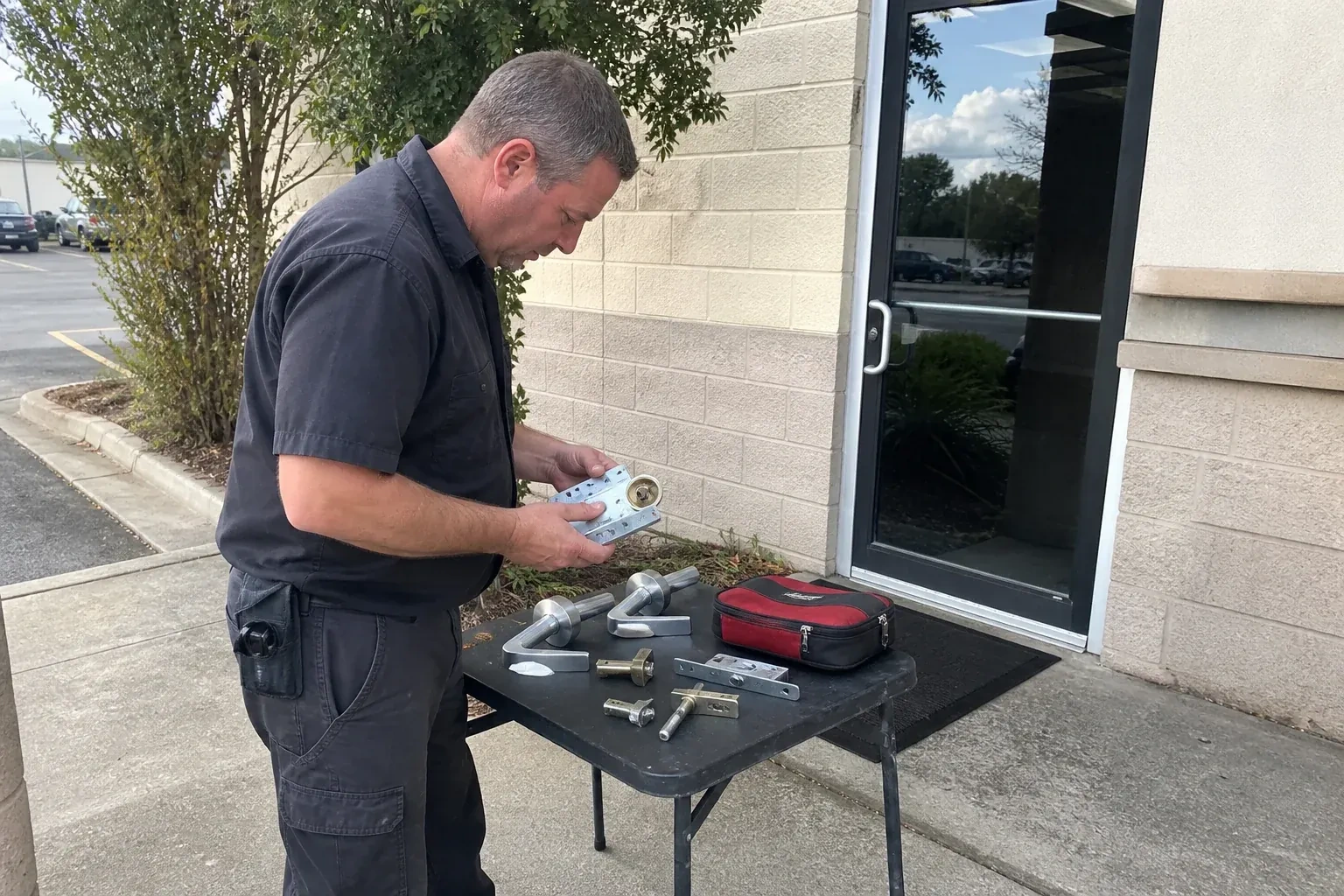
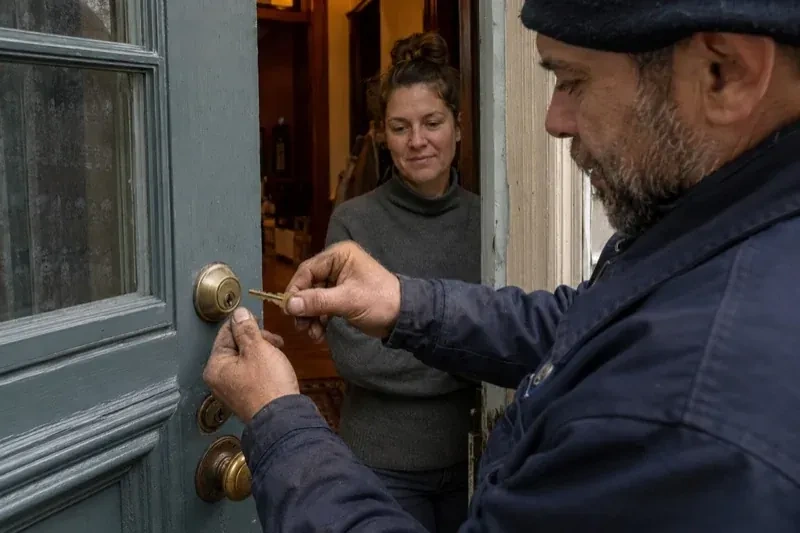
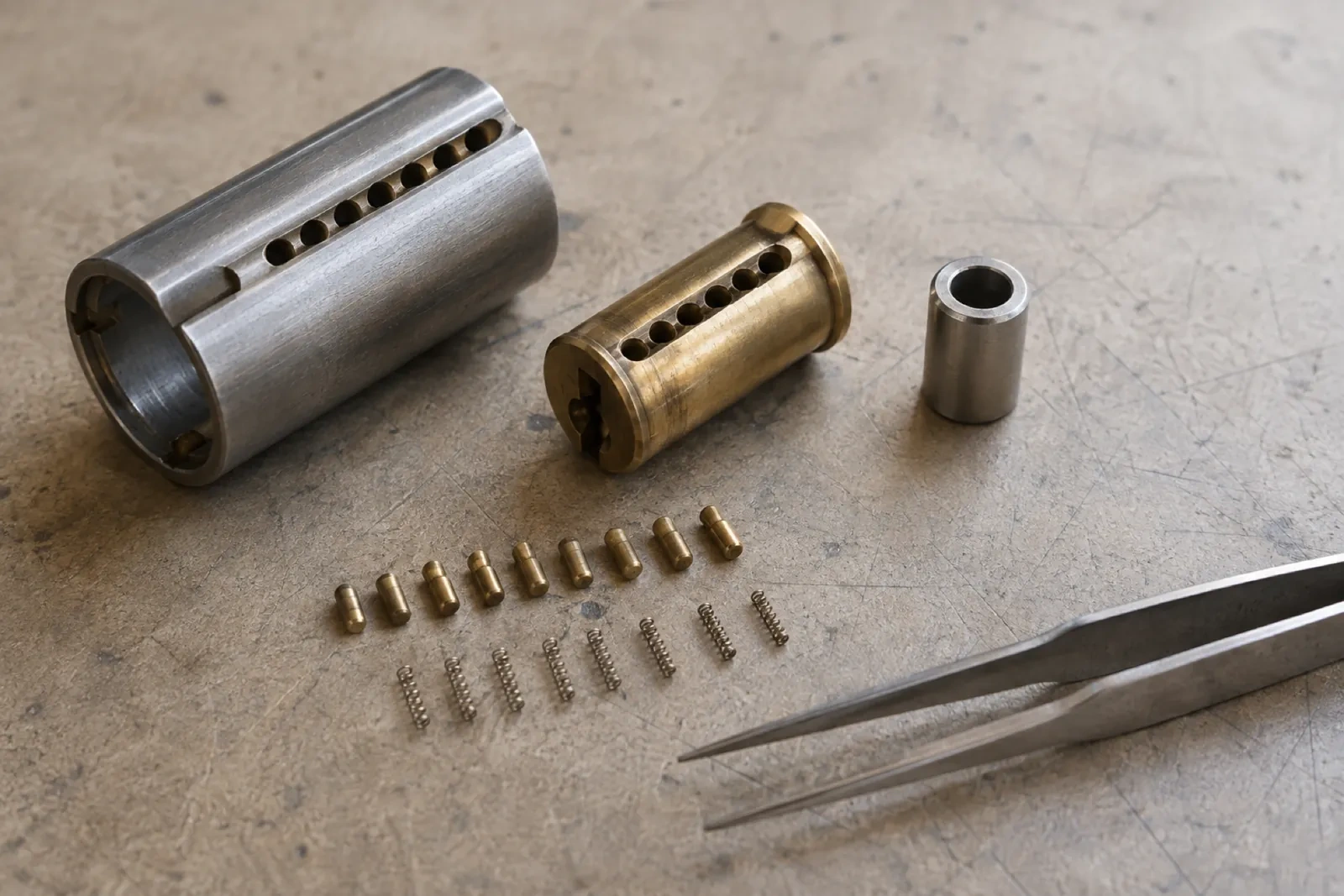
Before blaming the lock, the locksmith looks at the key. A key that has been copied from another copy several times drifts away from the true cuts, a worn key no longer lifts the pins to the shear line, and a bent key binds before it is fully seated. If an original or a rarely used spare exists, it is tried; a lock that opens with the spare has told you the problem. Some cylinders also retain the key until the plug is returned to its neutral position, and a key that seems trapped may simply be a plug that has not come back. A fresh key cut from the code is a common outcome.
Thawing ice and clearing salt
Ice is melted, never chipped. A lock de-icer or gentle warmth on the cylinder face turns the frozen meltwater back to liquid so it can drain, and the key is then worked until the plug turns. Boiling water is kept well away, because it refreezes inside and can crack cold brass. Salt crust is flushed out with contact cleaner and the plug is dried thoroughly before any lubricant goes in, since salt and moisture sealed under lubricant keep corroding. The cylinder is then dressed with the lubricant specified for that product, applied once everything is dry. If the weatherstrip has frozen to the door, that bond is released and the seal wiped.
Set up for the freeze-thaw months
After a winter jam the cylinder has been dried and dressed with a lubricant that sheds moisture, and you know the routine for the next cold snap. A keyhole cover or a storm door keeps meltwater out of an exposed lock. A tube of de-icer in the car or coat pocket is the answer to a frosted cylinder, and boiling water is never the answer. Rinse salt spray off hardware near a treated driveway or walkway when the weather allows. Doors on the shaded side deserve a check after the first hard frost, because they hold ice long after the sunny side has cleared.
Seized & Jammed Lock Opening
In the van
Replacement tailpiece or cam
Strike plate and hinge shims
Key blanks and code cutter
Replacement cylinder
Long hinge screws

Seized & Jammed Lock Opening
What affects the quote
The drive to you
Driving time is part of every call, and a property at the end of a long rural road is a different trip from one a few streets over.
Mortise and commercial hardware
Drawing a mortise case, replacing a hub or spring and regreasing the contact points is more involved than a cylinder service, and storefront and exit hardware are quoted accordingly.
Upgrades you choose on the spot
A keyhole cover, a storm door latch, a reinforced strike or a new deadbolt are optional extras some people add while the locksmith is there, each shown as its own line.
What to have ready
- Is there another door you can use in the meantime?
- Do you have identification, a lease or a management contact for the property?
- Has there been a thaw and freeze, or a stretch of humid weather, this week?
Seized & Jammed Lock Opening: questions
QuestionsCan a seized lock be opened without damaging it?
In most cases, yes. A bolt held by the door is freed by relieving the pressure on the door. A cylinder clogged with grit or ice is cleaned and thawed until it turns. A failed tailpiece is bypassed and replaced. The lock stays on the door with its finish and your existing keys. A plug or shell that is worn, damaged, or eaten through by corrosion or earlier forcing is what has to be replaced, and that is explained before any work starts.
Could a jammed lock mean someone tampered with it?
Occasionally, but wear and weather are far more common. Signs that point to tampering are fresh scratches around the keyway, a plug that sits crooked, or debris such as glue or a broken tool tip inside, none of which appear from ordinary use. The locksmith looks for these during the inspection and says plainly what was found. If the cylinder has been damaged that way, it is replaced and, if you wish, the other doors are rekeyed.
Can an old mortise lock in a century home be serviced rather than replaced?
Often, and keeping the original hardware is usually worth trying first, since it fits the door and suits the house, though condition and the availability of matching parts decide whether a repair is realistic. The case comes out of the door edge, the decades of dust and hardened grease are cleaned away, a broken spring or worn hub is replaced with a matching part, and the contact surfaces get fresh grease. If a bit key or a cylinder has worn, a new key is cut or the cylinder rebuilt.