
Commercial · Whitby
Master Key System Design
A property manager taking over a small commercial building inherits a shoebox of keys with no labels and no chart.
In plain words
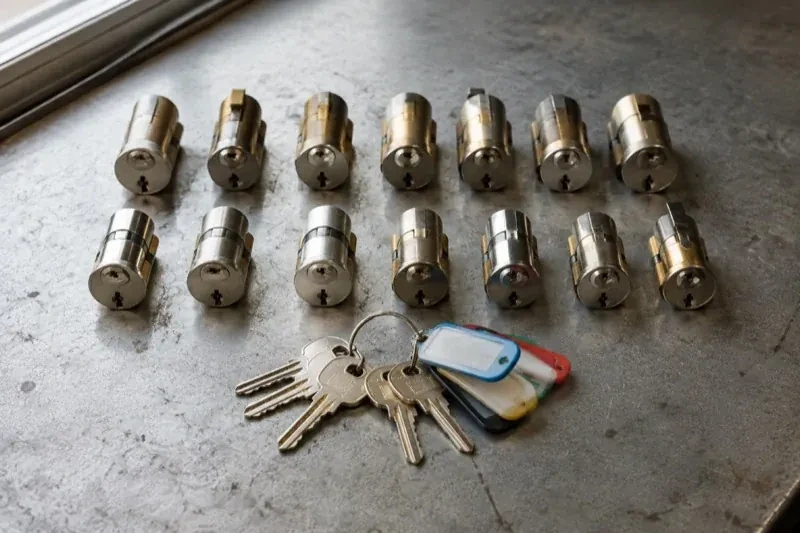
Many commercial properties end up with keys copied from other keys over years of staff changes, until nobody can say with confidence what a given key actually opens. Master key system design starts from the opposite direction: an approved list of roles and openings comes first, and the keying follows it. Doors that genuinely need to share access are grouped under a sub-master; doors that do not stay on their own key. Once the hierarchy is agreed, the cylinders are pinned to match it, tested lock by lock, and handed over with a plain record so the business always knows which key belongs where.
How the visit goesA self-storage operator wants the office, the tenant gate and the equipment shed on three different levels of access for staff, but every lock on the property currently answers to the same handful of interchangeable keys handed out over the years.
Master Key System Design
How the visit goes

Where a sub-master genuinely earns its place
Not every group of doors needs its own level. The assessment looks for places where a sub-master is a real convenience, such as a department, a floor, or a set of storage rooms used by the same small team, rather than adding levels for their own sake. A hierarchy with more levels than the business actually uses is harder to manage and easier to get wrong later, so this stage is as much about deciding what not to build as it is about what to include, before any pins are cut or any key blanks are ordered.
Fitting or replacing hardware to match the plan
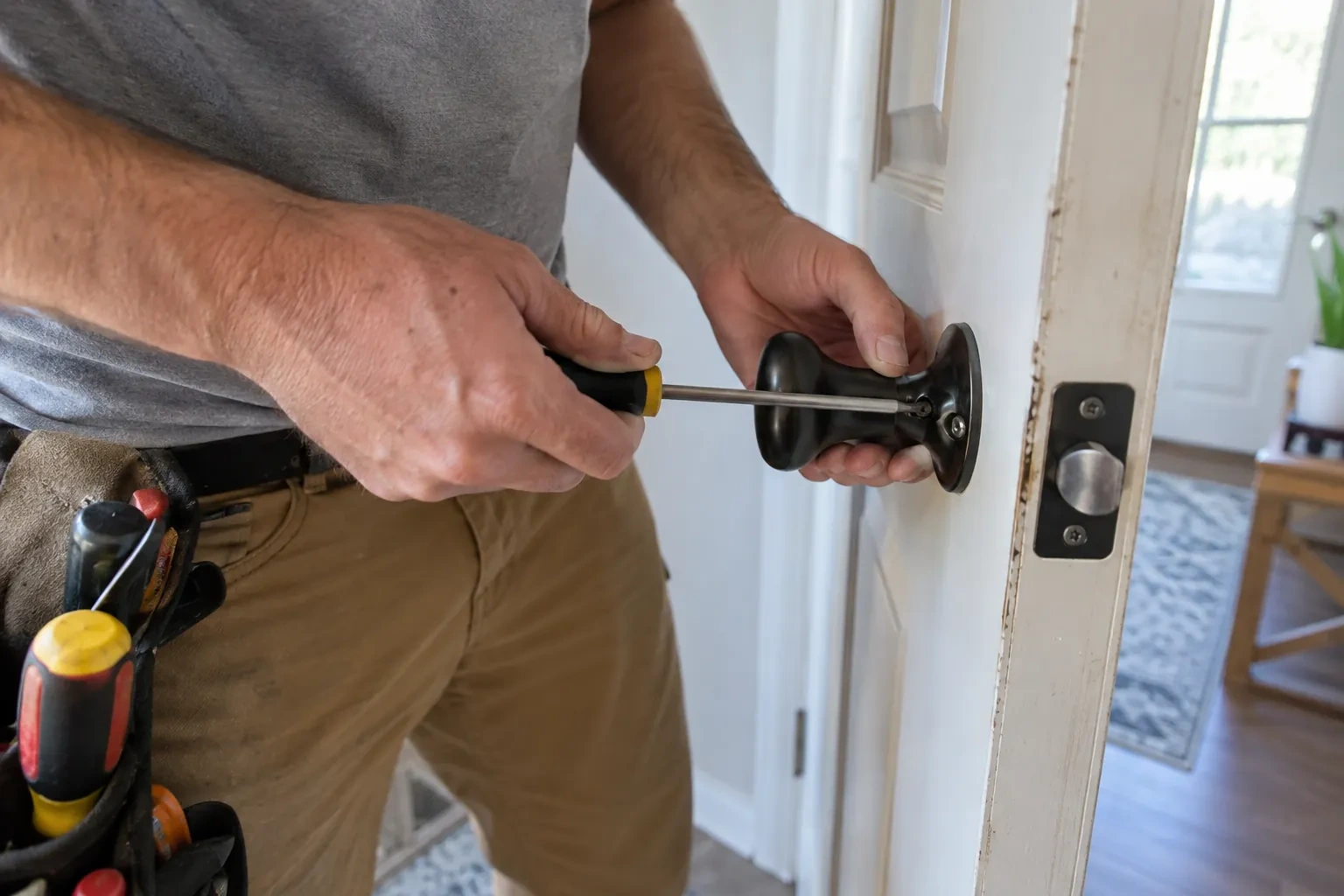
Cylinders that can join the new hierarchy without modification are pinned in place; those that cannot, whether because of age, a mismatched keyway or simple wear, are replaced with compatible hardware chosen to match the finish and function already on the door. Locksets on a barrier-free path of travel are fitted with lever or paddle-style hardware that can be operated with a closed fist, keeping those doors usable for everyone while still carrying their assigned level in the same hierarchy as the rest of the building.
Keys that say less if they go missing
The keys handed over are marked by role or level, not by door or address, so a key that is lost or set down somewhere it should not be tells whoever finds it very little about what it actually opens. Combined with a restricted keyway where one was chosen, this cuts the odds of an unauthorized copy, though the chart still shows that a lost top-level master reaches every cylinder it was cut to operate, which is why that level gets watched most closely.
Master Key System Design
In the van
Locking chart storage cabinet
Master pin kits
Cylinder decoders
Change and master keys
Restricted or standard key blanks

Master Key System Design
What affects the quote
Testing scope before handover
Testing every cylinder individually and then testing each master and sub-master across its full group takes time proportional to how many doors and levels exist. A larger hierarchy with more levels to verify against more doors adds to that testing time.
Whether hardware needs replacing for accessibility
Doors on a barrier-free path of travel need lever or paddle-style hardware rather than round knobs, so a property with several such doors that currently have incompatible hardware has more replacement work folded into the project than one already fitted with compliant hardware.
Number of doors and levels involved
A single office with one change key and no sub-master is a simpler project than a multi-floor property with several departments and a top-level master. The quote reflects how many doors are assessed, how many levels are designed, and how many cylinders are pinned to match those levels.
What to have ready
- Is a top-level master needed, and for how many people?
- Do any doors need restricted or patented keys for duplication control?
- Roughly how many doors need to be part of the system?
Master Key System Design: questions
QuestionsCan a master key system be expanded later without redesigning it?
Usually yes, if spare capacity was planned into the keying platform from the start. A new hire is normally handed a copy of the bitting their role already calls for, and a realistic new door can be pinned to accept a combination already reserved for that purpose. A system pinned to its absolute limit on day one has less room to grow, and adding a level to existing doors later can mean repinning cylinders that are already in daily use.
What does key control actually mean?
It means knowing, at any time, how many keys exist for a given door or level, who holds each one, and how a new copy would be authorized. A master key system supports key control by design, since keys are marked by role, logged by serial, and cut only against the chart, rather than copied informally whenever someone asks for one.
What should I have ready before the assessment visit?
A rough list of who currently has access to which doors, any existing keys or cylinders you can point to, and a sense of upcoming changes such as new hires, a department split, or a unit due to open. None of this needs to be exact; the assessment is partly built around confirming or correcting whatever the business already assumes about its own access.
Related services
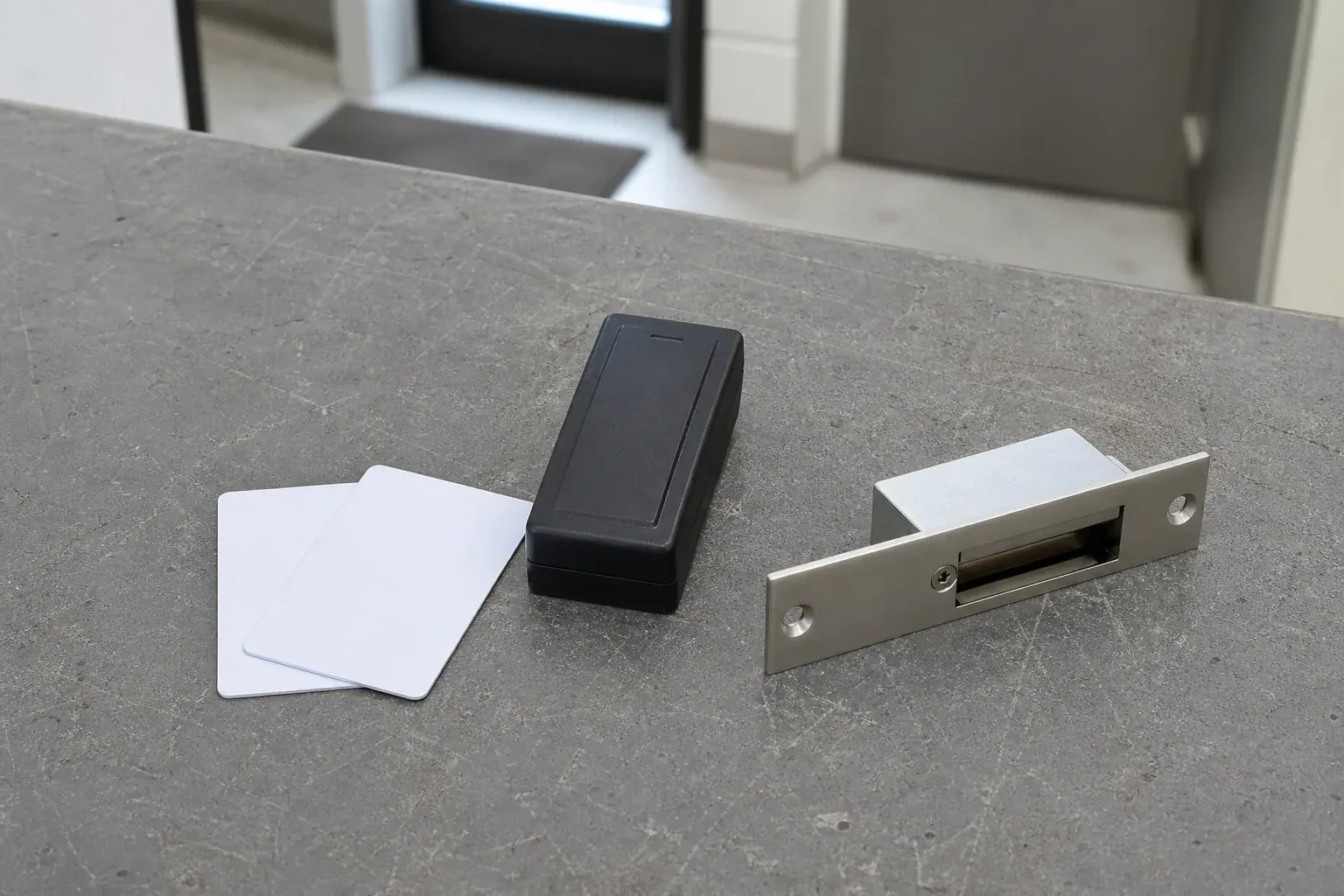
- Access Control InstallationThe team has grown past the point where one shared key still makes sense.
- Panic & Exit HardwareSomeone at the front counter always has to unlock the side door by hand before the lunch rush, because the round doorknob out there was never meant to be an exit for a room this size.
- Commercial-Grade Lock ReplacementHead office wants every branch keyed alike under one system, and half the locations are still running whatever lockset the original contractor happened to install years ago.