Lockouts · Whitby
Home Lockout Service
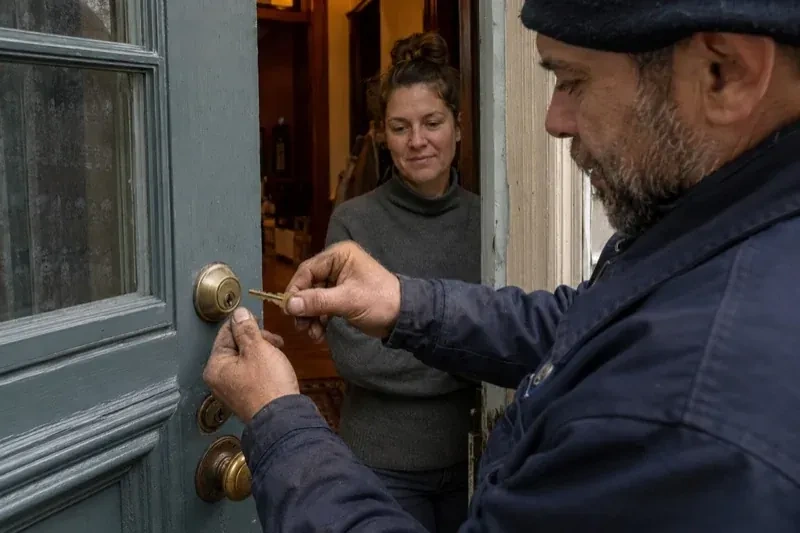
It is minus fifteen, the wind is coming across the driveway, and the key will only go halfway into the deadbolt.
In plain words
Winter creates its own kind of lockout. Meltwater runs into a keyway during the day and freezes overnight, a weather-exposed cylinder stiffens in the cold, and a door that shrank in January may drop its bolt out of line with the strike. A home lockout visit in these conditions is as much about the door as the lock: the locksmith thaws and frees the cylinder without forcing it, checks whether the bolt or the frame is the real obstacle, and opens the door in a way that leaves the hardware sound. A little dry lubricant and a tube of de-icer usually finish the job.
How the visit goesAfter a week of humid weather the back door has swollen in its frame. The key turns, you can feel the bolt trying to move, but it is jammed hard against the strike plate and the door refuses to open.
Home Lockout Service
How the visit goes
Anything already damaged, and anyone inside
Two practical questions round out the first look. First, has anything been tried already? A bent latch from a credit card, a scratched cylinder from a screwdriver, or a previous locksmith's drill mark all change the approach, and the locksmith notes them so you know what was there before work began. Second, is anyone or anything inside that changes the pace: a child napping, a pet, a stove left on, a running tap? That answer sets how the opening is sequenced and whether the most careful method or the most direct one comes first. Both questions take moments and make the rest of the visit calmer.
Relieving a bound door
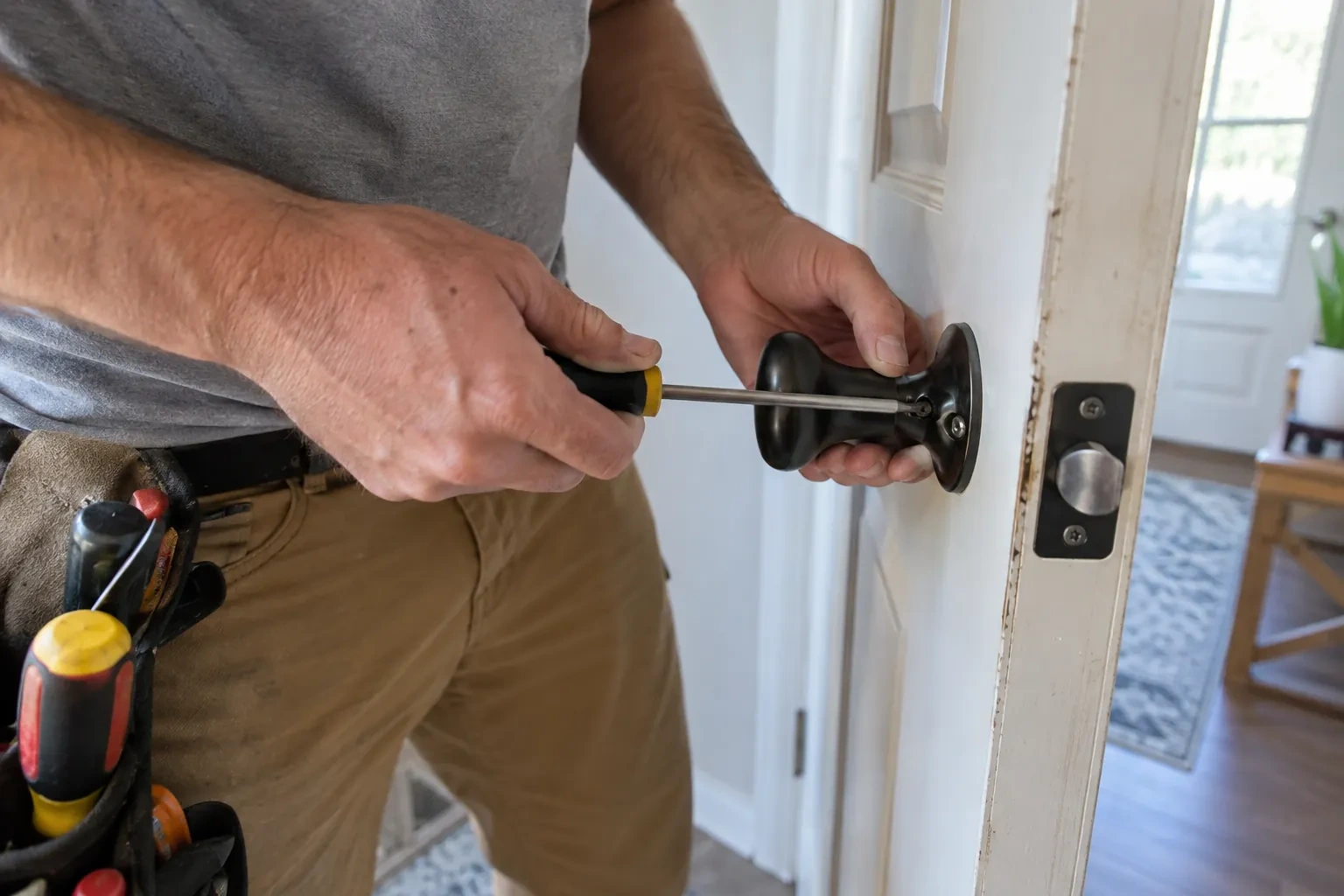
When the bolt is jammed against the strike because the door has swollen or sagged, picking achieves nothing until the pressure comes off. The locksmith lifts or leans on the door to bring the bolt back into line with its pocket while the key or pick turns the cylinder, and the bolt slides home. With the door open, the cause is addressed so it does not lock you out again: tightening or shimming a hinge that let the door drop, dressing the strike pocket so the bolt has room, or trimming a weatherstrip that pushes the door out of square. The lock was never the problem; the door simply moved around it.
Ready for the next cold snap
After a winter lockout you leave with a cylinder that has been dried and dressed with a moisture-shedding lubricant, and usually a small tube of lock de-icer for the glove box or coat pocket. Keeping the storm door closed shields the main lock from freezing rain, and a simple keyhole cover on an exposed side door stops meltwater getting in during a thaw. If the door itself was frozen to its seal, the weatherstripping has been cleared and a light silicone wipe on it stops it bonding to the door again. These small habits carry most households through a whole season of freeze and thaw without another stuck morning.
Home Lockout Service
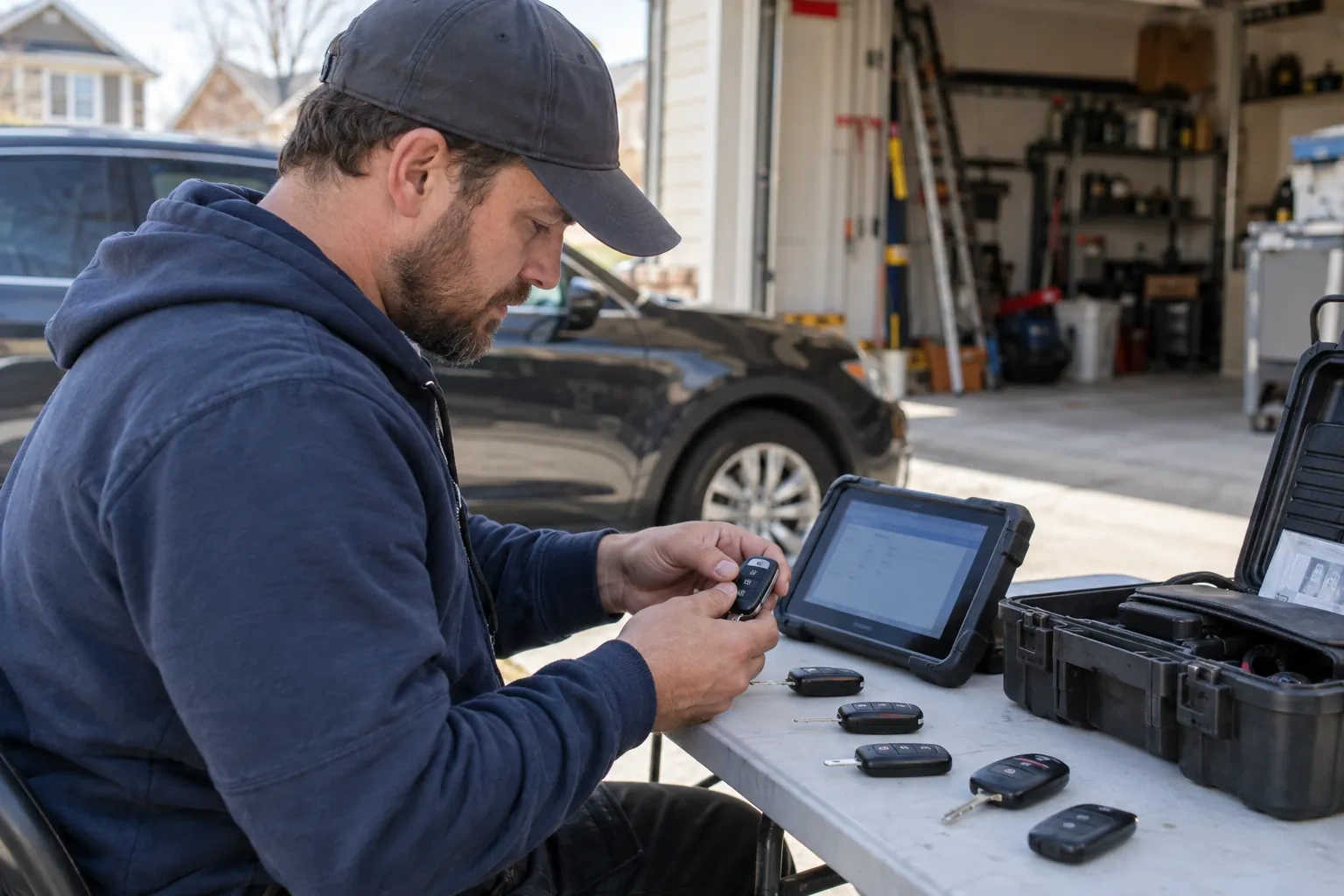
In the van
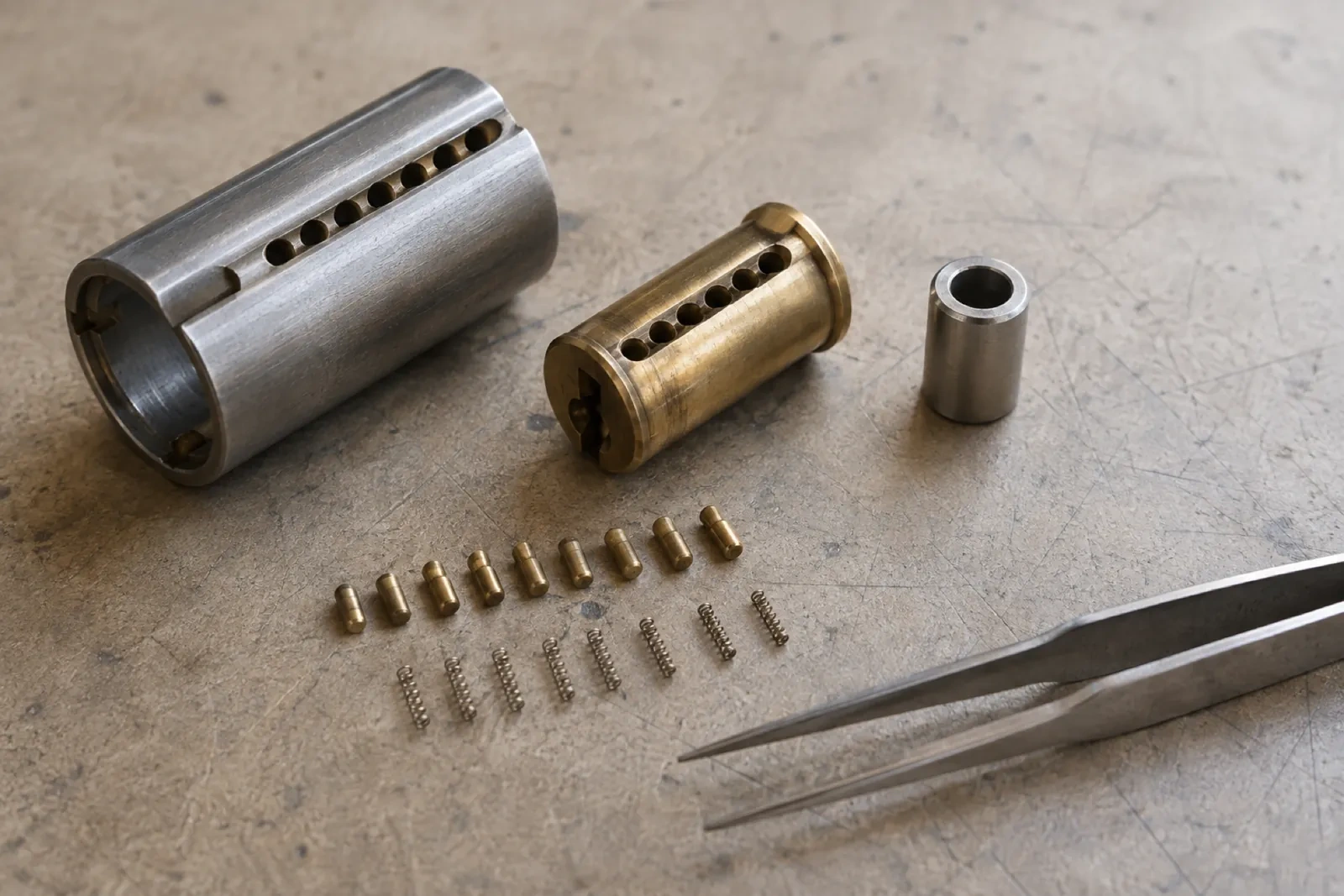
Cylinder decoder
Plug follower and repinning kit
Key blanks and key cutter
Plug spinner
Broken key extractors
Home Lockout Service
What affects the quote
Restricted or high-security keyways
Security pins, sidebars and patented keyways take longer to open and, if replaced, cost more as hardware than a standard cylinder. Restricted keys also have to be cut from the system's records rather than duplicated.
Type and grade of the lock
A builder-grade knob latch, a residential deadbolt, a mortise case in an older home and a high-security cylinder each take different tools and different amounts of time to open, and that difference shows in the quote.
Number of new keys cut
Keys cut on site are counted into the quote individually. Two for a couple, five for a family with teenagers and a dog walker: say how many you want and the total follows.
What to have ready
- Is the key inside the house, lost, broken in the lock, or turning without opening?
- Is anyone, including a child or pet, inside the home right now?
- Do you have photo identification with you, or is it inside?
Home Lockout Service: questions
QuestionsMy lock is a high-security model. Can it still be opened?
Yes. High-security cylinders with security pins, sidebars or restricted keyways are designed to slow an intruder, and they do slow a locksmith too, but they open with the right technique, a decoder made for that keyway, or as a last resort a precise drill through the cylinder followed by a like-for-like replacement. Bring any key card or code card that came with the lock, since restricted keys are cut from those records rather than copied.
What should I have ready when I call about a lockout?
The address and which door you are outside of, what kind of lock is on it as far as you can tell, and where the key is: inside, lost, broken or simply refusing to turn. Mention whether the door is a rental, whether anyone is inside, and whether the lock is electronic. If you have photo identification on you, say so; if not, say that too so the verification route is agreed before the locksmith arrives.
Is a double-cylinder deadbolt a good idea after a lockout?
A deadbolt keyed on both sides is sometimes suggested for doors with glass beside them, but on a main escape door it means finding a key to get out. A door people use to leave the home should open from the inside without a key or special knowledge, especially in an emergency. A single-cylinder deadbolt with a thumb-turn, paired with a reinforced strike and a proper glass film if needed, keeps both security and a clear way out.
Related services
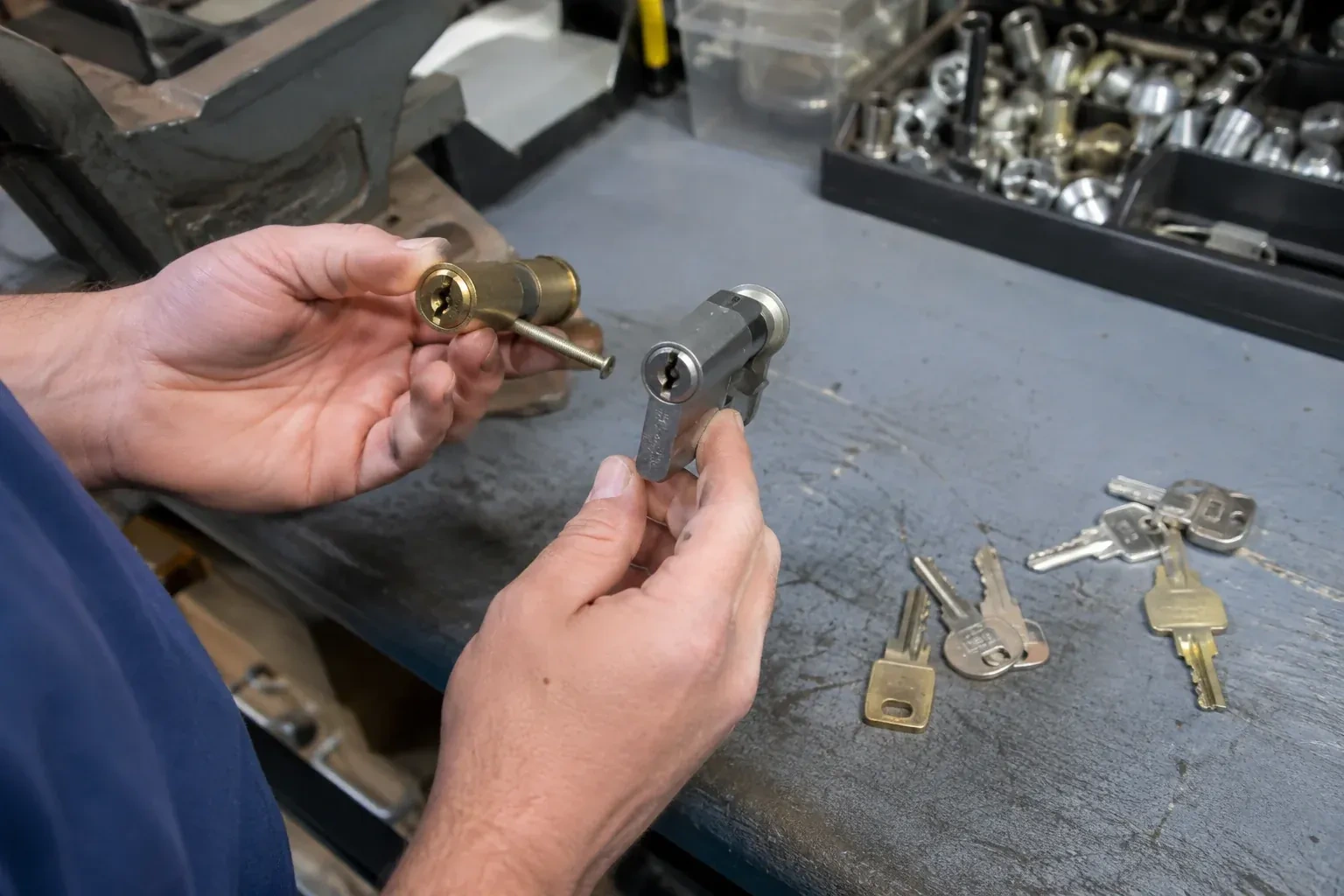
- Broken Key ExtractionYou were locking up on the way out when the key broke in the lock.
- Break-In Damage Lock RepairThe shop's aluminum door has a bent meeting stile and the hookbolt is jammed half out.
- Seized & Jammed Lock OpeningThe key turns a full circle without any resistance and the deadbolt stays exactly where it is.