Car keys · Whitby
Spare Car Key Duplication
One key opens the car, starts the car, and rides in one pocket every day.
In plain words
Most vehicles on the road pair a cut metal blade with an invisible electronic layer, a chip in the head that the immobilizer checks before the engine is allowed to start. Duplicating a spare means reproducing both halves, not just the shape of the blade, so the process depends on what year and system the car actually uses. An older mechanical key copies directly from the blade on a duplicating machine. Transponder and remote-head keys add a chip that is copied or freshly coded through the vehicle's diagnostic connection. Proximity fobs add pairing over radio, and every path ends with a second key that starts the car.
How the visit goesThe proximity fob has ridden in a pocket for years, the range feels shorter than it used to, and a dashboard warning mentioned a battery a while back. Nobody has sorted out what happens on the day it finally goes dark.
Spare Car Key Duplication
How the visit goes
Locating the right blank
A correct spare starts with the correct blank: the same blade profile as the original, and where relevant the same shell shape for a remote head or proximity fob so the buttons and battery compartment line up. Aftermarket blanks exist for most common platforms, while a less common or very recent model sometimes calls for a shell sourced specifically for that vehicle. Getting this step right avoids a mismatch discovered only after cutting has begun, and it is one of the reasons the vehicle's year, make and model are confirmed early rather than assumed from the look of the current key.
Matching a remote head or fob
When the original carries buttons for locking, unlocking or remote start, the new key or fob is programmed to the vehicle's receiver so those same functions respond from the spare. This usually means putting the vehicle into a programming sequence from inside the cabin, then pressing the new remote's buttons in the order the manufacturer specifies. Some platforms allow this through the doors and ignition alone; others need the diagnostic port involved as well, particularly when the remote functions are tied into the same module that manages the immobilizer, so the two steps happen together rather than separately.
Caring for the new key
A freshly cut blade benefits from being wiped clean of any cutting residue and given a light turn in each lock it is meant to open, which also confirms nothing was missed during testing. A new fob's battery is fresh from the visit, but it is worth noting the battery type on a label or in a phone note so a future replacement does not mean guessing at the hardware store. Keeping the spare's ring separate from a bunch of house keys also reduces wear on the blade from constant jostling against harder metal edges.
Spare Car Key Duplication
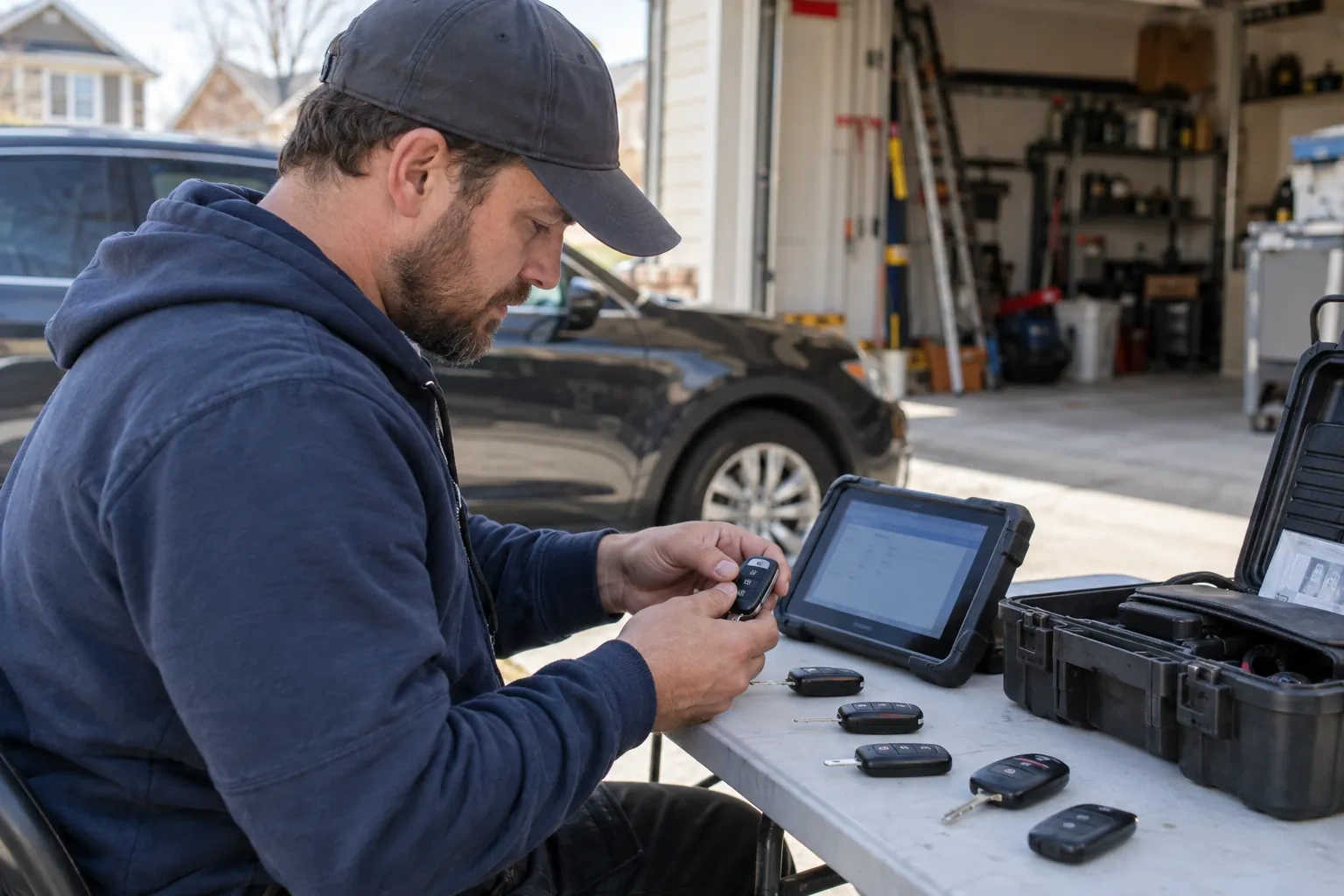
In the van
Chip cloning tool
Code-cutting machine
Proximity fob shell
Key blank matched to blade profile
Transponder chip
Spare Car Key Duplication
What affects the quote
Whether remote functions are included
A spare limited to the blade and chip that unlock and start the vehicle involves less programming than a full match of every remote button the original carries, and the quote follows whichever is chosen.
Choosing a limited-function spare
A simplified key built for a valet or a specific driver, without every remote feature the primary key carries, generally involves less programming than matching every function exactly.
Matching two vehicles to one key
Bringing a second vehicle onto the same key, when the two lock systems are compatible, takes more identification and testing than producing a spare for a single car alone.
What to have ready
- Is the vehicle registered to you, or to someone else?
- Do you currently have one working key, or more than one?
- Has the vehicle had an aftermarket alarm or remote starter installed?
Spare Car Key Duplication: questions
QuestionsHow is the electronic chip handled during duplication?
Where the transponder supports it, the chip in the working key is read and its data cloned onto a fresh chip, sometimes with vehicle-specific data pulled from the car to help. Where cloning is not supported for that particular vehicle and chip, the locksmith instead connects through the diagnostic port and has the car's own security module enrol a freshly coded chip as a new, independently authorized key.
Is cloning the same as programming a new key?
They solve the same problem differently. Cloning copies the working key's existing code onto a new chip, which some vehicles' systems permit directly. Programming instead has the vehicle itself learn a brand-new code and accept it as an additional valid key, which is how most recent vehicles with rolling codes or added cryptography are handled, since their systems are built specifically to resist straightforward copying.
Can spare keys be made for older vehicles without a chip?
Yes, and it is usually the most straightforward version of this service. A vehicle old enough to use a plain mechanical key has no chip to read or program, so the whole job is cutting a matching blade, either traced from the original or cut to code, and testing it in every lock the first key opens.
Related services
- Car Key ReplacementThe car is yours now, but somebody else still holds a key to it.
- Key Fob ProgrammingA replacement fob just arrived in its box, shiny and untouched.
- Transponder Key ProgrammingThe car came with a single key when the sale went through, and that key is the only thing standing between the household and being stranded.