Commercial · Whitby
Commercial Rekeying
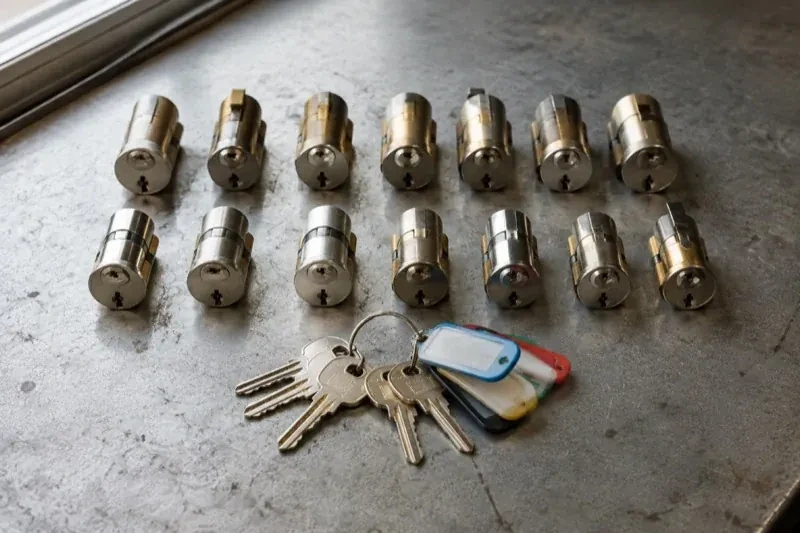
Two people left over the summer and the keys they handed back came up one short.
In plain words
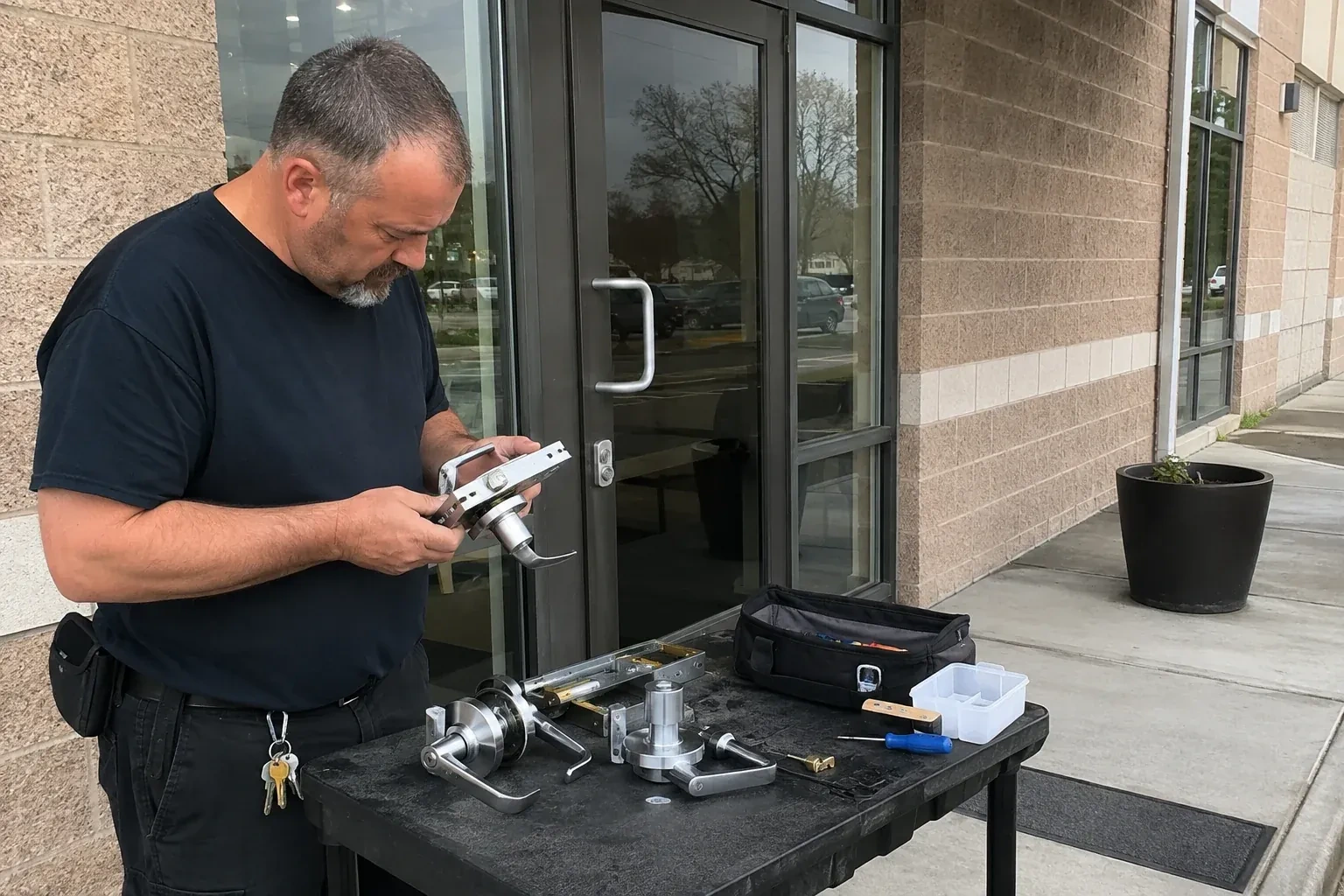
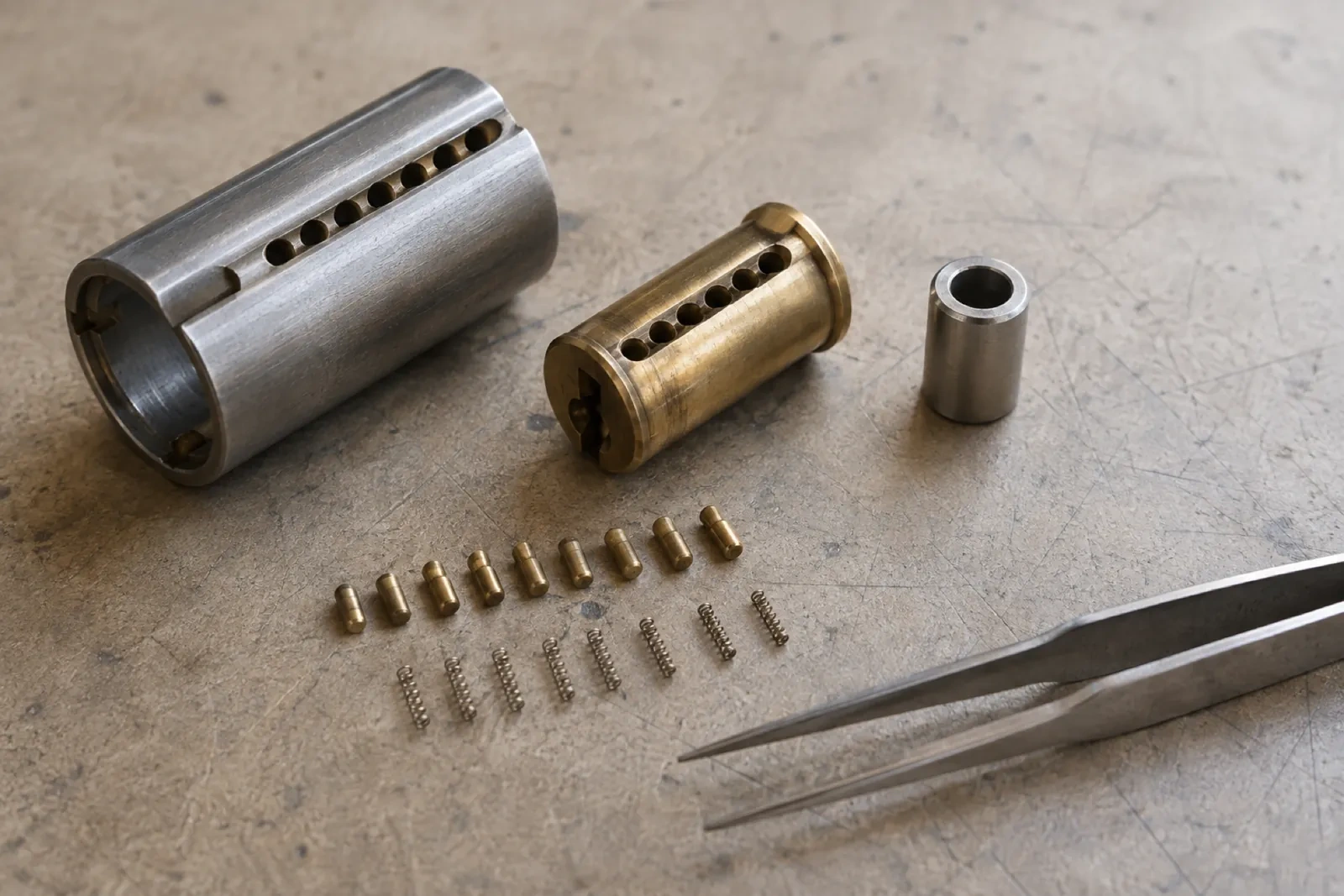
Commercial rekeying changes the pins inside a business's existing lock cylinders so that a new key operates them and every earlier key stops working, while the hardware itself stays on the door. The locksmith works from a list of the openings the business controls and the people who need to pass through each one, sets the cylinders to fresh combinations, cuts keys to match and records which key opens which door. Because nothing is replaced unless it is worn, a whole premises can be brought back under control in one scheduled visit, with the doors locking and unlocking exactly as before but answering only to keys you have counted.
How the visit goesThe drawer behind the counter holds a tangle of keys with tape labels: front old, side, Dave. Some open things, some open nothing, and the hardware-store copies mean the true count drifted long ago past anything written down.
Commercial Rekeying
How the visit goes
Cores and restricted keys already on site
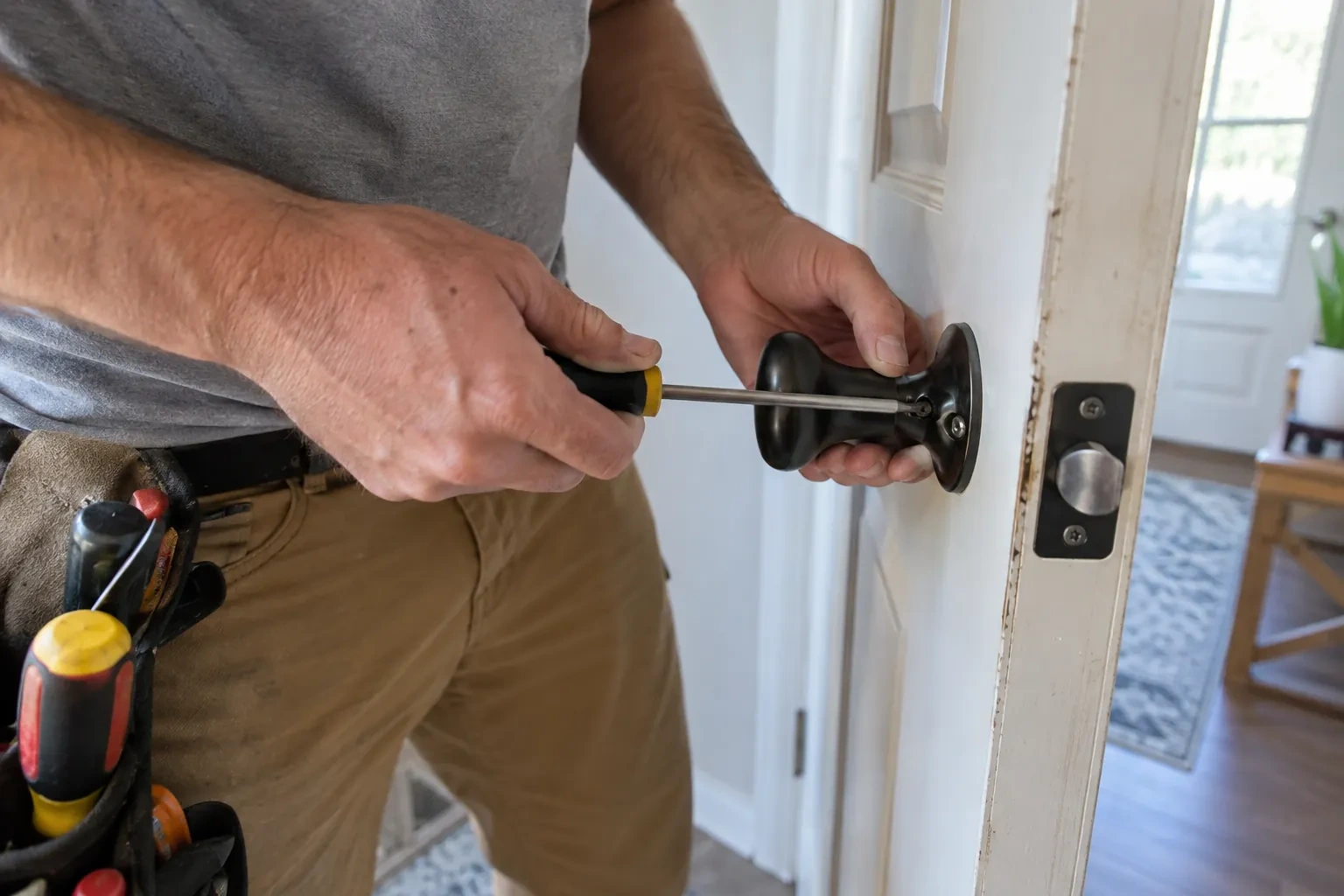
Some businesses already have more key control than they realize. Figure-eight shaped cores in the levers point to an interchangeable core system, which means a control key somewhere removes the core without unscrewing anything; finding out who holds that control key, or whether it left with a former manager, shapes the whole job. Keys with an unusual profile or a stamped number may belong to a restricted keyway whose blanks are only supplied against a signed letter of authorization, and the locksmith asks who the signatories are. Knowing what is already in place lets the new plan build on it rather than replace it, and flags any control that has quietly lapsed.
Retiring the old keys
The job is finished when the old keys are proven dead, not when the new ones work. At every rekeyed opening the locksmith tries a sample of the old keys, including the master if one existed, and confirms that each one enters the keyway and turns nothing. The collected old keys are then cut through with snips in front of the manager and can be handed back as scrap or taken away. Any door deliberately left on its original key is written on the chart in plain words so nobody assumes it changed. That last check is what turns a day of brass work into a genuine reset of who can open the business.
Keys counted into named hands
Alongside the chart comes a key register: each key's stamped code, the person it was issued to, the date, and a line for the date it comes back. Filling it in as keys are handed out on the first morning takes ten minutes and pays off at every departure afterwards, because the question becomes 'return key A-07' rather than 'did she have a key?'. Spare keys are counted too and kept somewhere locked rather than in the drawer where the old tangle lived. When the register and the chart agree with the keys on the hook, the business knows exactly who can open it, which is the whole point of the exercise.
Commercial Rekeying
In the van
Rekeyable padlocks
Cylinder removal and spanner tools
Key stamp set and tags
Mortise cylinder set screws and cams
Standard and restricted key blanks

Commercial Rekeying
What affects the quote
Several locations
Rekeying two or three sites onto one keying plan means travel between them and a chart that spans buildings, quoted per site plus the shared design work.
Restricted keyway
Moving to a patented, restricted keyway means new cylinders or cores rather than a repin of the old ones, and the blanks themselves carry a higher price than standard keys.
Documentation and register
A keying chart, a key register and stamped codes on every key are part of a proper commercial rekey, and the quote names the paperwork so it is never skipped.
What to have ready
- When is the premises quiet or empty enough for the work?
- Which staff need to open which doors on a normal day?
- Who at the business has the authority to approve changing the locks?
Commercial Rekeying: questions
QuestionsCan padlocks, cabinets and the mailbox go on the plan too?
Yes. Gate, cage and shutter padlocks that accept repinning can share the back-door key, and the locks on filing cabinets, drawers and display cases can be grouped so the people who work at them carry a single key while the manager holds a separate one. Mailbox cylinders are small and are usually swapped for new rather than repinned. Everything is entered on the chart, so one document covers the whole premises.
Can the aluminum storefront door on our unit be rekeyed?
Yes. The narrow stile of a storefront door houses a screw-in mortise cylinder secured from the edge, and it unthreads, is repinned and screws back in like any other. What the locksmith watches is the cam: it has to suit the hook or deadbolt mechanism inside the door and sit at the correct depth, or the bolt throws short. Weather-facing cylinders showing salt wear are pointed out so you can decide on replacement.
How often should a business change its keys as a matter of routine?
There is no fixed interval. Rekey on events rather than on a calendar: a key not returned, a lease change, a break-in, a renovation crew finished, or a key count that no longer matches the register. Businesses with a good register and a restricted keyway often go years between rekeys because nothing prompts one. A yearly check of the register against the keys on the hook is the habit that tells you when the time has come.
Related services
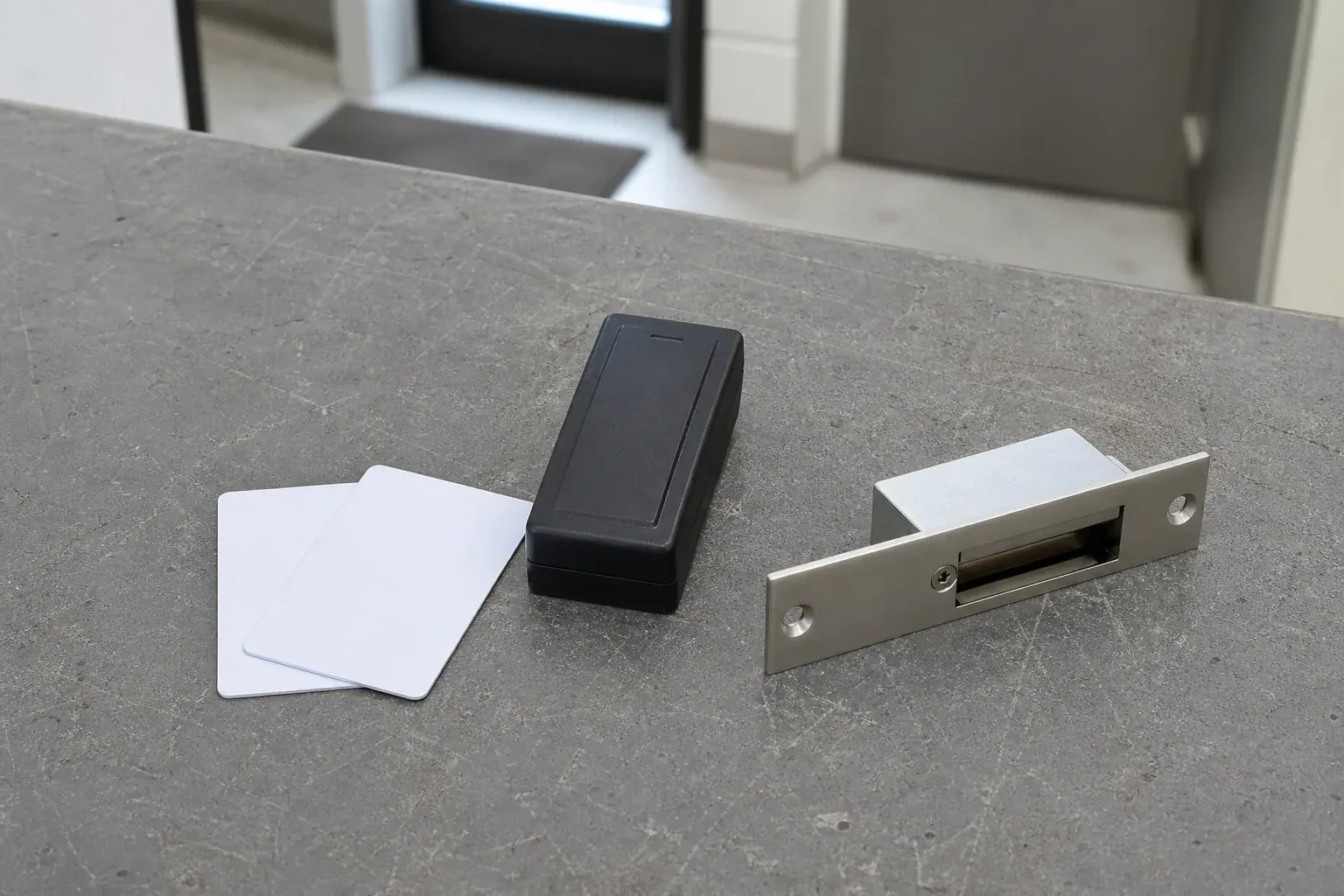
- Access Control InstallationThe team has grown past the point where one shared key still makes sense.
- Panic & Exit HardwareSomeone at the front counter always has to unlock the side door by hand before the lunch rush, because the round doorknob out there was never meant to be an exit for a room this size.
- Commercial-Grade Lock ReplacementHead office wants every branch keyed alike under one system, and half the locations are still running whatever lockset the original contractor happened to install years ago.