Car keys · Whitby
Vehicle Lock Repair
The car came with a second key that grinds and catches in the rear door, unlike the smooth key you use every day on the front two.
In plain words
Vehicle Lock Repair addresses a single locking point, a door, the trunk or hatch, or a storage compartment, that has stopped behaving like the rest of the vehicle. After confirming the customer's connection to the vehicle against its registration, the locksmith opens the affected panel, tests the cylinder, the linkage and, where fitted, the power actuator, and traces the fault as far as it goes. Repair or replacement usually targets that part alone, though freeing a stuck mechanism can sometimes need a carrier plate, glass run guide or latch replaced alongside it; either way, the finish and the rest of the locking set carry on as they were.
How the visit goesPressing the remote locks three doors with a solid clunk and leaves the rear passenger door untouched, every single time. A twist of the key still opens that door by hand, so the fault is sitting somewhere between the remote and that one lock.
Vehicle Lock Repair
How the visit goes
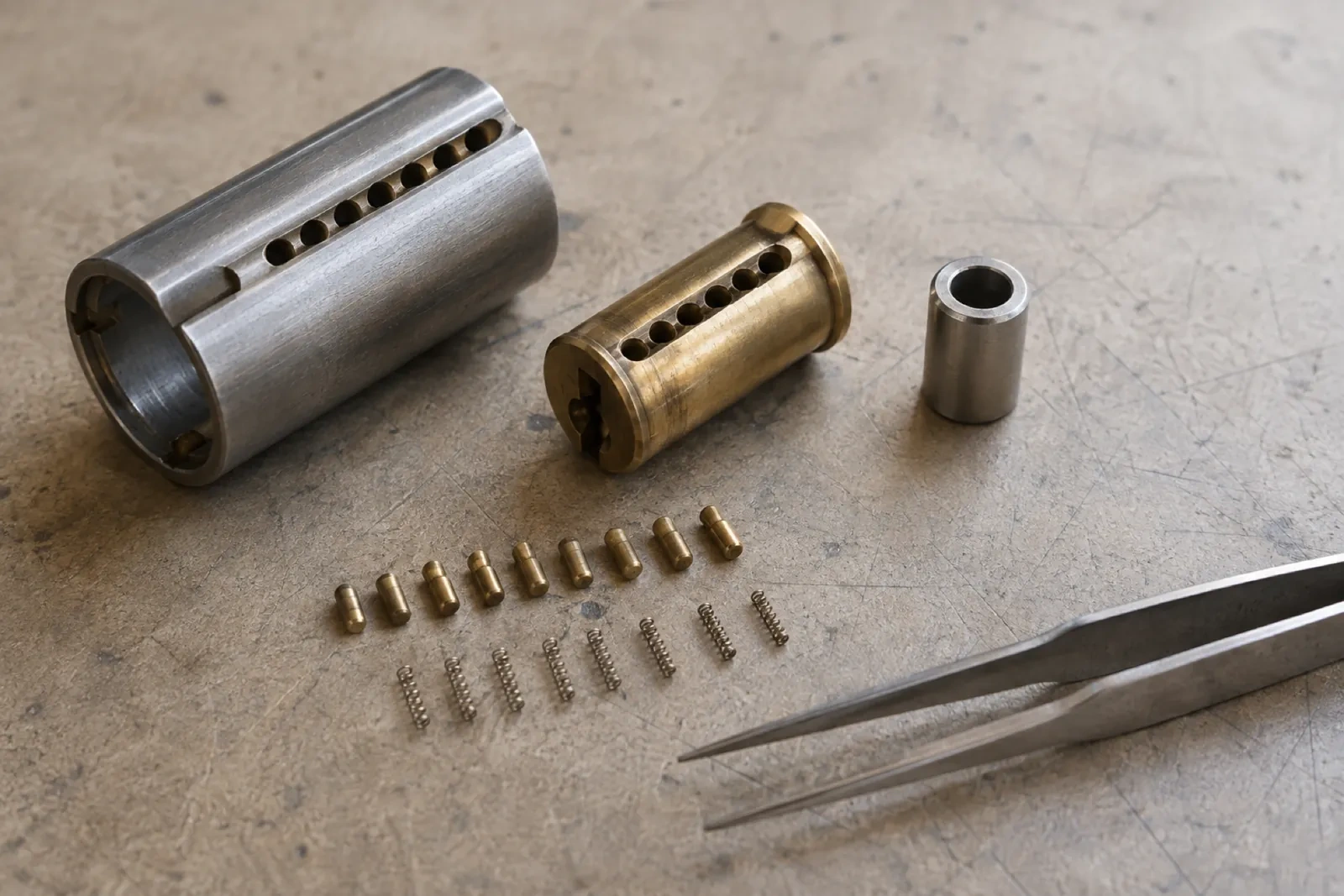
Confirming the vehicle is yours to work on
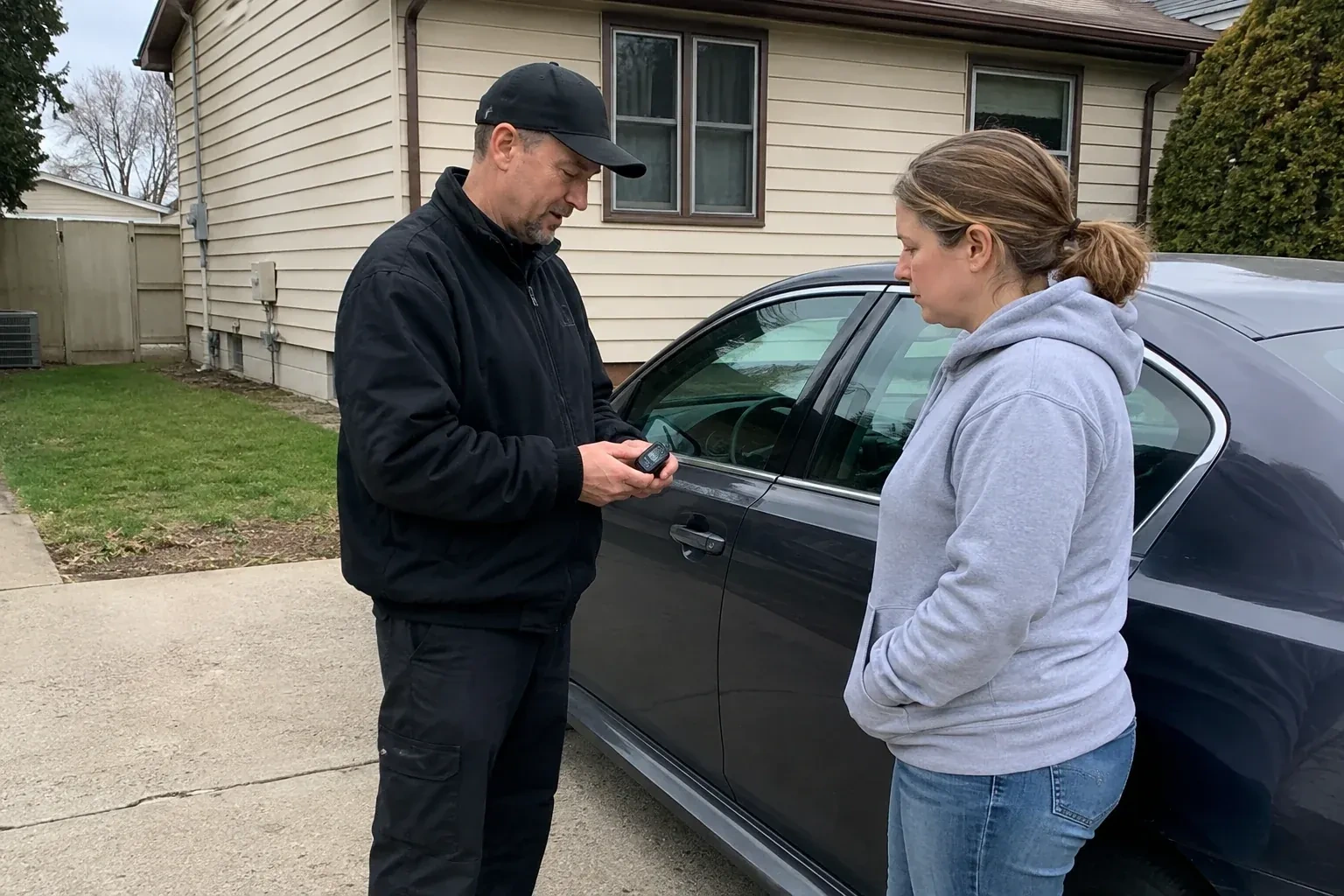
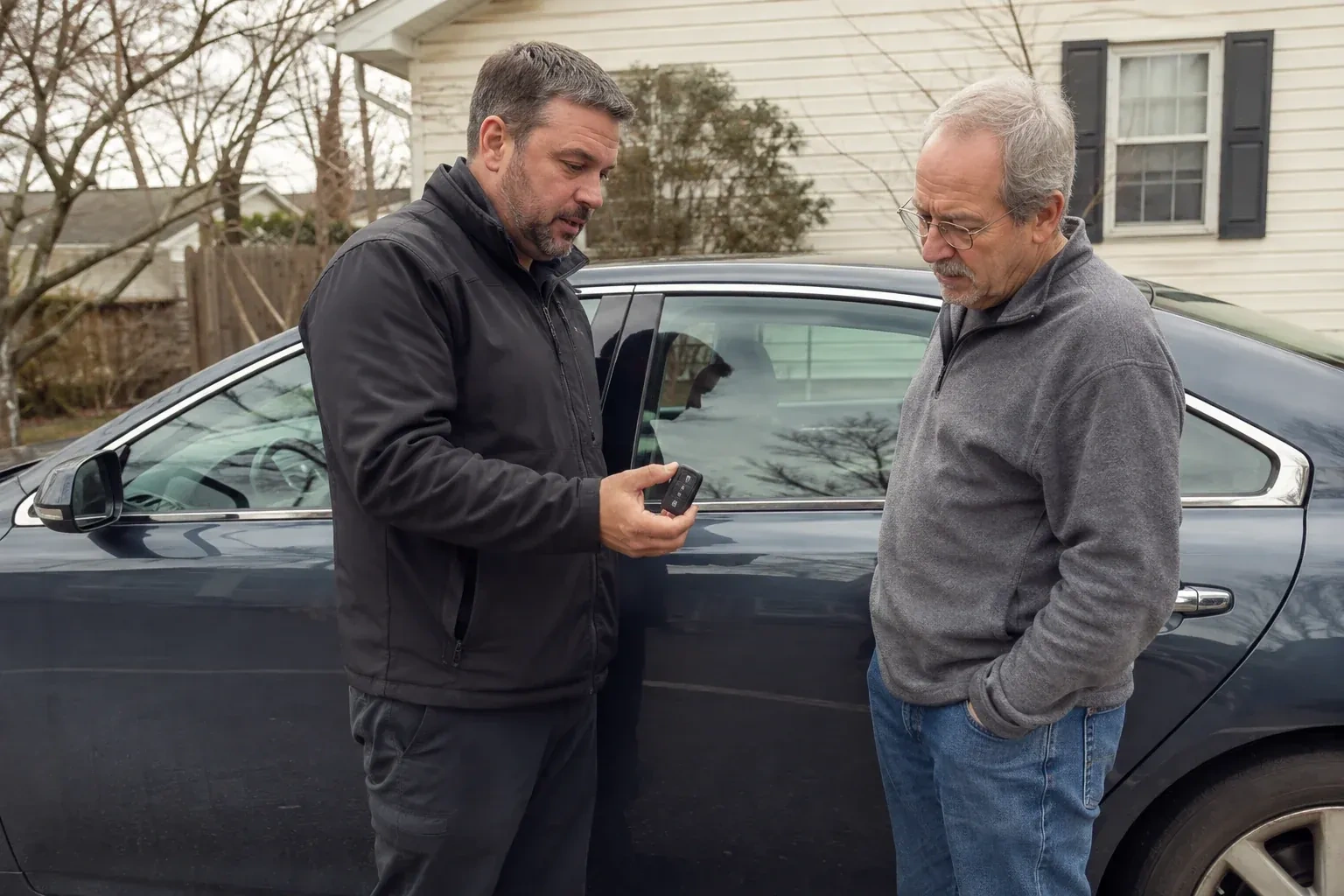
Before any panel comes off, the locksmith confirms that the person asking for the repair has the right to have it done. The vehicle's registration document, matched against the vehicle identification number stamped on the dash or door jamb, is the simplest route, and a rental agreement or fleet authorization does the same job for a vehicle you do not personally own. This step protects every vehicle a locksmith is asked to open or repair, including yours, and it happens before the first tool touches the door.
Cutting or matching a key to the vehicle
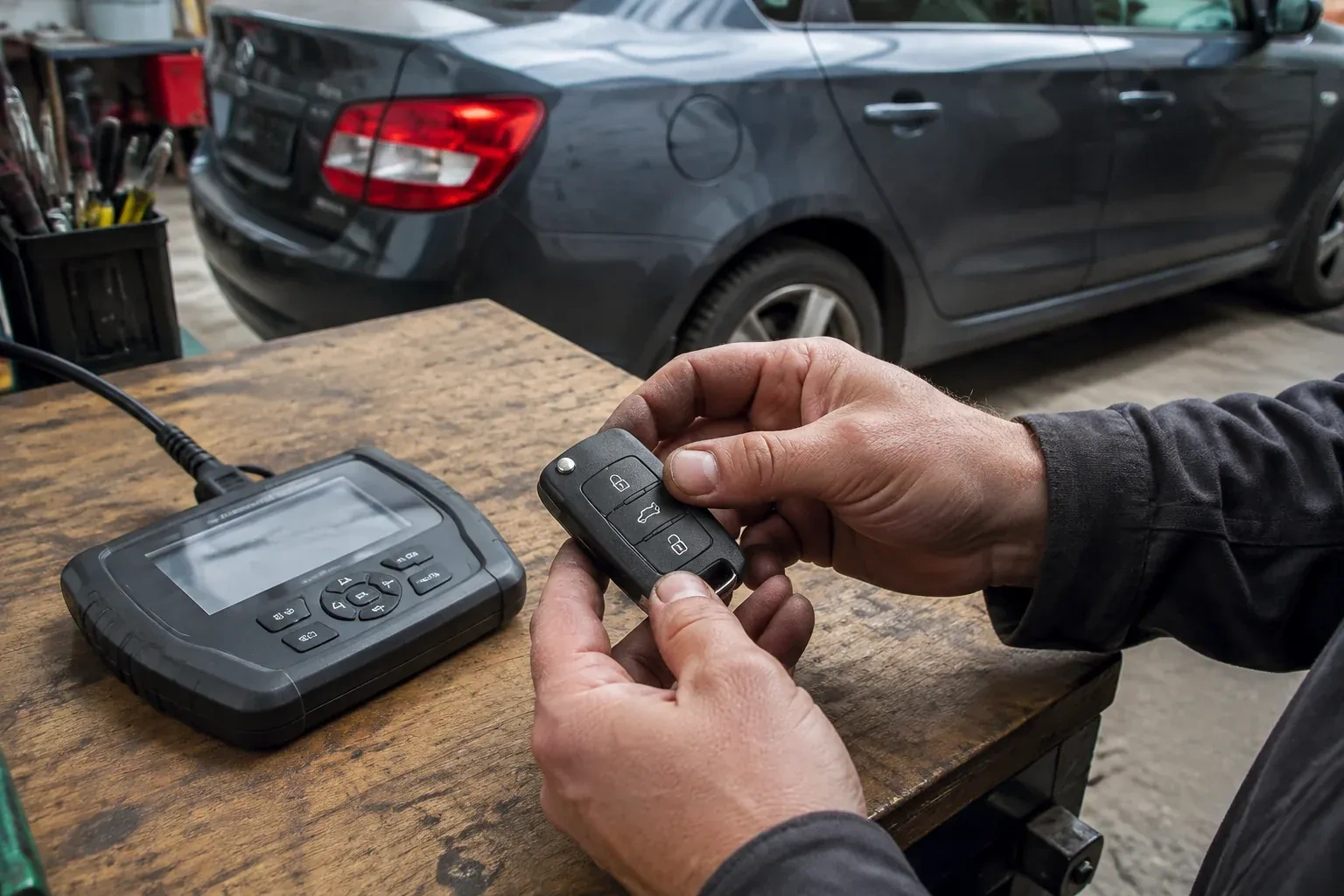
Where the key itself is thin, mismatched or simply missing for the affected lock, the locksmith cuts a new blade to the vehicle's code or by reading the cylinder directly, and fits a transponder chip inside it where the vehicle requires one for the ignition to accept it. The new key is tested in every lock on the vehicle, not only the one that was repaired, to confirm the whole set still shares one key.
Understanding what was actually replaced
You leave the visit knowing exactly which part failed and which part replaced it: a cylinder, a linkage rod, an actuator, a length of wiring, or the key and fob themselves. That record is worth keeping with the vehicle's other maintenance notes, since it tells the next locksmith or technician exactly where to look if a related symptom turns up on a different door later on.
Vehicle Lock Repair
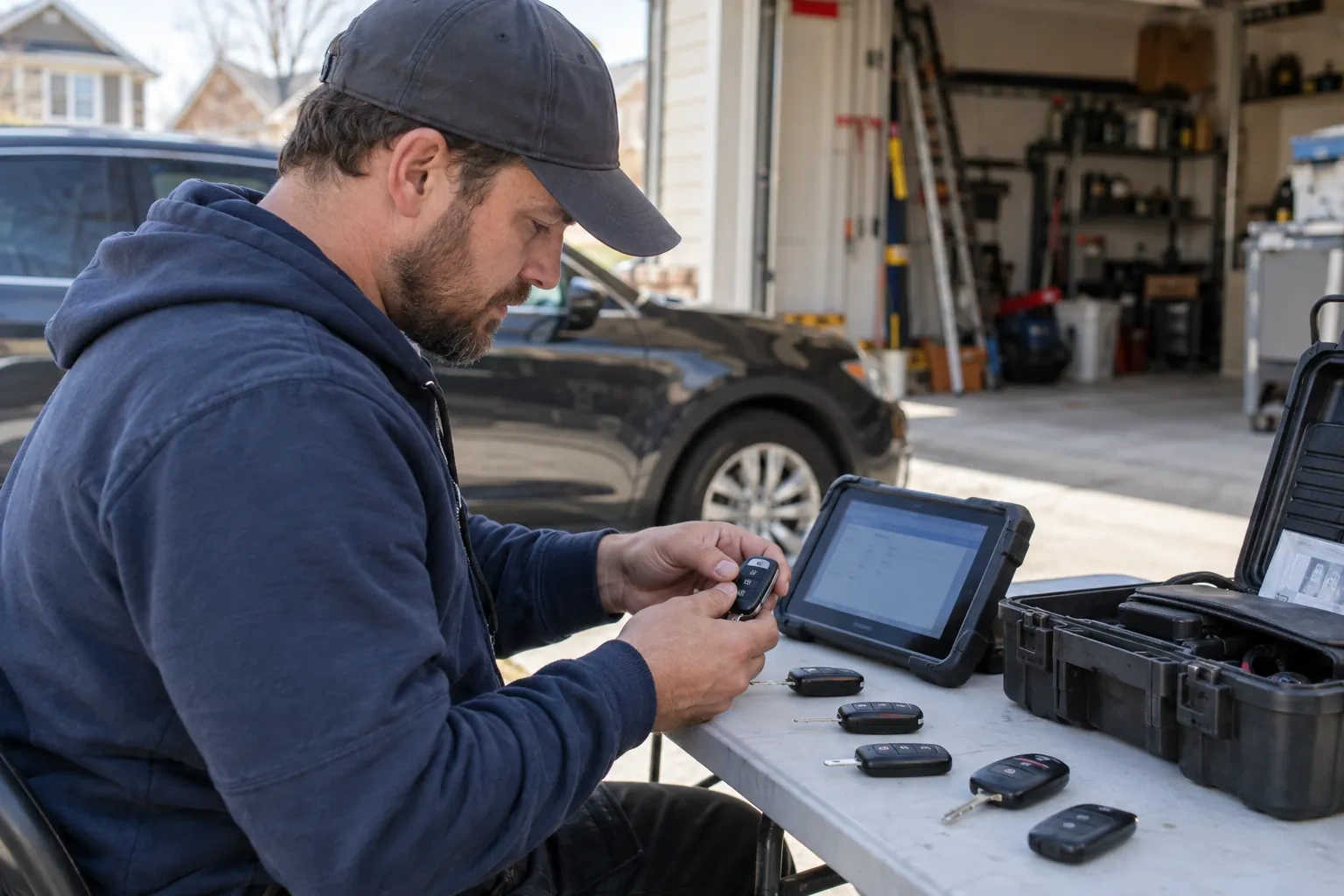
In the van
Trim panel removal tools
Weatherstripping and seal sections
Transponder chips
Multimeter for wiring checks
Wiring harness door boot
Vehicle Lock Repair
What affects the quote
Whether a key or fob needs cutting
Repairing the lock is one task; cutting a new key or programming a fob to match is another, priced separately since it involves its own blanks, transponder chips and testing across every door.
Damage from a previous repair attempt
A linkage bent by an earlier attempt, a scratched cylinder face, or trim clips already broken before the locksmith arrives may need repair or replacement in addition to the original fault, and this is pointed out before quoting.
Age and make of the vehicle
Some vehicles use widely available hardware, while others need parts sourced specifically for that make and model. Availability of the matching cylinder, actuator or key blank affects the timeline and the quote.
What to have ready
- Is the vehicle reachable and stationary right now, wherever it is parked?
- Has the lock been getting stiffer gradually, or did it stop suddenly?
- Does the key turn without effect, resist turning, or not go in at all?
Vehicle Lock Repair: questions
QuestionsCan you match a new lock cylinder to my existing key rather than giving me a new key?
Yes, this is usually the preferred approach. A replacement cylinder is set or selected to match the key you already carry, so you continue using the same key and fob across the whole vehicle instead of adjusting to a new one for a single door.
Should I try to fix a spinning trunk lock myself before calling?
It is reasonable to check the obvious things first, such as whether the trunk release button works from inside, but forcing a spinning key or prying at the surrounding panel can bend the linkage further. A locksmith arrives with tools shaped for the mechanism and can usually reach the fault without extra damage.
How does a locksmith reach the actuator or linkage inside my door?
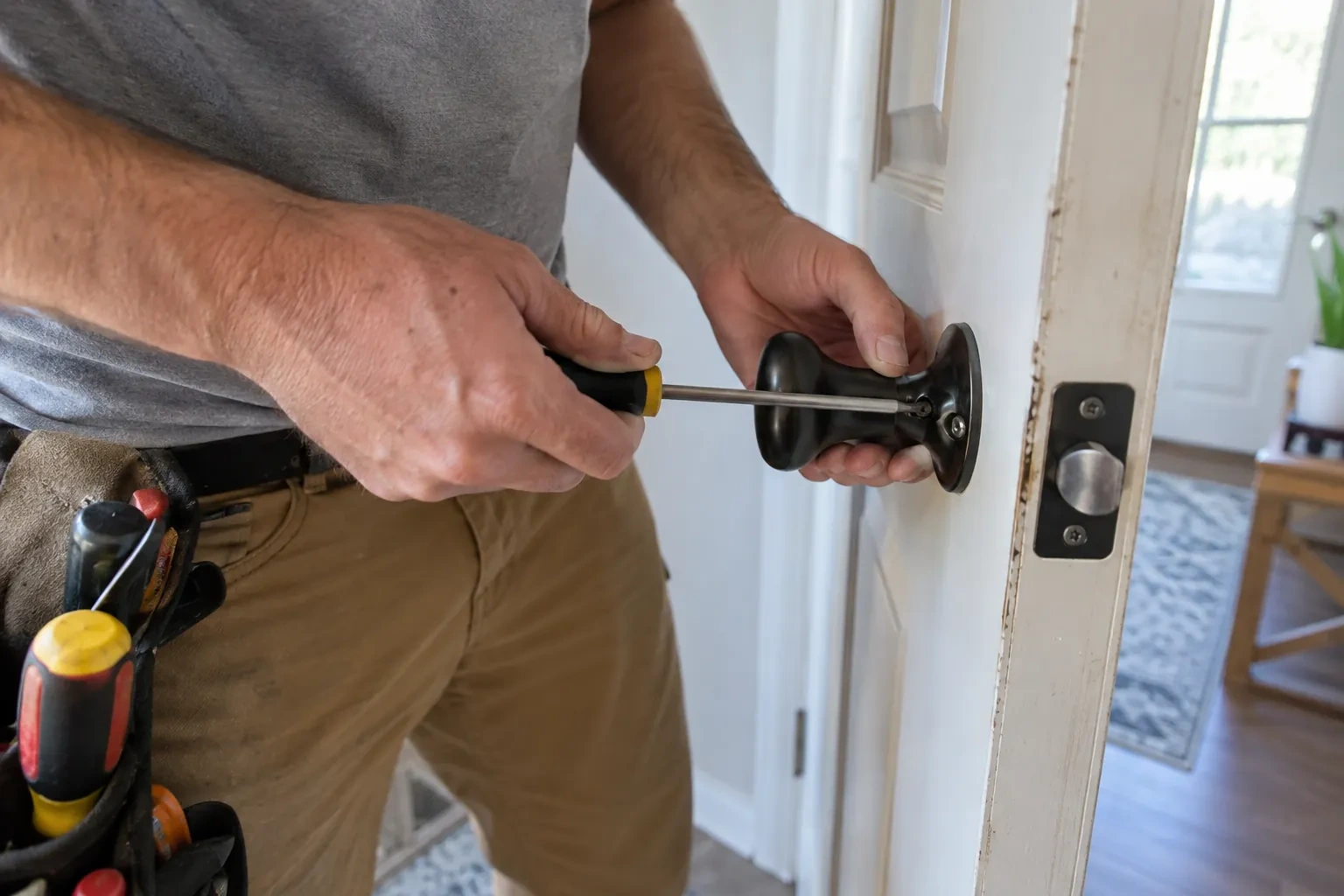
The interior trim panel is removed using tools shaped to release its retaining clips without marking the panel. On many doors that exposes the cylinder, the linkage rod and the power actuator for individual testing and repair, though some doors keep a carrier plate, water shield or window guide in the way, or use an integrated latch and actuator assembly, and are worked on accordingly.