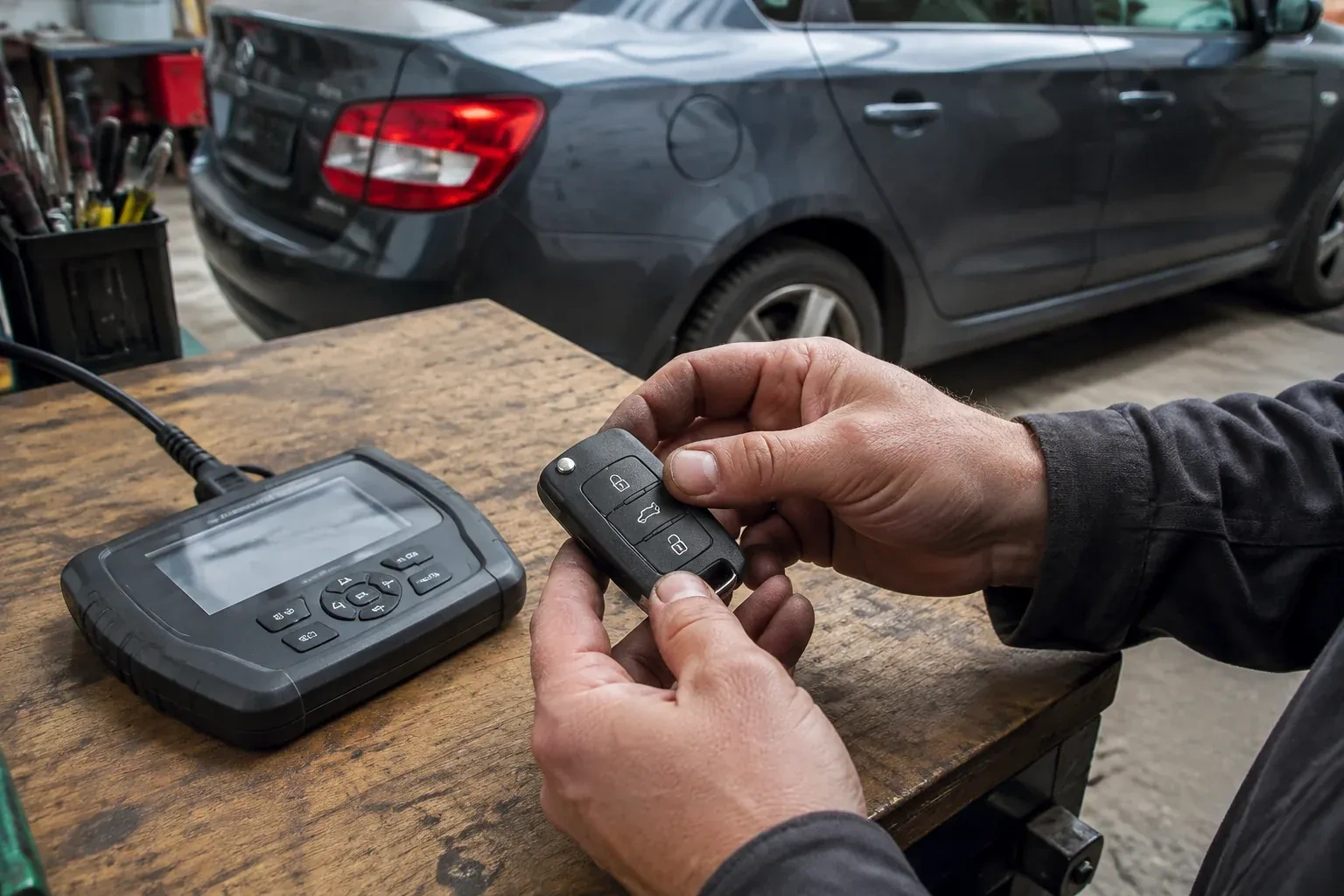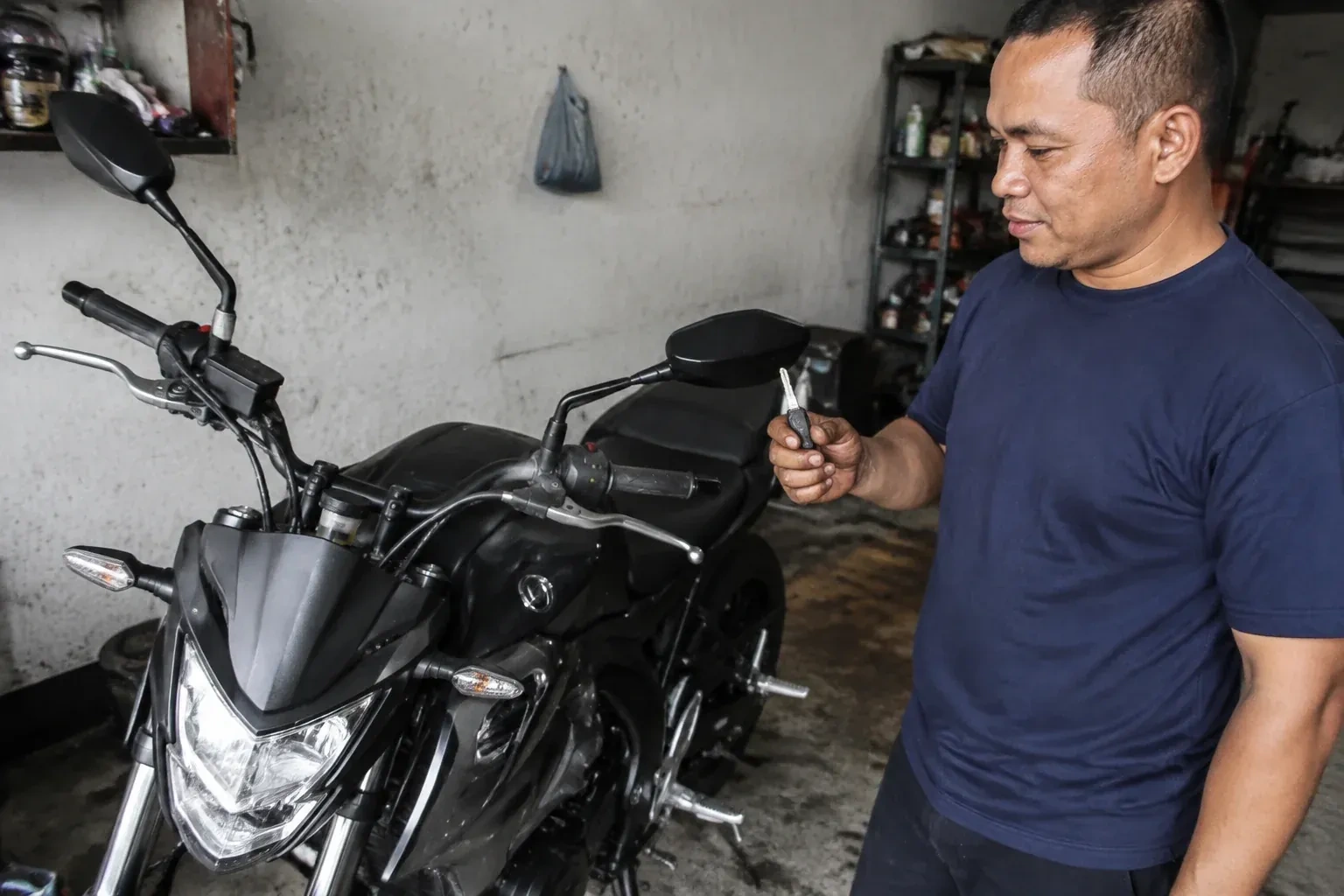
Car keys · Port Whitby
Motorcycle & Scooter Keys in Port Whitby
Two keys came with the scooter: one for the ignition and steering, an entirely different one for the seat and the storage compartment underneath it, so opening the seat means carrying twice the metal.
In plain words
Locks that sit through a season of outdoor storage or freeze-thaw weather often need more than a fresh key. A steering-head lock that has seized is diagnosed first, then freed with the cleaning method its maker directs and gentle working of the mechanism rather than force on the key, since a harder twist is more likely to snap a blade than move a stuck lock. Once the lock turns freely, cutting or duplicating the key proceeds the normal way, and a season's worth of grit is cleaned out of the mechanism at the same time.
How the visit goesA copy cut at a hardware kiosk turns the ignition on some mornings and skips it on others, occasionally sticking halfway and needing a wiggle that the original key never required.
Motorcycle & Scooter Keys
How the visit goes
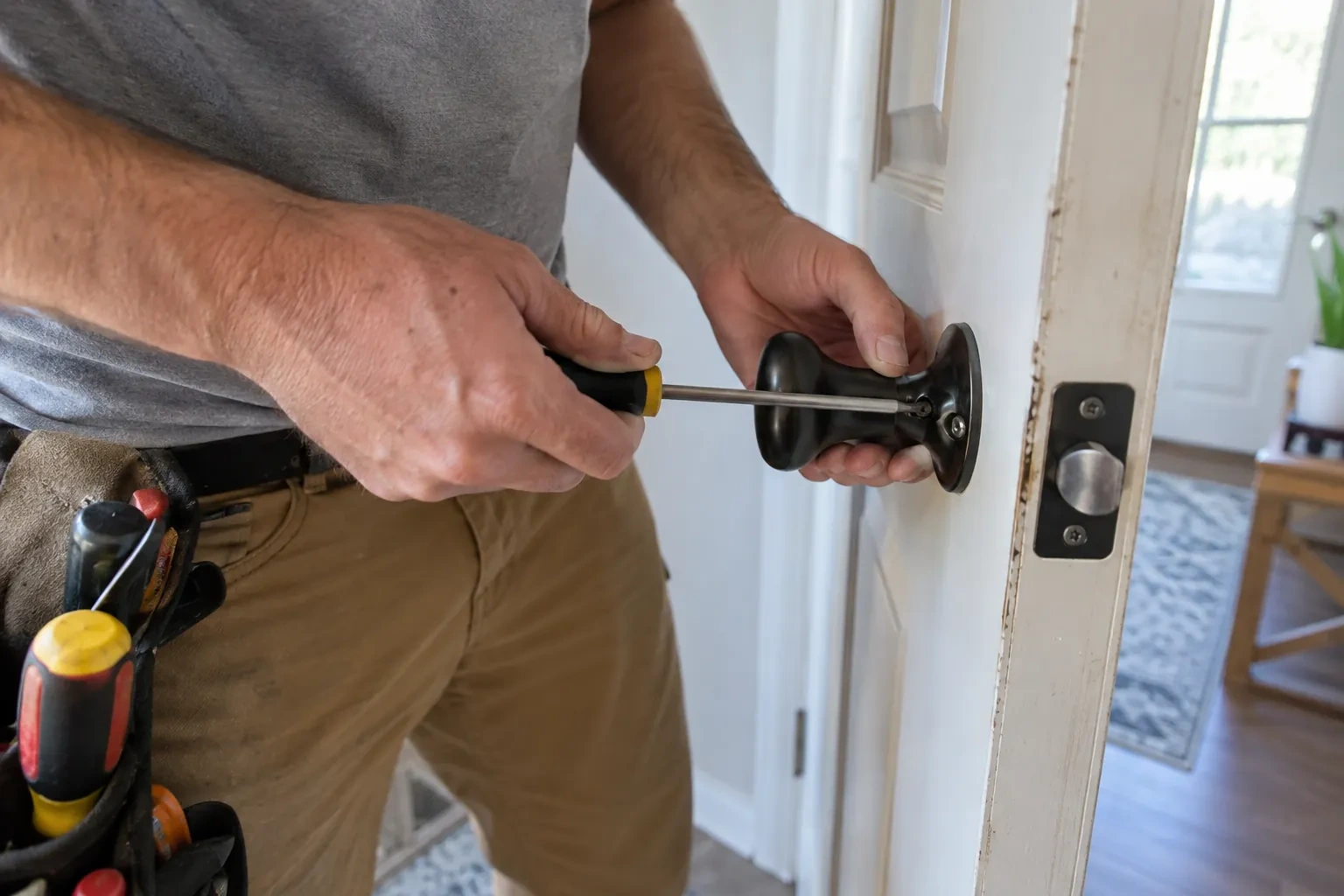
Assessing wear and corrosion
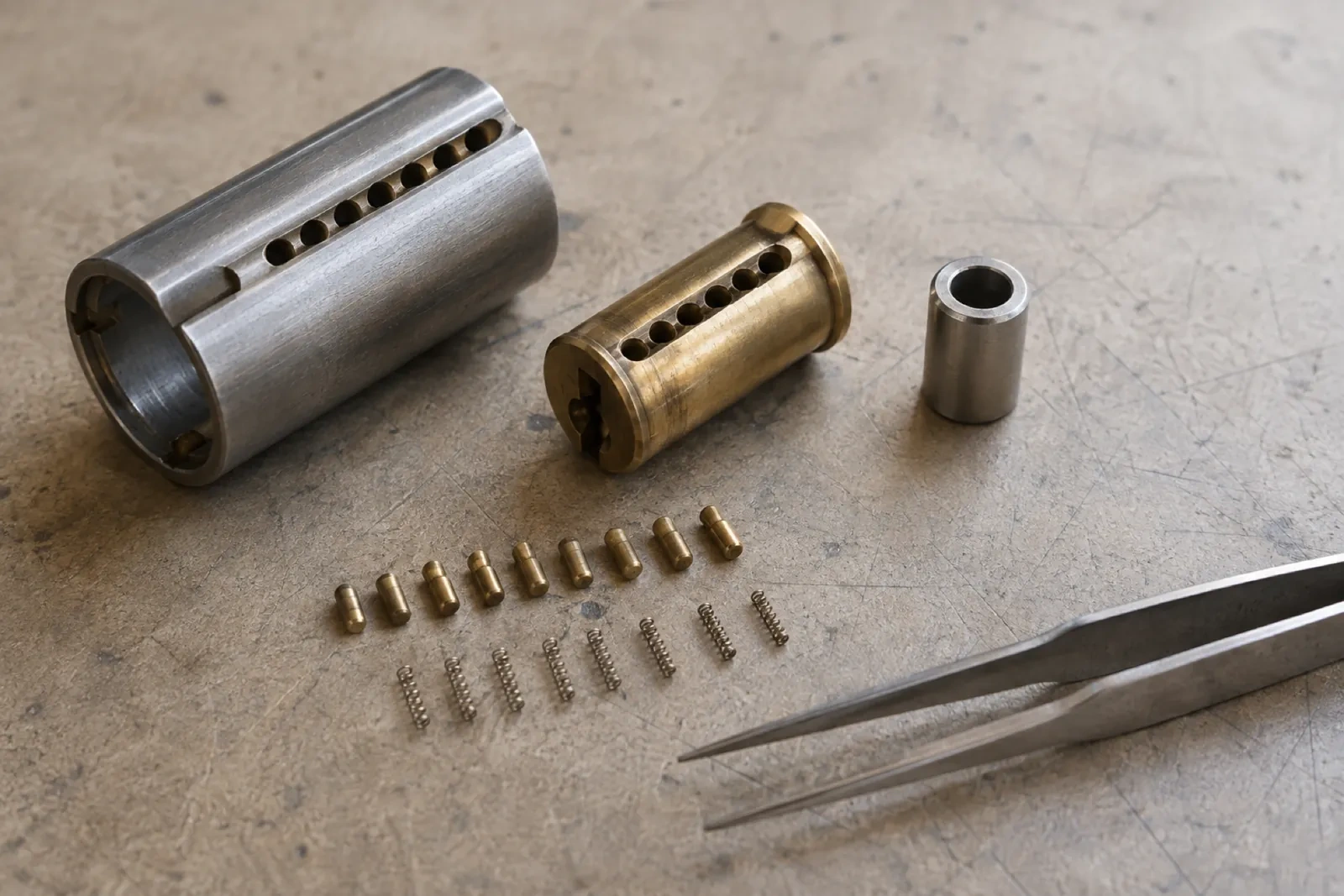
Locks that live outdoors on a machine take on grit, road salt and moisture in a way that an indoor lock never does, and the locksmith checks the lock face and keyway for rust, stiffness and a gritty feel before cutting anything. A lock with corrosion inside the wafers can defeat even a correctly cut key until it is cleaned and lubricated, so this check decides whether the visit stays a straightforward key job or also needs the lock itself serviced before a new key is tested against it.
Testing before handover
Every finished key is tested on the actual machine before the visit ends, not just checked against a code on paper. That means turning the steering lock through its full range, opening the seat and fuel cap if they are on the same key, and starting the engine to confirm any transponder is recognised. Only once all of that behaves consistently, more than once, does the locksmith consider the key set complete. Any code or reference used to cut the key is left with the owner or noted for their records, so a future spare does not have to start from nothing.
Noticing trouble early
A key that has begun needing a small wiggle or a lift to turn, on a lock that used to accept it cleanly, is an early sign worth acting on before it becomes a lock that will not turn at all. The same goes for a steering lock that has started to feel stiffer than it used to, or a seat latch that catches before it releases. Addressing any of these while the key still works, rather than after it stops working altogether, is usually the calmer of the two visits.
Motorcycle & Scooter Keys
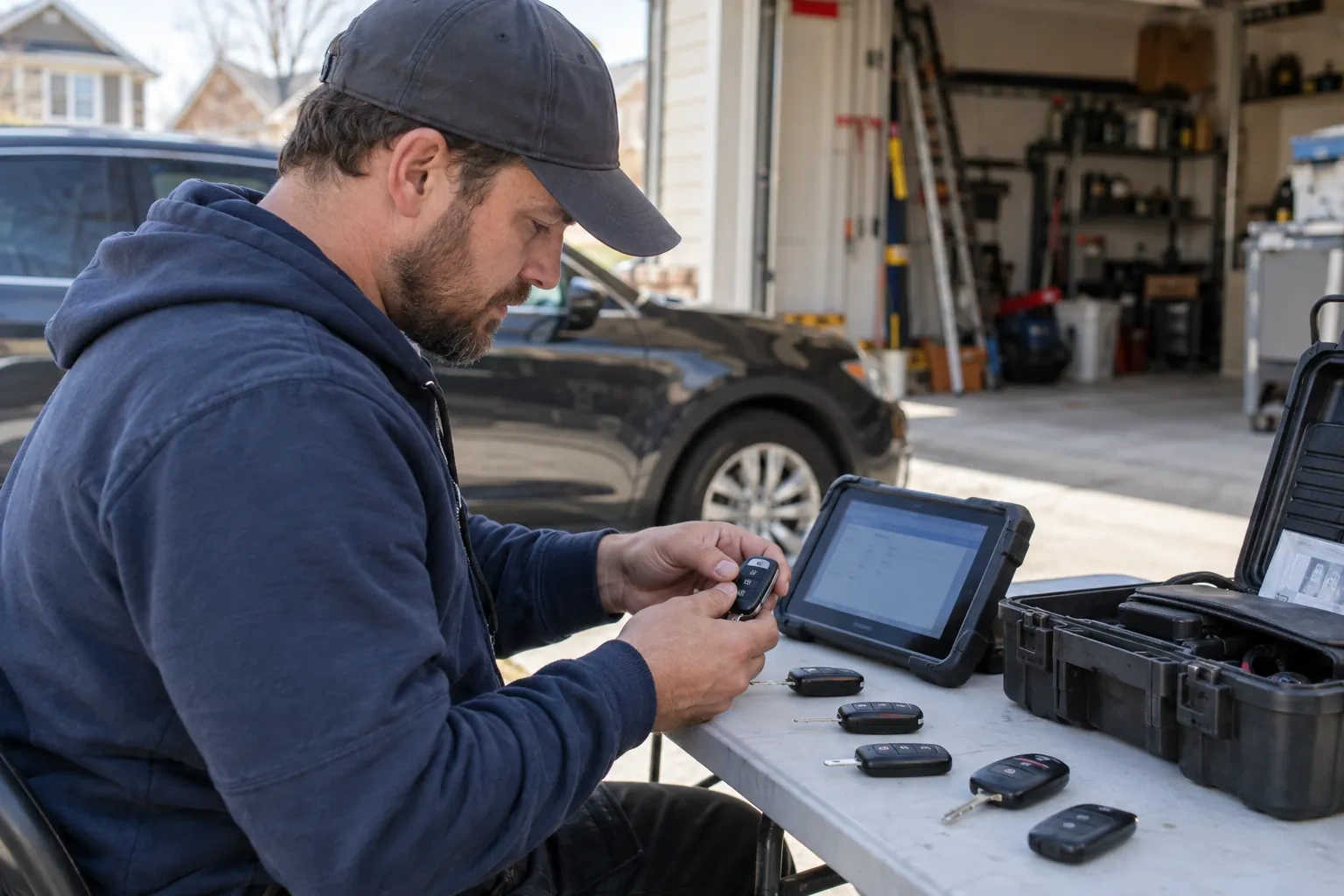
In the van
Manufacturer-approved lock cleaner or lubricant
Wafer lock decoder
Code-cutting machine
Motorcycle key blanks
Replacement transponder chips
Motorcycle & Scooter Keys
What affects the quote
Bringing multiple locks onto one key
Bringing the seat, fuel cap or a storage lock onto the ignition's key is extra work per lock rekeyed, separate from cutting the key itself, and is priced as its own line.
Make, model and age of the machine
Make, model and age decide how common the keyway and blank are. A widely used platform is usually the more straightforward case; an uncommon or older machine can take longer to source parts for.
Weather affecting a seized lock
A lock seized by cold, ice or dried-out grease from a season of storage takes patient thawing and working before a key can be tested against it, which a winter call reflects.
What to have ready
- Would you like every lock brought onto one key?
- Was the machine bought used, and how many keys came with it?
- Is the machine's VIN accessible on the frame or paperwork?
Motorcycle & Scooter Keys: questions
QuestionsWhy does the number of wafers in a lock matter?
Each wafer represents one depth the key has to hit precisely for the lock to turn, so a lock with more wafers has more combinations and takes a little longer to decode or pick than a simpler one. Most motorcycle locks use around five wafers, and manufacturers sometimes space the depth increments further apart specifically to reduce the chance that an unrelated key happens to fit. This is why an ordinary-looking key rarely works in an unrelated bike.
Do I have to have the original key for you to cut a new one?
No. When every key for the machine is gone, the locksmith reads the lock directly, working out each wafer's depth by picking and reading the cylinder or using a decoder built for that keyway, and cuts a fresh key to the code that comes out of that reading. It takes longer than copying an existing key, since every wafer is read individually, but it produces a key that matches the lock rather than a guess.
The key snapped off inside the ignition. Is that still a key job?
It starts the same way and adds one step. The broken piece is drawn out with tools made to grip it rather than push it deeper, and the ignition is then checked to see whether the break was a one-off or a sign the lock itself needs attention. A new key is generally cut from the two pieces or by decoding the lock, since a weakened copy could break again in the same spot.