Change or rekey · West Lynde
Gate & Building Entry Locks in West Lynde
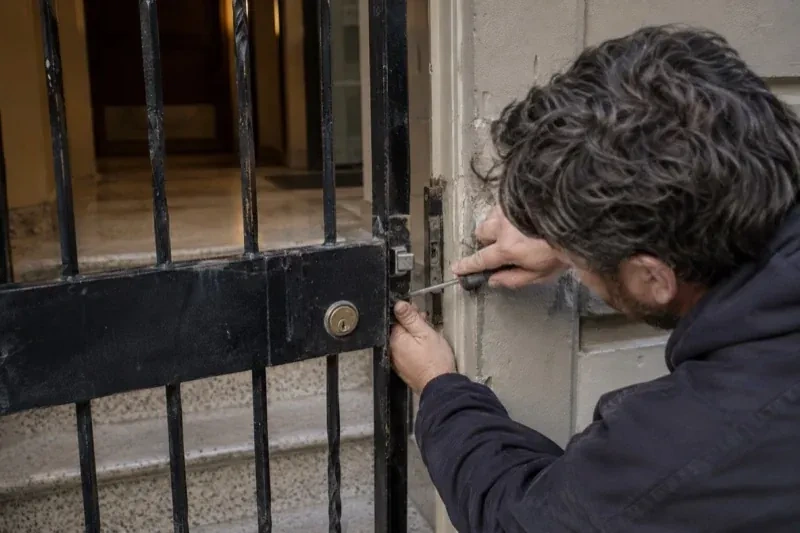
Someone pried at the gate latch overnight, and now the strike plate hangs by one screw and the cylinder spins loose in its housing.
In plain words
Hardware bolted to a gate or an exterior building door lives outside every day of the year, which is a different job from a lock tucked behind a storm door. This service treats that exposure as the starting point: cylinders rated for weather, fasteners that resist road salt, and a closer set up to keep working through a freeze-thaw cycle rather than seizing at the first cold snap. The result is a gate or entry that keeps operating through the season it is most likely to struggle in.
How the visit goesThe driveway gate drags a groove into the gravel every time it swings, and the latch stopped catching weeks ago. Now it sits propped shut with a brick, waiting for anyone to walk through and forget to prop it back.
Gate & Building Entry Locks
How the visit goes
Reading a frost-heaved or settled post
Ground movement shows up as a lock problem long before anyone thinks to blame the post. The locksmith checks whether the gate post has lifted, tilted or settled relative to the latch post it is supposed to line up with, and by how much, since a small seasonal shift is different from a post that has genuinely moved for good. This distinction decides whether the fix is resetting the strike position for now or addressing the post itself, and it keeps the same misalignment from returning with the next frost.
Freeing a seized or salted padlock
A padlock or gate cylinder stiffened by rust, dried grease or old grit is worked open with patience: a penetrating product suited to locks, gentle heat where appropriate, and a pick or the original key worked in small movements rather than forced. Where the internals have corroded past saving, the padlock or cylinder is replaced with a weather-rated unit built for that kind of exposure. Afterward the mechanism is dried and treated with the lubricant the manufacturer specifies for that cylinder, since the right product for one model can gum up another.
Everyone currently there has a matching key
If the visit involved a rekey, every current resident, tenant or key holder leaves with a key cut to the new combination, and a short written note of who received one. Anyone who moved out before the change is now holding a key that no longer fits whichever gate or door was rekeyed, though it may still turn any other cylinder on the property that kept its old combination. Where several gates or doors were brought onto the same key, each one is tested in your hand before the locksmith leaves, so you are not left guessing which key opens which gate the next time you need one after dark.
Gate & Building Entry Locks
In the van
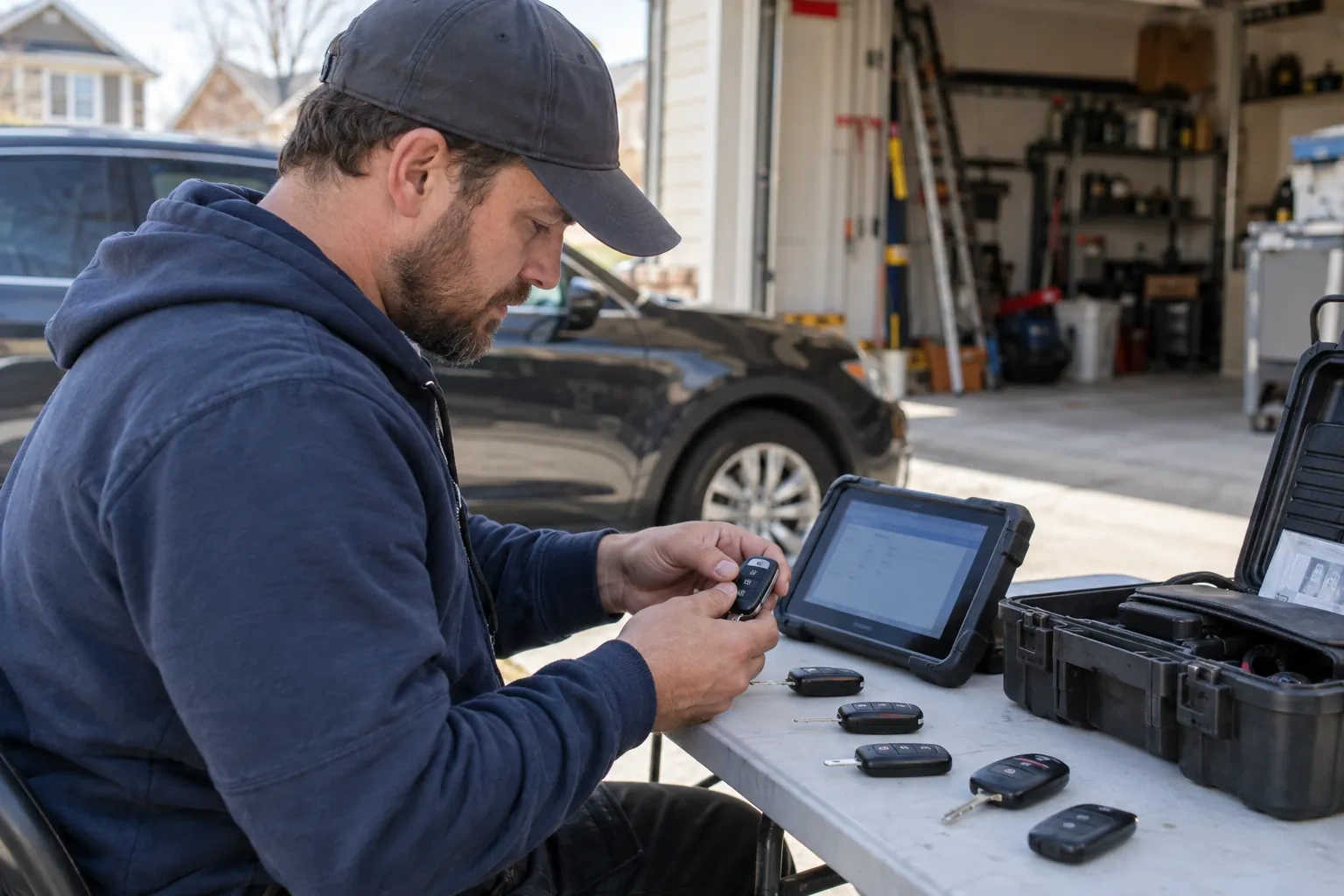
Cylinder decoder and pick set
Weather-rated cylinders
Gate locks and latches
Hinges, pivots and shims
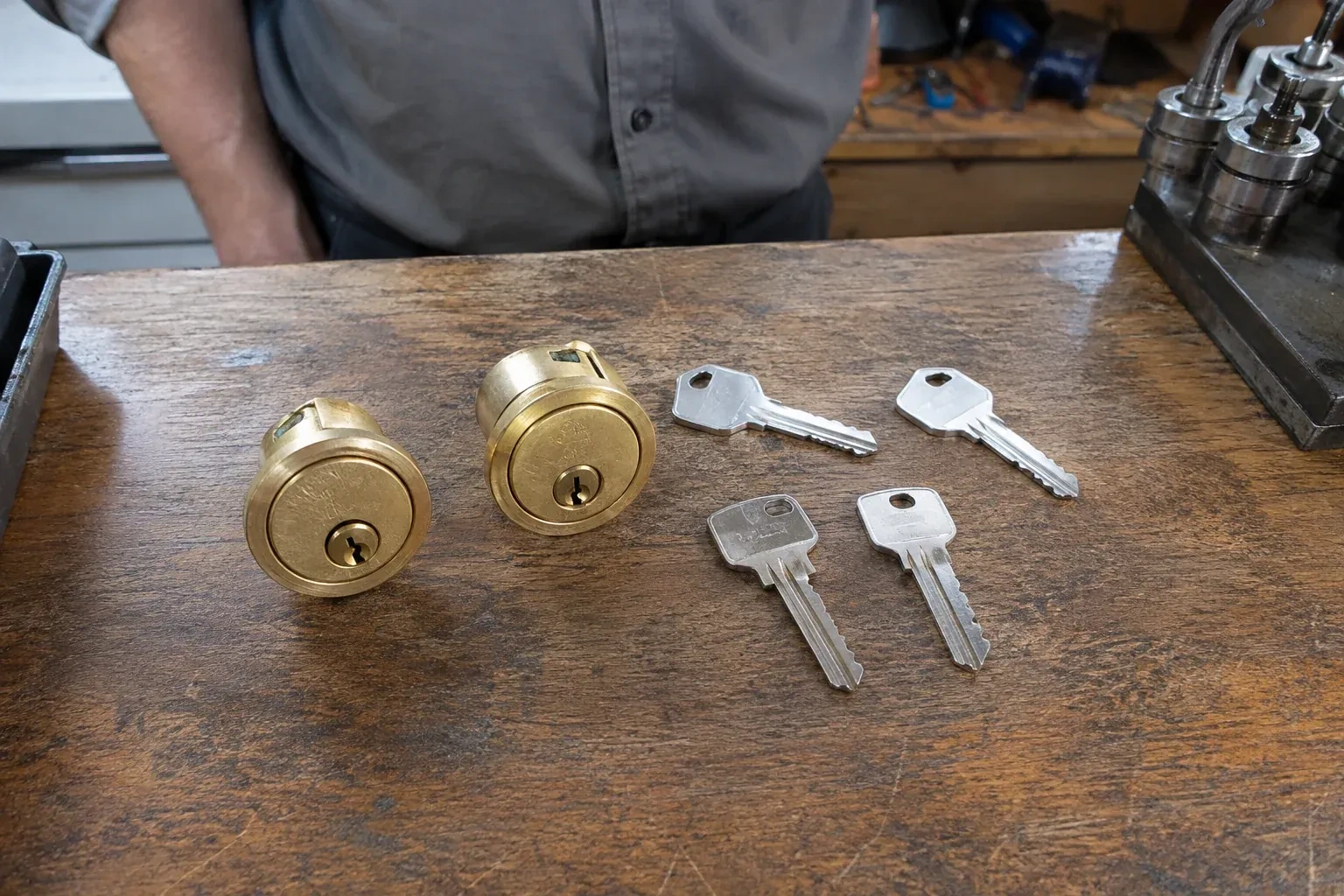
Keyed-alike cylinders
Gate & Building Entry Locks
What affects the quote
Master key or keyed-alike planning
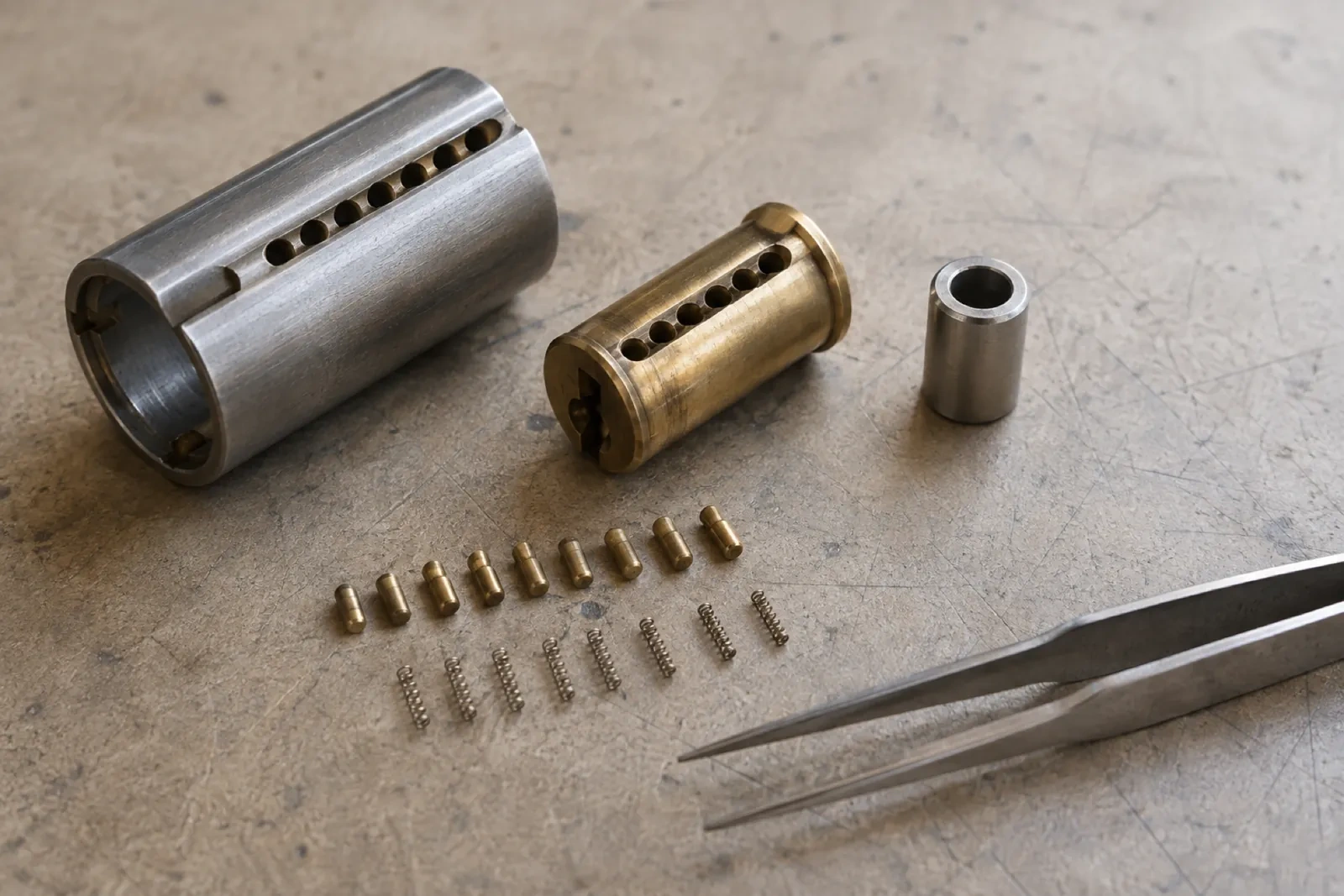
Setting up a master key system, or bringing several separate locks onto one shared key, involves planning the pinning structure across every cylinder involved, which is more work than rekeying one lock in isolation.
Whether keys need coordinating across doors
Rekeying a single lock is one task. Bringing several gates or a shared entry onto one common key, or setting up a master key arrangement across a property, adds planning and cylinder work beyond a single rekey.
How many current key holders need new keys
Keys cut on site are counted individually into the quote. A single household needs far fewer than a multi-unit building entry where every current resident is being issued a fresh key at once.
What to have ready
- Do you manage this property, or should someone else be involved in the decision?
- Is the gate sagging, dragging, or hard to close by hand?
- Is the lock dragging, slamming, stuck, or simply not latching?
Gate & Building Entry Locks: questions
QuestionsA tenant moved out of our building. Do we need to rekey the shared entry?
It is worth doing, since a move-out is exactly the situation a rekey is meant to cover: a former tenant's key still operates the same lock everyone currently living there relies on. Rekeying resets the cylinder to a fresh combination and issues new keys to current residents, without requiring a whole new lock in most cases. Bringing any other gates or doors that share that key along at the same time keeps the whole property on one current combination.
Can a gate that slams shut be fixed without replacing the whole closer?
Often, yes. A closer that slams is frequently just out of adjustment rather than worn out, and bringing its closing speed and final latching action back into a sensible range solves the problem on its own. Replacement becomes the answer when the arm, seals or internal fluid have genuinely failed, which the locksmith checks for directly rather than assuming from the symptom alone. Either way, the gate is tested through several full cycles before the visit is called finished.
Should every gate on my property share one key, or is it better to keep them separate?
Either can make sense, and the choice usually comes down to who uses which gate and how often. A household that walks through the front and side gates daily generally prefers one key for both, while a gate that only a landscaper or utility worker uses is sometimes kept on its own key deliberately, so lending it out does not hand over access to everything else. The locksmith can lay out both options once every gate on the property has been looked at.
Related services
- Deadbolt InstallationThe back door has a deadbolt in name only: a short bolt, a thin brass strike held by two little screws, and a jamb you can flex with your palm.
- Lock Replacement & UpgradeThe keys the seller handed over came in a sandwich bag: six unlabelled copies for two locks of different makes from different decades.
- Vintage Mortise Lock ServiceThe key turns freely in the round cylinder on the door, all the way around and back, without the bolt shifting at all.