Commercial · West Lynde
Access Control Installation in West Lynde
The team has grown past the point where one shared key still makes sense.
In plain words
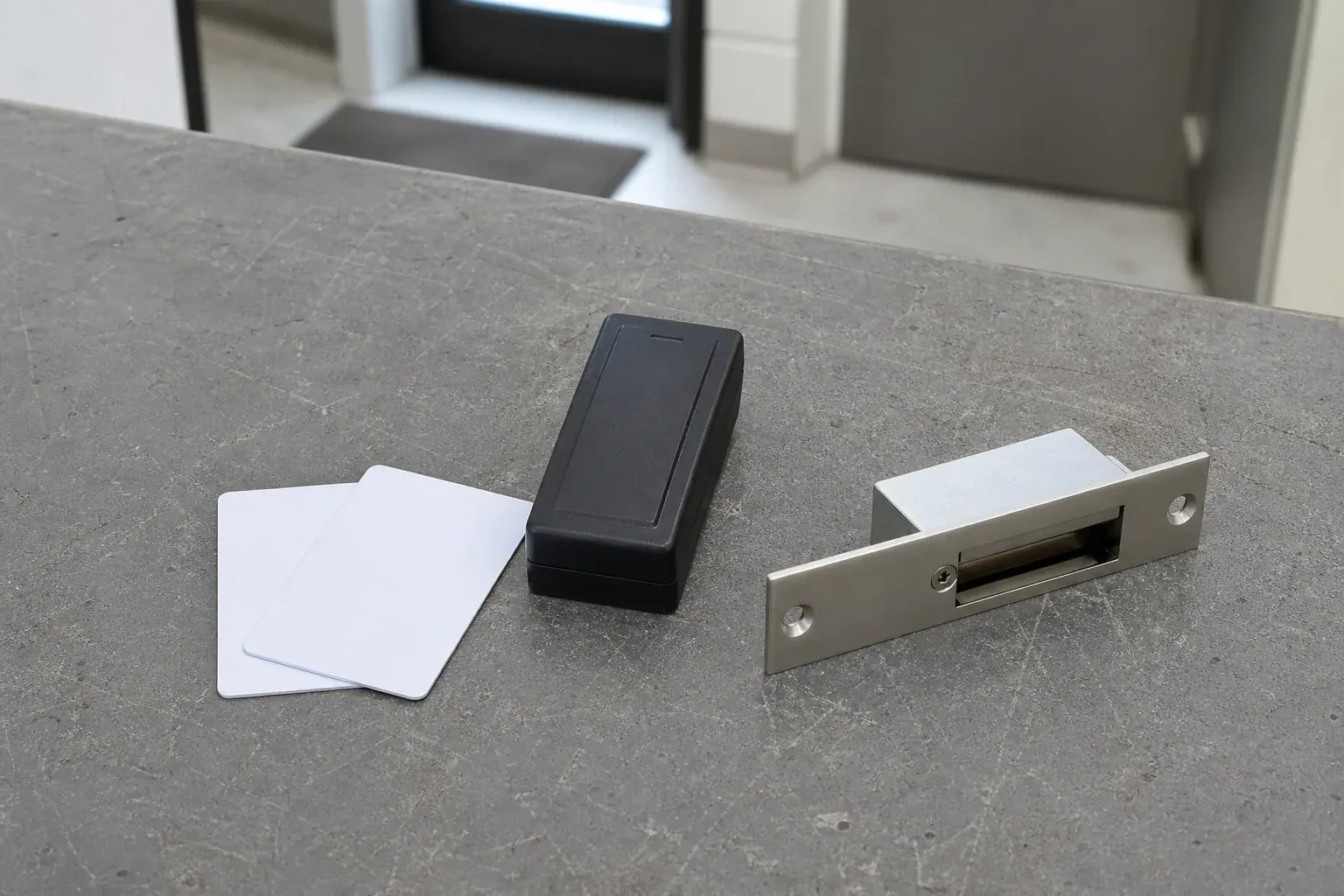
Credentials take several forms, and most installations end up mixing them: a proximity card or fob held near a reader, a keypad code typed at the door, or a mobile credential read from a phone. Cards and fobs are simple to hand out and just as simple to switch off if lost; a code needs no hardware to issue but has to be changed once shared too widely; a mobile credential ties entry to a device the person already carries. The mix is chosen door by door, based on who uses each one and how often.
How the visit goesHead office wants a record of who opens the branch and when, tied to an actual name rather than a shared code scrawled on a sticky note taped under the till.
Access Control Installation
How the visit goes

Taking stock of what is already on the doors
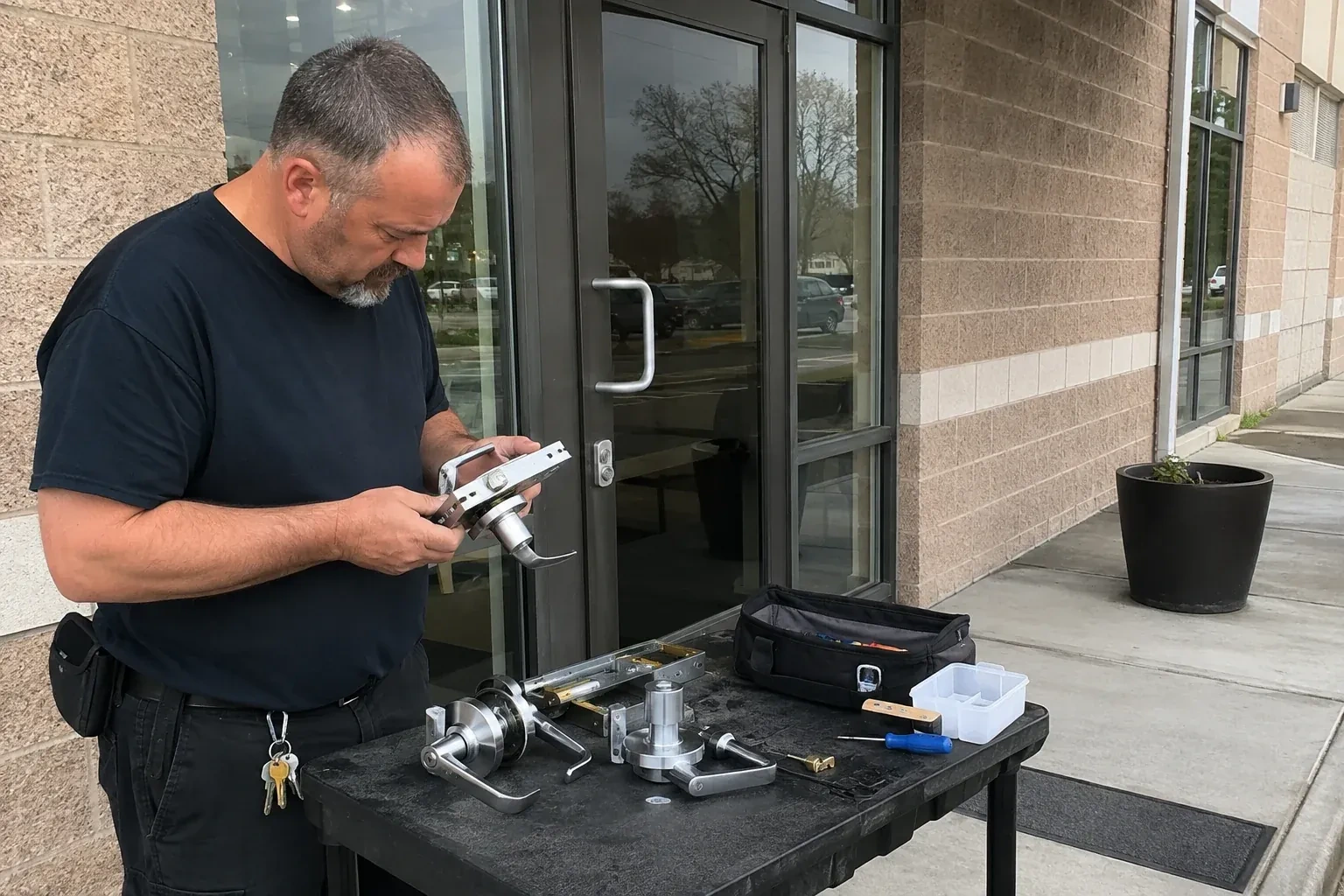
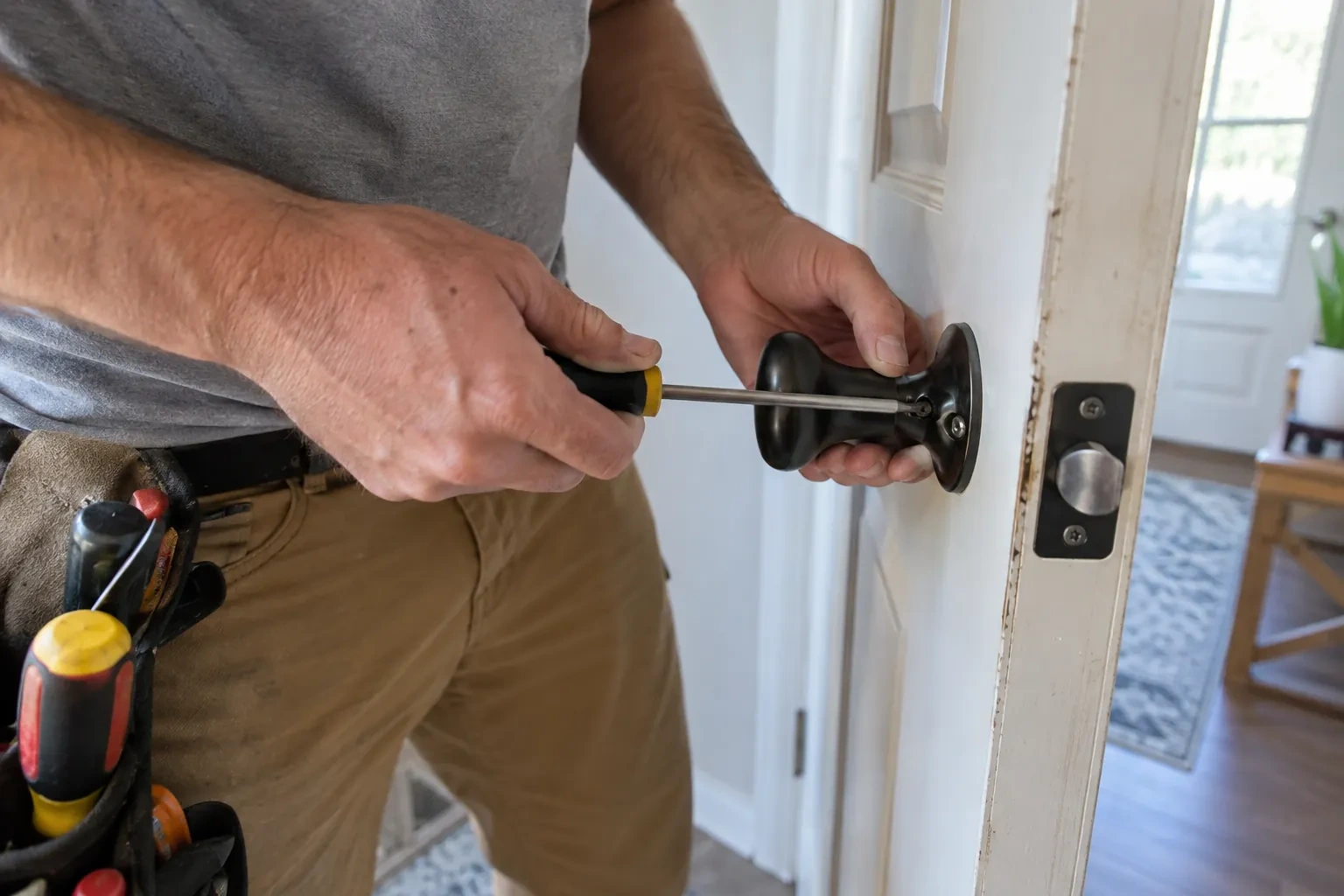
Many commercial buildings already carry some kind of lock, from a plain keyed lever to an older keypad system nobody quite trusts anymore, and the survey starts by identifying exactly what that is. A working mechanical lock can often stay in place as the override once an electric strike or reader is added, saving a step; a failing or unsupported electronic lock is usually replaced outright rather than wired around. The locksmith also checks which doors currently share one key, since that pattern often explains why the business wants individual, revocable credentials in the first place.
Wiring the openings back to a controller
Each controlled opening can send and receive several signals: a reader reporting a presented credential, a lock output that releases the hardware, and, where the configuration calls for them, a door position switch reporting open or closed and a request-to-exit input. The locksmith runs the wiring from each opening back to wherever the controller is mounted — as a home run, along a shared bus, or over the network on an IP or PoE device — labels each conductor at both ends, and terminates them into the controller's input and output boards. A building with several openings may share one power supply and battery backup sized to the combined load, or split the load across more than one supply.
Reading the entry log
Every controller keeps a record of which credential was presented at which door and when, and, where a door position switch is fitted, whether the door actually opened; that log is available to the administrator whenever it is needed, not only after something has gone wrong. Pulling a recent day's entries for the stockroom, checking whether the loading dock was opened outside its scheduled window, or confirming a contractor's credential was only used on the days they were on site are ordinary lookups rather than a special request, though the record shows the credential used rather than proof of who held it. Reviewing the log occasionally, rather than only when there is a problem, is a genuinely useful habit.
Access Control Installation
In the van
Request-to-exit devices
Card and fob readers
Keypad readers
Access control panel
Fire alarm interface relay
Access Control Installation
What affects the quote
How many credentials and what type
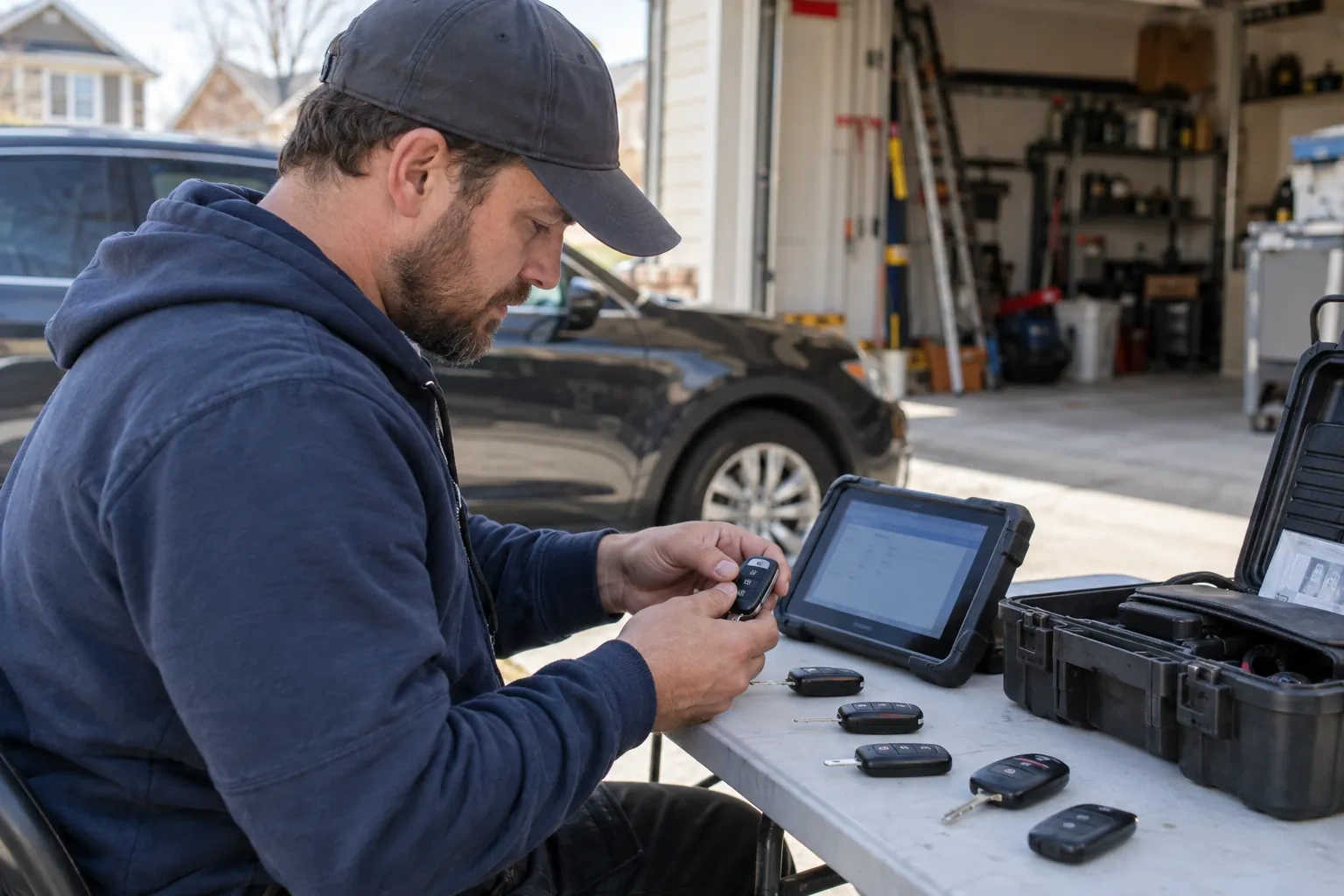
Cards, fobs, keypad codes and mobile credentials each involve different issuing steps, and a system enrolling a handful of managers is a shorter task than one enrolling an entire staff across several shifts.
The building's age and frame material
A modern hollow metal frame generally accepts new hardware with less adjustment than an older wood frame or a historic building, where matching the existing appearance and construction takes extra care.
Whether any door is also a fire exit
An exit route on a magnetic lock brings its own hardware — a request-to-exit device and a fire alarm tie-in — while an electric strike paired with a free-egress lockset can meet the same one-motion exit without those extra components, unlike a purely interior door.
What to have ready
- Is any of these doors also a fire exit or required exit route?
- What are the doors and frames made of, as far as you know?
- Do you expect to add more controlled doors later on?
Access Control Installation: questions
QuestionsHow long does an installation usually take?
A single standalone door is usually finished within a day, including testing and training. A building with several networked openings, cabling to run and a controller to program takes longer, and is often planned across more than one visit so cabling, hardware, and software configuration each get proper attention rather than being rushed through in one pass.
Can visitors or contractors be given temporary access?
Yes, a temporary credential can be issued for a contractor, a cleaner, or a visitor with its own schedule and, where the system supports it, an expiry so it stops working on its own once the job is done. This avoids handing out a permanent code or a key that then has to be tracked down and collected afterward.
Can the system be expanded to more doors later?
Yes. A system installed with some spare capacity in its controller and power supply can usually take another door or two by adding a reader and lock and wiring it back in. A door far from the existing wiring can instead run its own standalone unit. Either way, existing schedules and credentials do not need to be rebuilt from scratch.
Related services
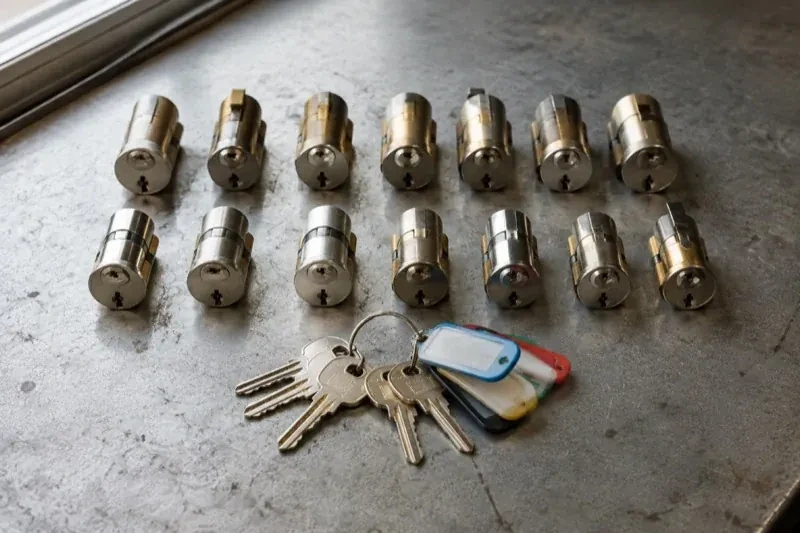
- Master Key System DesignA property manager taking over a small commercial building inherits a shoebox of keys with no labels and no chart.
- Panic & Exit HardwareSomeone at the front counter always has to unlock the side door by hand before the lunch rush, because the round doorknob out there was never meant to be an exit for a room this size.
- Commercial-Grade Lock ReplacementHead office wants every branch keyed alike under one system, and half the locations are still running whatever lockset the original contractor happened to install years ago.